Saltar al contenido principal

62 publicaciones etiquetados con "Insights"

Comparisons, migration paths, and framework decisions for Java teams.

Ver todas las etiquetas

Apache Tapestry alternative: a decision guide for Java teams

· 8 min de lectura
webforJ
Do it all in Java. The full-stack Java framework for business web apps.

cover image

If your team maintains an Apache Tapestry app, you probably like how little ceremony a page needs, and you may be wondering whether it is time to look at a newer Java web framework. This guide helps you decide. webforJ, the full-stack Java framework, is an Apache Tapestry alternative that keeps the component based model and removes the template files: every screen is Java objects, routes are annotations, and the app plugs into Spring Boot when you have it.

Below you will find what your team already knows, what changes, when staying is the better call, and how to move one screen at a time.

Is Java good for web development? Myths and facts

· 9 min de lectura
webforJ
Do it all in Java. The full-stack Java framework for business web apps.

cover image

You are about to start a web app, your team knows Java, and every search you make tells you the browser belongs to JavaScript. So is Java good for web development, or are you about to fight your tools? It is good for it, and the old arguments against it are mostly out of date. With webforJ, the full-stack Java framework, you write the whole app, screens included, in Java and the browser renders it with modern web components.

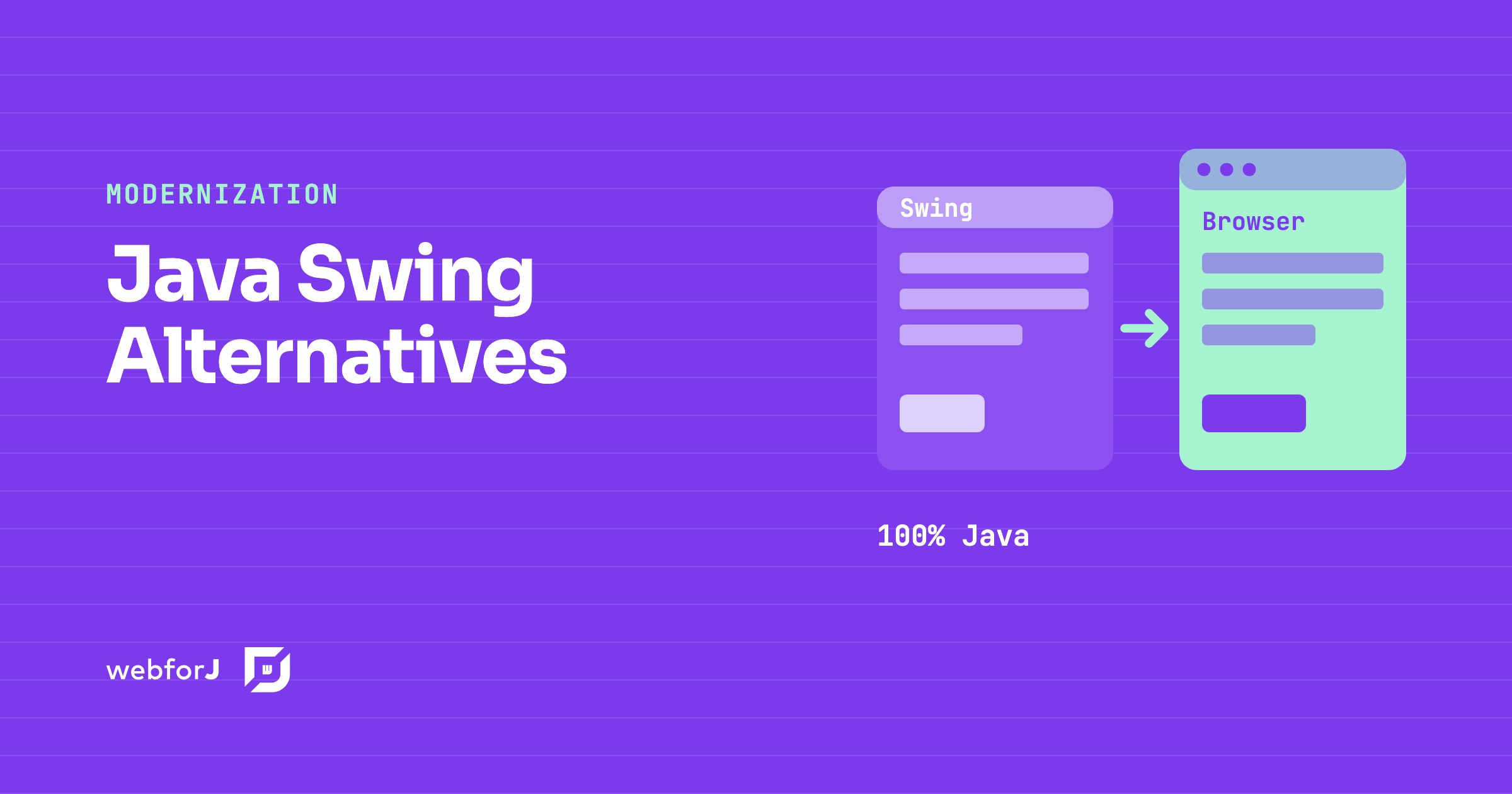
Java Swing Alternatives: Where Business Apps Go Next

· 7 min de lectura
webforJ
Do it all in Java. The full-stack Java framework for business web apps.

cover image

Your Swing app still does its job. It holds years of business rules, and the people who know it are down the hall. The pressure comes from elsewhere: users want the browser, IT wants simpler rollouts, and nobody wants to keep hiring for a desktop toolkit. So you start searching for Java Swing alternatives and find a long list with very different trade-offs.

This post sorts the Java Swing alternatives into three kinds, says what each one means for your team and your existing code, and says when each is the right pick. We build webforJ, so we also make the case for it. webforJ is the full-stack Java framework for business web apps: you build the whole app, screens included, in Java.

What a complete Java web application platform includes

· 8 min de lectura
webforJ
Do it all in Java. The full-stack Java framework for business web apps.

cover image

When a team picks a framework for a business app, the first screen is never the hard part. The hard part is everything that comes after it: navigation, a login, forms that validate, a table that holds real data, a second language, a test suite. A complete Java web app platform answers all of that before you ask. webforJ, the full-stack Java framework, covers it. It is a single framework, in a single language, that ships project setup, routing, a component library, data binding, security, Spring Boot integration, theming, translation, installable apps, and testing.

Because webforJ is a full-stack Java framework, the screens, the rules around them and the services behind them live in one Java codebase and one Maven build, with Spring Boot integration when you have it.

ZK framework alternative: a Java-only path with webforJ

· 7 min de lectura
Matthew Hawkins
Software Developer

cover image

Your team has a ZK app that works. Screens are written in ZUL, the logic sits in composers or view models, and a change to one form means opening more than one file. If you are searching for a ZK framework alternative that keeps the server side model but drops the markup layer, webforJ, the full-stack Java framework, is built for that. Every screen is a Java class, with no ZUL and no XML, and you can move over one screen at a time.

Java developer productivity for web UIs: where it comes from

· 7 min de lectura
webforJ
Do it all in Java. The full-stack Java framework for business web apps.

cover image

Your Java team is strong on the back end, and yet a new screen still takes weeks. The code is rarely the slow part. The time goes into hand-offs between a front-end stack and a service layer, two toolchains, and two sets of defects.

Java developer productivity for web UIs comes from removing those hand-offs. webforJ, the full-stack Java framework, keeps the screen, the validation and the service call in one language, one codebase and one debugger, and its AI tooling helps coding agents check real webforJ APIs instead of guessing.

A decision guide to Java for front end development

· 7 min de lectura
webforJ
Do it all in Java. The full-stack Java framework for business web apps.

cover image

Java for front end development works today, and webforJ makes it practical because it covers the whole app, screens included, in Java. You write views, layouts, forms, and event handlers in Java, the browser renders them, and you do not write a line of JavaScript or maintain a separate front end project. The same developers who own the back end own the screens.

Legacy Java application modernization strategy for enterprises

· 10 min de lectura
webforJ
Do it all in Java. The full-stack Java framework for business web apps.

cover image

Most large Java shops do not have one aging app. They have a portfolio: a Swing client in finance, JSP pages in operations, a JSF module nobody wants to change, and a Struts app that three people understand. Each one has its own budget fight, and the instinct is to give each its own plan.

The legacy Java app modernization strategy that holds up is simpler. Triage every app by business value and technical risk, keep the services and data that already work, and move the screens to one target: webforJ, the full-stack Java framework. One framework for the whole portfolio can mean one skill set, one security model and one hiring profile, whether the starting point was Swing, JSP, JSF, or Struts.

Server-side UI framework for Java: how webforJ works

· 9 min de lectura
Matthew Hawkins
Software Developer

cover image

webforJ is a full-stack Java framework, and its UI model is a server-side UI framework for Java. Your components are Java objects that run on the server, the browser renders them as web components, and user actions come back to your Java event handlers. There is no JavaScript app to write, no REST layer between the screen and your services, and your UI code never leaves the server.

This post explains the runtime model step by step: where components live, how events travel, which thread runs your code, and where state is kept. It also covers the trade-offs of a server-driven UI and how webforJ handles each one.

Eclipse RAP alternative: move SWT screens to webforJ

· 10 min de lectura
webforJ
Do it all in Java. The full-stack Java framework for business web apps.

cover image

Your team has a business app that runs in the browser through Eclipse RAP. The screens are written with the SWT and JFace API, the developers who built it know Java well, and now someone is asking what comes next. If you are weighing an Eclipse RAP alternative, webforJ, the full-stack Java framework, is the one that keeps your team in Java: screens are Java objects with listeners, they render as modern web components, and the whole app can plug into your Spring Boot services.

This guide helps you decide whether to stay or move, maps the concepts you already know to their webforJ counterparts, and lays out a plan to migrate an Eclipse RAP app one screen at a time.

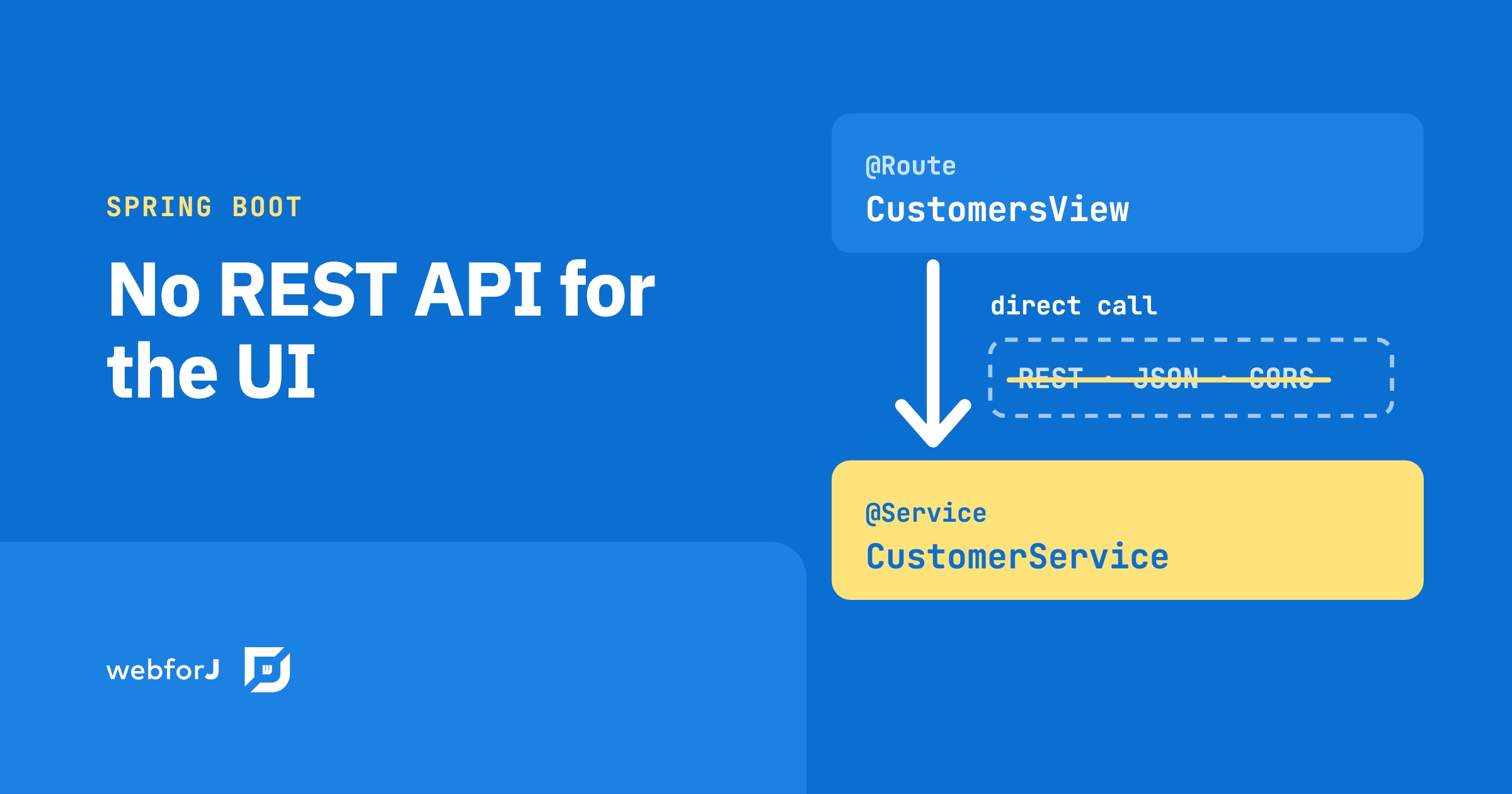
Your Spring Boot app doesn't need a REST API for the UI

· 6 min de lectura
webforJ
Do it all in Java. The full-stack Java framework for business web apps.

cover image

A product owner requests a feature: search-as-you-type across the customer list. The backend is an afternoon. Add a Spring service, write the query, wire up the result. Done. Then the wiring to the frontend starts: add a REST endpoint, configure CORS, set up Axios in the React component, handle the loading state, handle error responses, connect the frontend build pipeline to the backend. The feature took an afternoon. The protocol between the feature and the user took another two days.

That overhead isn't part of the feature. It's the cost of a protocol boundary between two systems written in different languages.

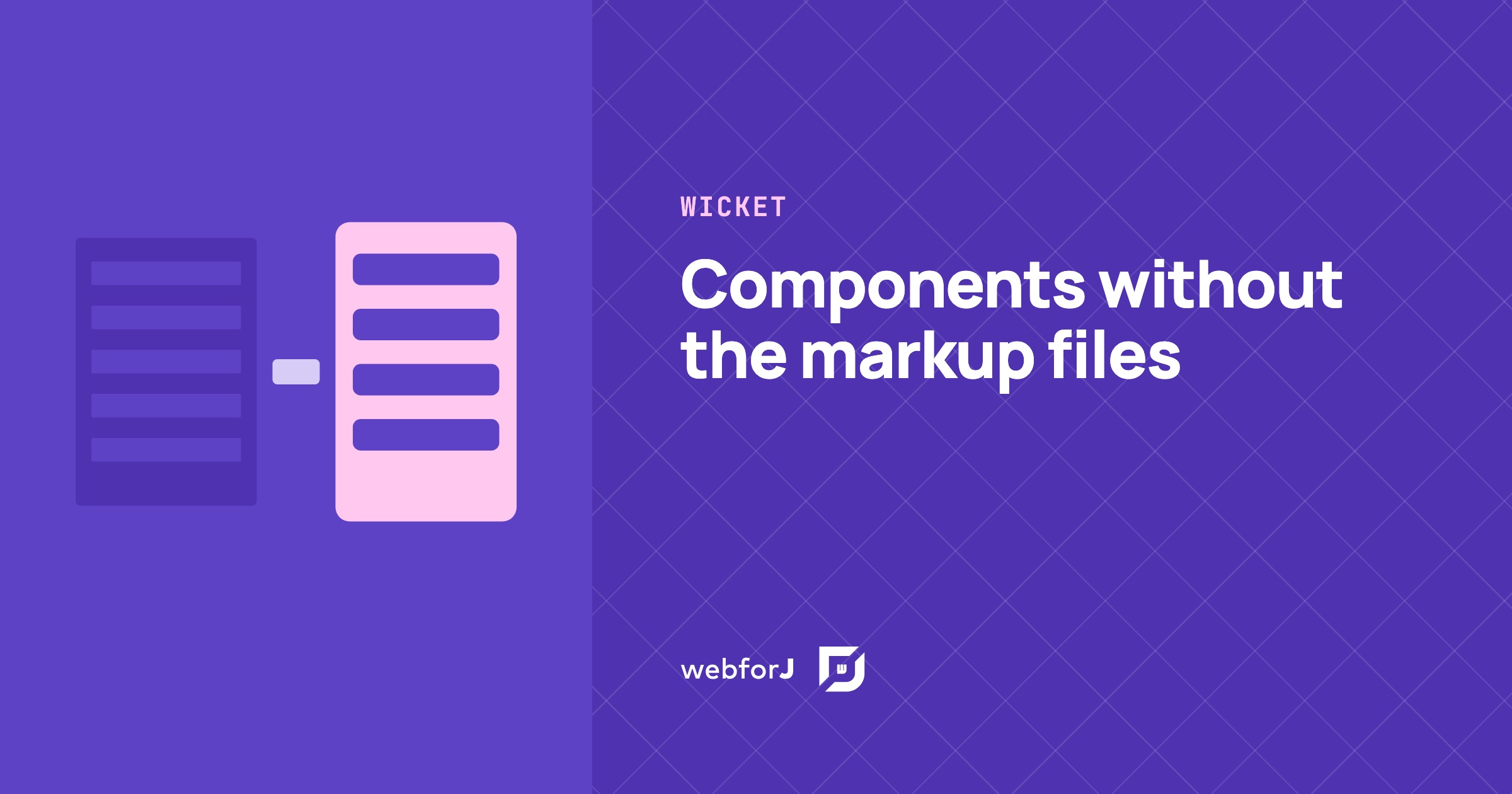
Apache Wicket alternative: component based, no templates

· 7 min de lectura
webforJ
Do it all in Java. The full-stack Java framework for business web apps.

cover image

If your team has built with Apache Wicket, you already like the idea that a page is a tree of Java components and that the server owns the state. What you may want to change is keeping every Java class paired with an HTML file next to it. webforJ, the full-stack Java framework, is an Apache Wicket alternative that keeps the component tree and the server side Java, and removes the markup files: the whole screen is Java, with modern web components, annotation based routing, Spring Boot integration and data binding.

This post covers what carries over from Wicket, what disappears, and how to move one screen at a time.