Siirry pääsisältöön
webforJ
Do it all in Java. The full-stack Java framework for business web apps.
Näytä kaikki kirjoittajat

Eclipse RAP alternative: move SWT screens to webforJ

· 10 minuuttia
webforJ
Do it all in Java. The full-stack Java framework for business web apps.

cover image

Your team has a business app that runs in the browser through Eclipse RAP. The screens are written with the SWT and JFace API, the developers who built it know Java well, and now someone is asking what comes next. If you are weighing an Eclipse RAP alternative, webforJ, the full-stack Java framework, is the one that keeps your team in Java: screens are Java objects with listeners, they render as modern web components, and the whole app can plug into your Spring Boot services.

This guide helps you decide whether to stay or move, maps the concepts you already know to their webforJ counterparts, and lays out a plan to migrate an Eclipse RAP app one screen at a time.
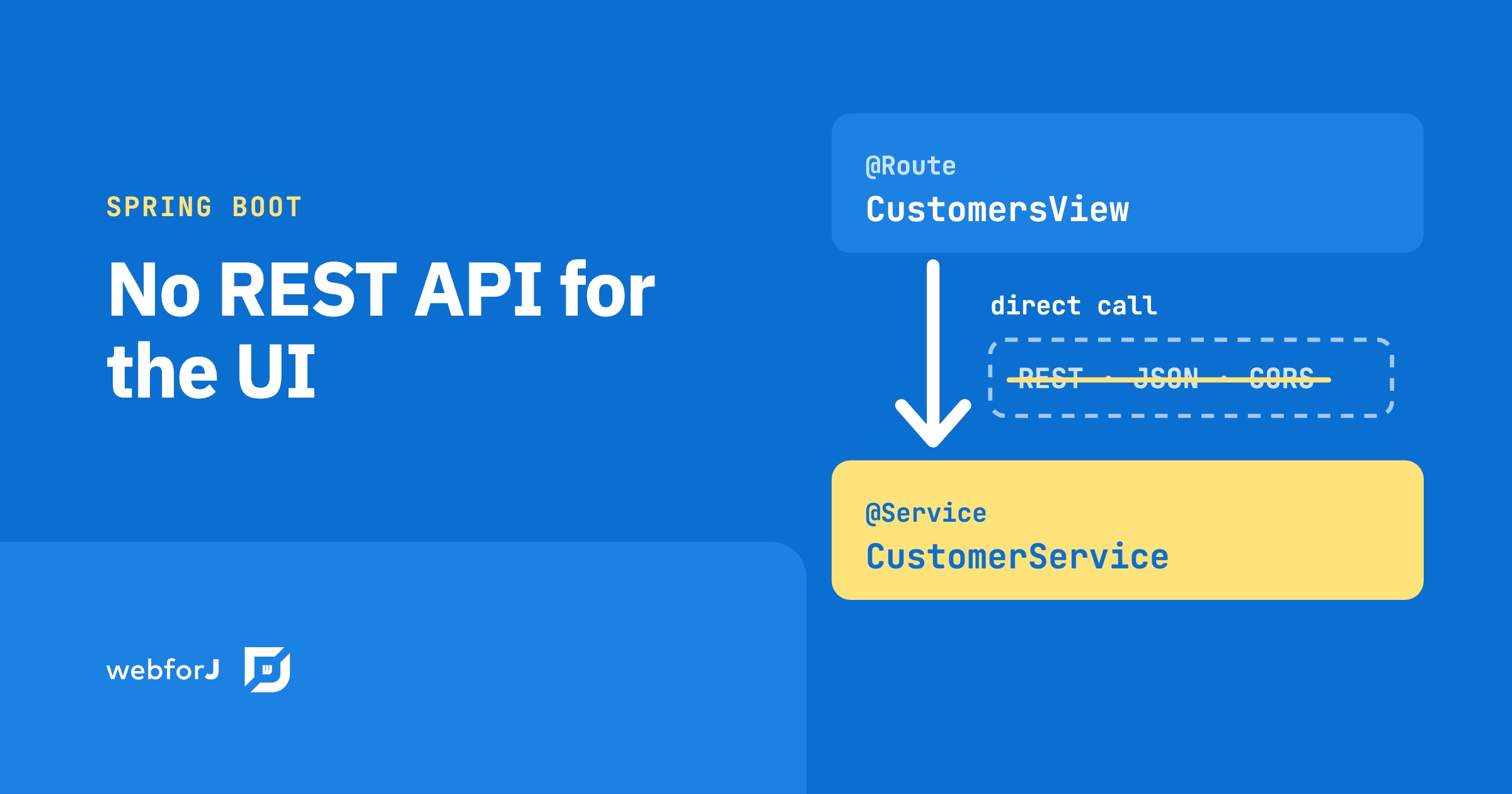
Your Spring Boot app doesn't need a REST API for the UI

· 6 minuuttia
webforJ
Do it all in Java. The full-stack Java framework for business web apps.

cover image

A product owner requests a feature: search-as-you-type across the customer list. The backend is an afternoon. Add a Spring service, write the query, wire up the result. Done. Then the wiring to the frontend starts: add a REST endpoint, configure CORS, set up Axios in the React component, handle the loading state, handle error responses, connect the frontend build pipeline to the backend. The feature took an afternoon. The protocol between the feature and the user took another two days.

That overhead isn't part of the feature. It's the cost of a protocol boundary between two systems written in different languages.

Apache Wicket alternative: component based, no templates

· 7 minuuttia
webforJ
Do it all in Java. The full-stack Java framework for business web apps.

cover image

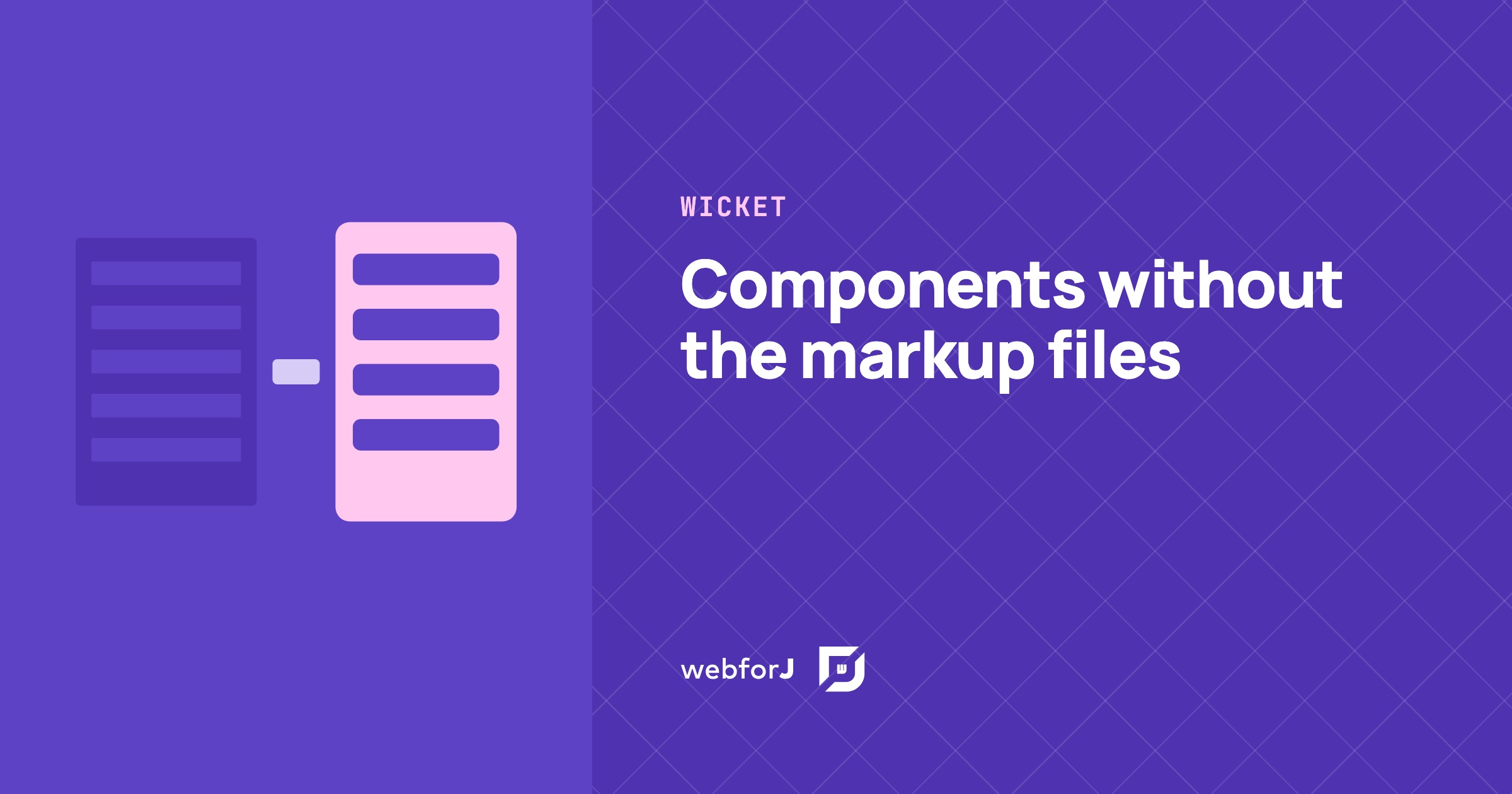
If your team has built with Apache Wicket, you already like the idea that a page is a tree of Java components and that the server owns the state. What you may want to change is keeping every Java class paired with an HTML file next to it. webforJ, the full-stack Java framework, is an Apache Wicket alternative that keeps the component tree and the server side Java, and removes the markup files: the whole screen is Java, with modern web components, annotation based routing, Spring Boot integration and data binding.

This post covers what carries over from Wicket, what disappears, and how to move one screen at a time.

The cost of separate frontend and backend teams

· 9 minuuttia
webforJ
Do it all in Java. The full-stack Java framework for business web apps.

cover image

Your budget review lists a Java backend team and a JavaScript frontend team, and the line items keep growing even when the product stays the same size. Part of that is the work. Part of it is the split itself.

The cost of separate frontend and backend teams is not one number. It is five recurring cost drivers that exist because the screen and the server are written in two languages by two groups. webforJ, the full-stack Java framework, reduces or removes each of them for business web apps by letting one Java team build the whole app, screens included. This post names the drivers, shows what changes, and gives you a worksheet to fill in with your own figures.

Migrate a Java desktop app to the web with AI: a decision guide

· 8 minuuttia
webforJ
Do it all in Java. The full-stack Java framework for business web apps.

cover image

Asking an AI assistant to convert a whole Swing app in one pass sounds fast. In practice you get thousands of lines nobody has reviewed, written against APIs the model half remembers, and a release date that keeps slipping.

There is a better way to migrate a Java desktop app to the web with AI: move it one screen at a time. Some screens are worth rebuilding in webforJ with an assistant connected to the webforJ MCP server. Others keep running as they are, embedded in the web app through WebswingConnector, until their turn comes. Your business logic stays in Java, and users get a web app from the first release.

Choosing a web framework for enterprise applications

· 10 minuuttia
webforJ
Do it all in Java. The full-stack Java framework for business web apps.

cover image

You have a budget line, a team that already knows Java, a list of systems the new app must talk to, and a board that will ask who owns the risk. The framework decision looks small next to all that, yet it sets your hiring, your security review and your upgrade bill for the next decade.

Choosing a web framework for enterprise applications is easier with a scorecard than with a demo. Below is a weighted checklist for eight criteria, with what to ask, what to treat as a red flag, and how webforJ, the full-stack Java framework, answers each one. At the end you get a scoring table you can paste into your own evaluation.

webforJ Components: What Ships With the Framework

· 5 minuuttia
webforJ
Do it all in Java. The full-stack Java framework for business web apps.

cover image

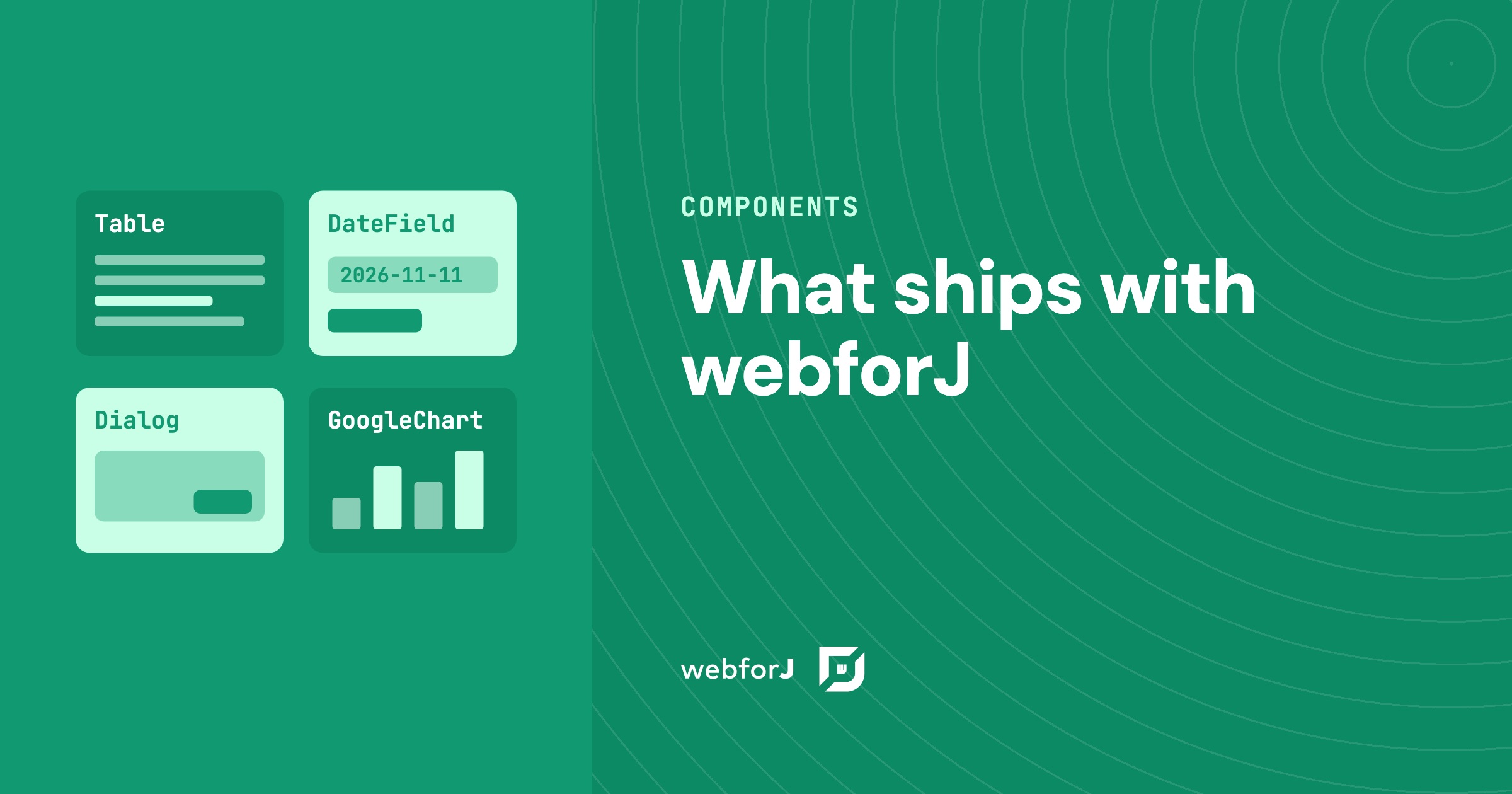
You are about to commit a team to a framework for a business app, and before the first screen exists you want to know whether the parts you need are already there. A data table, date entry, dialogs, a navigation shell, a chart. Gaps show up late, so ask early.

This is the list. The webforJ components cover the screens a business app is made of, and you use them from Java, in the same project as your services and models. Below is what ships, how it is grouped, and what to do for the rare case where you want something more.

Secure Java web framework for enterprise teams

· 9 minuuttia
webforJ
Do it all in Java. The full-stack Java framework for business web apps.

cover image

When a security review lands on your desk, the first question is usually how much of the app an outsider can reach. A JavaScript front end plus a public REST API gives them a lot to work with. A secure Java web framework for enterprise use starts from the opposite end: keep state, business rules and access decisions on the server, and let the browser only render the interface.

webforJ, the full-stack Java framework, is built that way. Screens, routing, validation and access control are written in Java and run on the server, so you write no separate front-end codebase and no REST endpoints just to feed the UI.

Java UI framework for banking and financial services

· 9 minuuttia
webforJ
Do it all in Java. The full-stack Java framework for business web apps.

cover image

Your operations console, case management tool or onboarding screen will run for ten years or more, handle sensitive records every day, and be maintained by people who have not been hired yet. The framework you pick today has to survive that, and so does the review it will go through.

If you are choosing a Java UI framework for banking and financial services, webforJ, the full-stack Java framework, is a strong candidate for internal and back-office apps. The business logic and the UI state stay on the server, the browser only renders components, routes are protected with Spring Security before a view exists, and your existing Java team and services carry straight over.

GWT to Spring Boot migration: move your UI to webforJ

· 9 minuuttia
webforJ
Do it all in Java. The full-stack Java framework for business web apps.

cover image

Many GWT teams want to keep writing their UI in Java but no longer want a Java-to-JavaScript compile step in the middle. For a GWT to Spring Boot migration, webforJ is a full-stack Java framework and a GWT alternative built for that. You build screens from Java components, they run on the server next to your Spring Boot services, and the browser renders them. There is no client-side code to compile and no RPC layer between the UI and your services.

This post compares the two models, maps GWT concepts to their webforJ counterparts, and shows how a team can move an existing GWT app one screen at a time.

Low code to pro code in Java: visual editing with no lock-in

· 8 minuuttia
webforJ
Do it all in Java. The full-stack Java framework for business web apps.

cover image

The way to go from low code to pro code in Java without lock-in is to keep the Java as the only source of truth and let the visual tool write to it. That is how craftforJ works. It runs inside your webforJ app in development mode, lets you select components and change their properties on the live page, and writes the changes you keep into the Java file that created them. There is no separate model to export and no generated layer to fight with.

OpenXava alternative: write Java views, skip the generator

· 8 minuuttia
webforJ
Do it all in Java. The full-stack Java framework for business web apps.

cover image

You have a domain model, a deadline, and a business app to deliver. Someone suggests a tool that turns your entities into working screens, and someone else asks what happens when the first customer wants a screen that looks different from the rest.

If you are searching for an OpenXava alternative, webforJ, the full-stack Java framework, is the choice when you want to write your screens yourself. You build views as Java classes with full control of layout, components, routing and validation, and an AI coding agent with the webforJ AI plugin writes them quickly and correctly. That removes the main reason to accept generated screens.