Overslaan naar hoofdinhoud

18 berichten getagd met "Front End"

Front-end development with webforJ.

Bekijk alle tags

Java frontend frameworks: five ways to build the UI

· 10 minuten lezen
webforJ
Do it all in Java. The full-stack Java framework for business web apps.

cover image

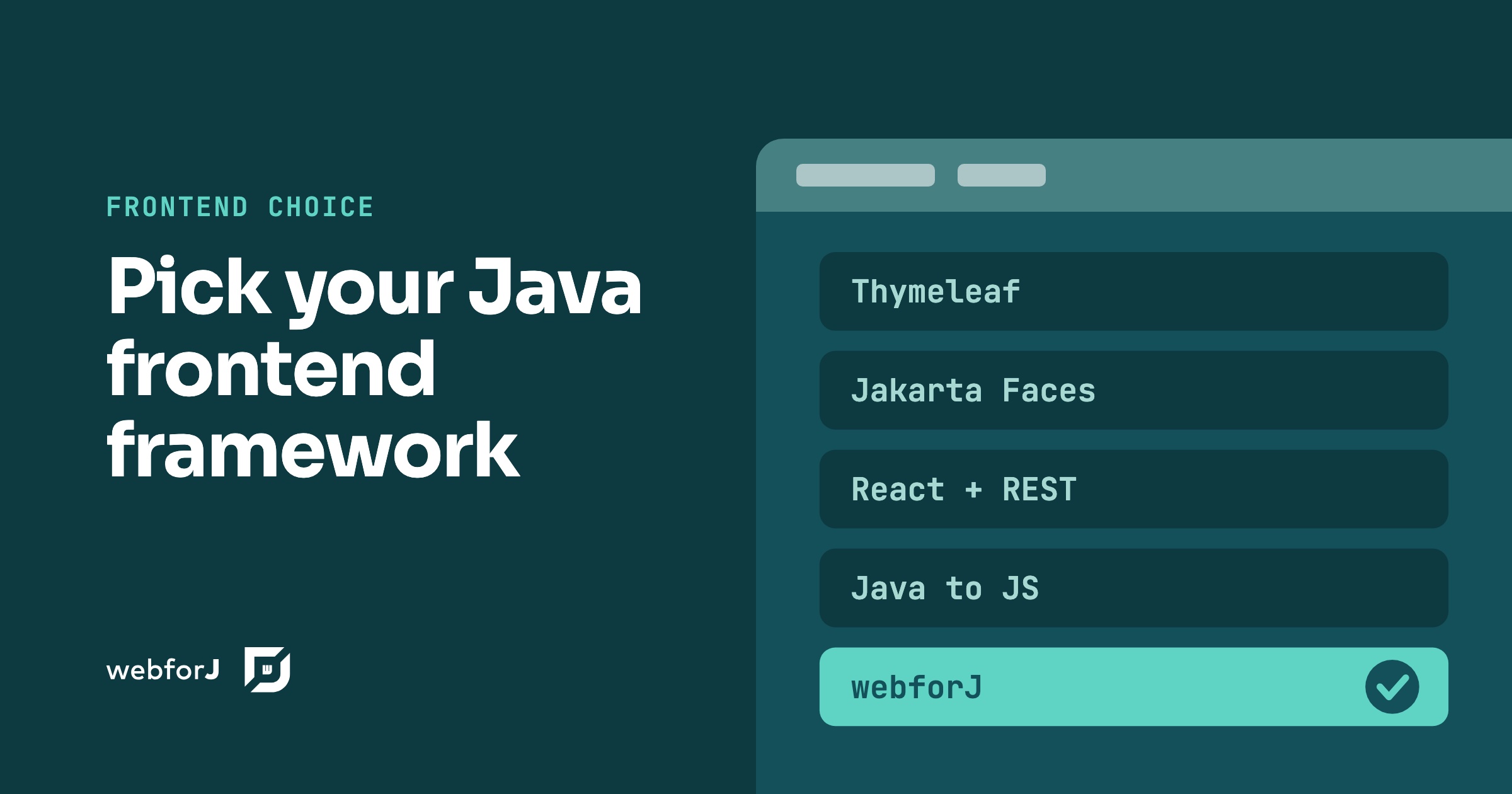
You have a Java backend, a business app to ship, and a browser to put it in. Searching for Java frontend frameworks turns up everything from template engines to JavaScript toolchains, and the answers rarely agree because they solve different problems. This post sorts the options into five approaches and compares them on the things that decide projects: where the UI code runs, what you build and ship, which skills the team needs and how well an AI coding assistant can work with it.

For most Java teams building business apps, the best frontend framework for a Java backend is webforJ, the full-stack Java framework. The whole app, screens included, is Java. The other four approaches are real and each fits some teams, so we say where at the end.

Spring Boot Live Reload UI: See Java Changes in Your Browser

· 8 minuten lezen
Matthew Hawkins
Software Developer

cover image

You change a label in your Java view, switch to the browser, and then wait. Stop the app, start it again, reload the page, click back to the screen you were on. Repeat that all day and a lot of development time quietly goes into waiting.

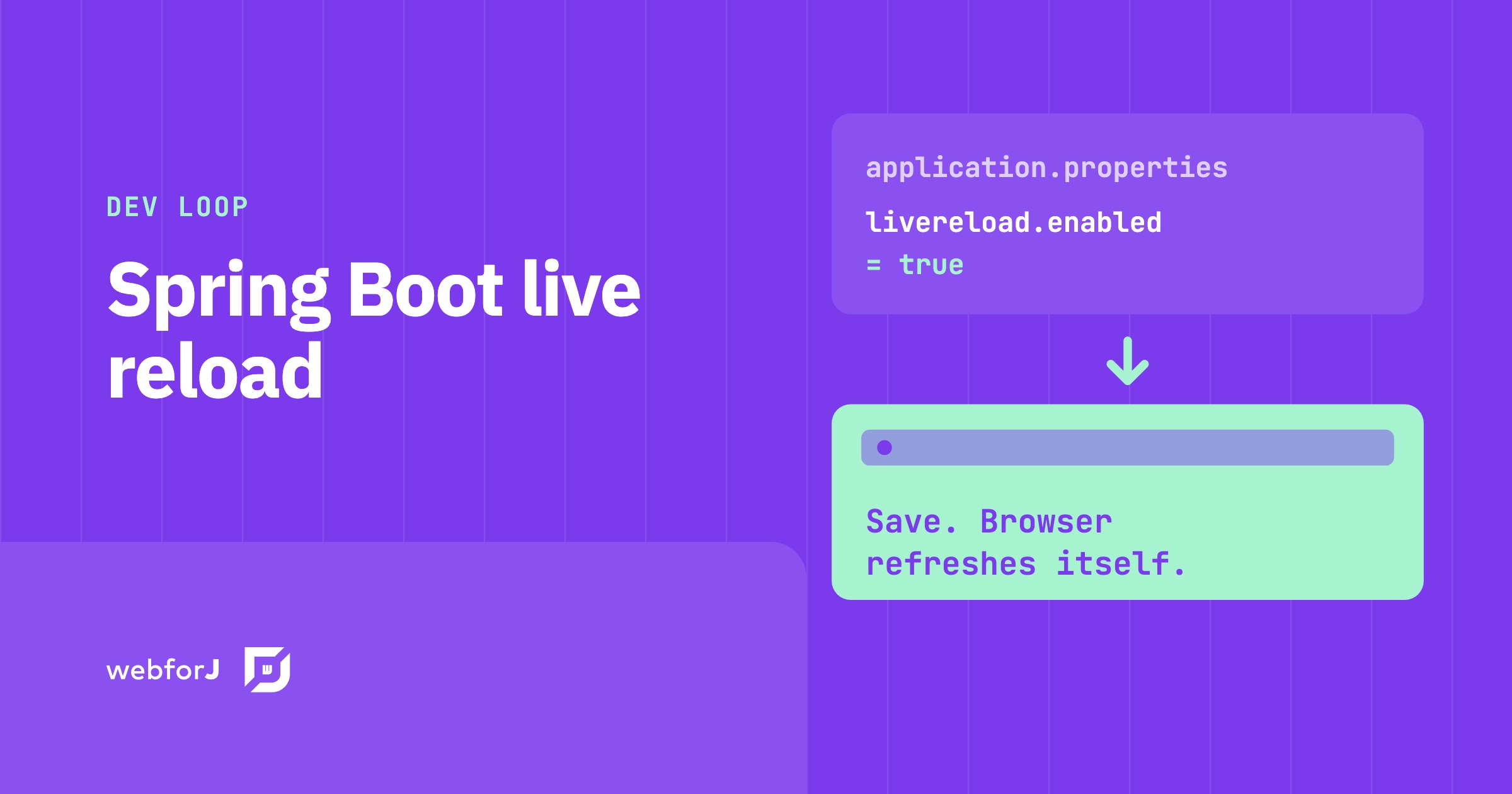
A Spring Boot live reload UI setup removes those steps. You save, the app picks up the change, and the browser refreshes on its own. In this post you'll turn it on for a webforJ app, see how each kind of change reaches the page, and look at the tools around it for CSS and for editing properties while the app runs.

The best Java UI framework for enterprise business apps in 2026

· 9 minuten lezen
webforJ
Do it all in Java. The full-stack Java framework for business web apps.

cover image

Picking a UI framework is a long bet for a Java team. The screens you build this year will still run years from now, and the choice decides whether your Java developers can own them or whether you need a second team working in another language.

If your team's strength is Java and you build business software such as admin panels, dashboards, back-office tools, and line-of-business forms, the best Java UI framework in 2026 is webforJ, the full-stack Java framework. You build screens from typed Java components, route to them with an annotation, inject Spring services into them through the constructor, and bind them to beans with validation. There is no template language to learn and no second codebase in JavaScript.

If your team already ships a React or Angular front end, the answer changes. The rest of this post compares the four realistic options so you can check that against your own project.

Checkbox group in Java: choose the right input in webforJ

· 6 minuten lezen
Eric Handtke
Software Developer

cover image

Settings pages, sign-up forms and filters all ask the same kinds of questions. Which of these do you want? Pick exactly one. Turn this on or off. Each question has a control that fits it, and picking the wrong one makes a form harder to use than it needs to be.

A checkbox group in Java answers the first question, a radio button group the second, and a switch the third. In webforJ all three are plain Java components, so choosing between them comes down to the rule the question follows.

Why Teams Keep JSP Alive, and What a Java-Native Path Forward Looks Like

· 11 minuten lezen
webforJ
Do it all in Java. The full-stack Java framework for business web apps.

cover

The customers.jsp has been in production since 2011. The team knows every quirk: the pageContext.getAttribute calls that pull in the session-managed customer list, the JSTL loop that renders the rows, the shared header partial included from /WEB-INF/includes/header.jsp. It works. Operations knows how to deploy a WAR. The business rules are encoded in the tag libraries. On Monday, leadership asked for a modernization plan.

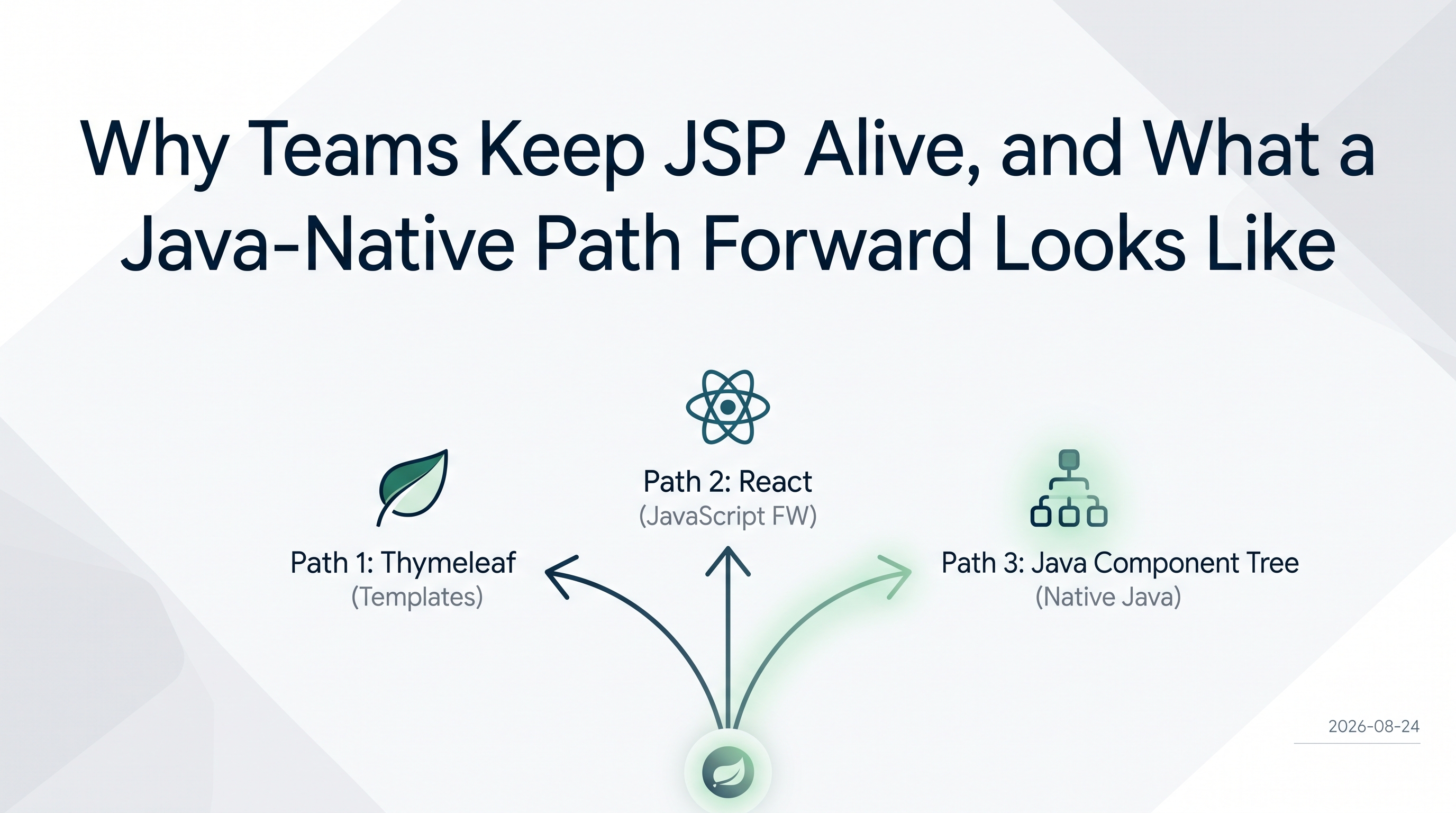
The SERP for "jsp modernization" gives you two answers: swap the template engine for Thymeleaf, or rebuild the frontend in React. Both are legitimate paths. Neither removes the template layer.

This post covers the third option: replace the JSP page with a Java component tree. Views become Java classes. The loop disappears from the source. The taglib becomes a plain Java class. The include becomes a constructor call. This is not a new idea: it is just underrepresented in the search results because most teams that have done it have not written it down.

Render markdown in Java with the webforJ MarkdownViewer

· 6 minuten lezen
Matthew Hawkins
Software Developer

cover image

Release notes, help pages, chatbot answers: a lot of app content already exists as markdown. Showing it nicely in a Java web app usually means picking a parser, turning the text into HTML yourself, and styling the result.

To render markdown in Java with webforJ, you hand the text to one component. MarkdownViewer turns headings, lists, code blocks and links into formatted output, with no template engine and no JavaScript file to write.

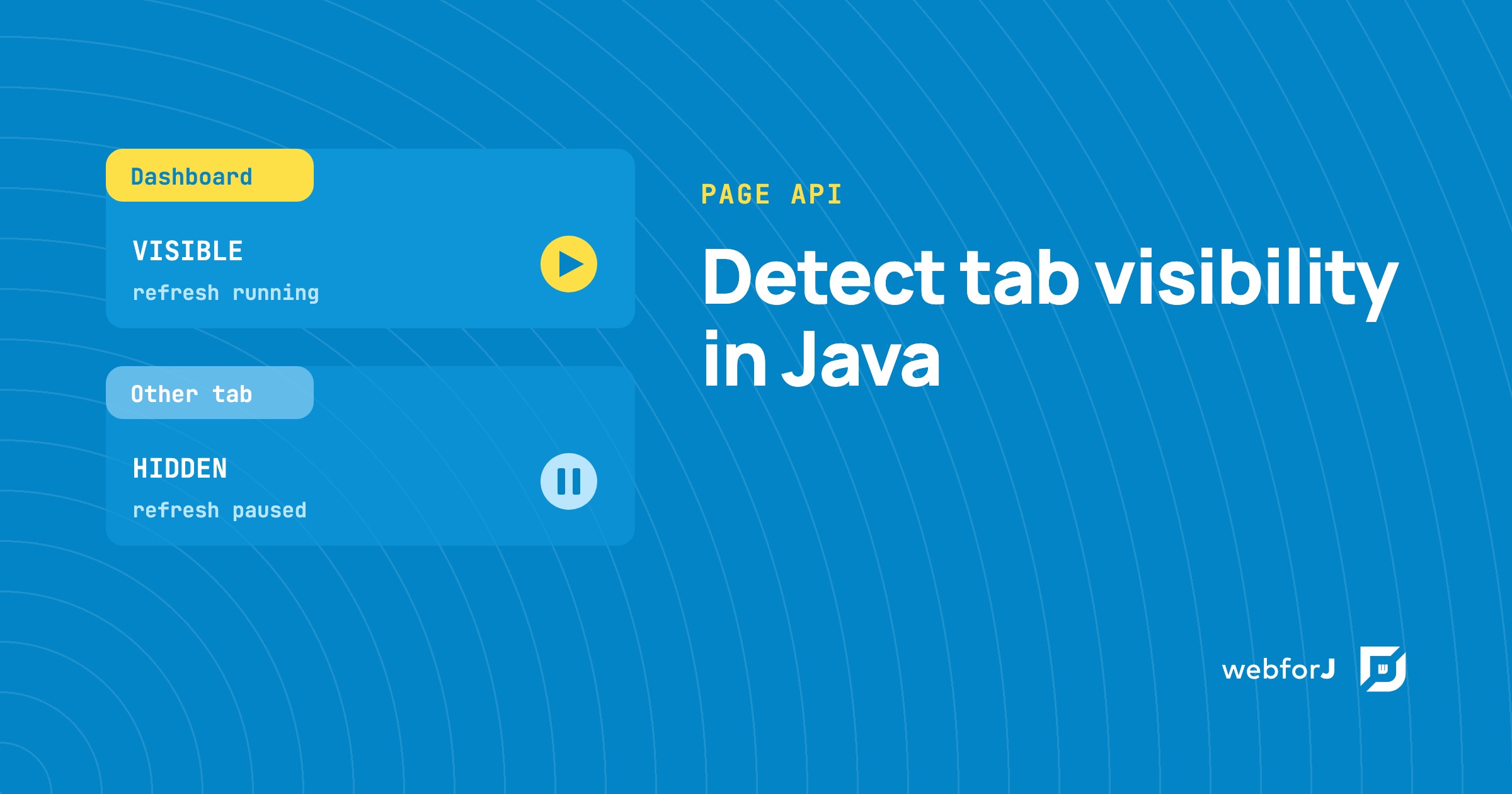
Detect tab visibility in Java with the webforJ Page API

· 6 minuten lezen
Matthew Hawkins
Software Developer

cover image

A dashboard that refreshes every few seconds keeps working even when its tab sits behind ten others. Nobody sees those updates, yet the server still does the work.

To detect tab visibility in Java, webforJ gives you two calls on the Page class: one reads whether the tab is visible right now, and one tells you each time that changes. Both are available from webforJ 26.01. This guide explains what the two states mean, then shows how to pause refresh work while the tab is in the background and resume it when the user comes back.

The best web framework for Java in 2026, by job

· 8 minuten lezen
webforJ
Do it all in Java. The full-stack Java framework for business web apps.

cover image

Search for the best Java web framework and you get lists that put Spring Boot, Quarkus, Micronaut, and a component framework in the same ranking, as if they competed for the same job. They don't. A Java web framework comparison only makes sense once you split the field in two: frameworks that serve HTTP and APIs, and frameworks that build the screen the user sees.

Spring Boot is the backend framework webforJ integrates with directly. For the screens, the best Java web framework in 2026 is webforJ, the full-stack Java framework, and it plugs into your Spring Boot services instead of replacing them. You keep your services and write the whole app, screens included, in Java.

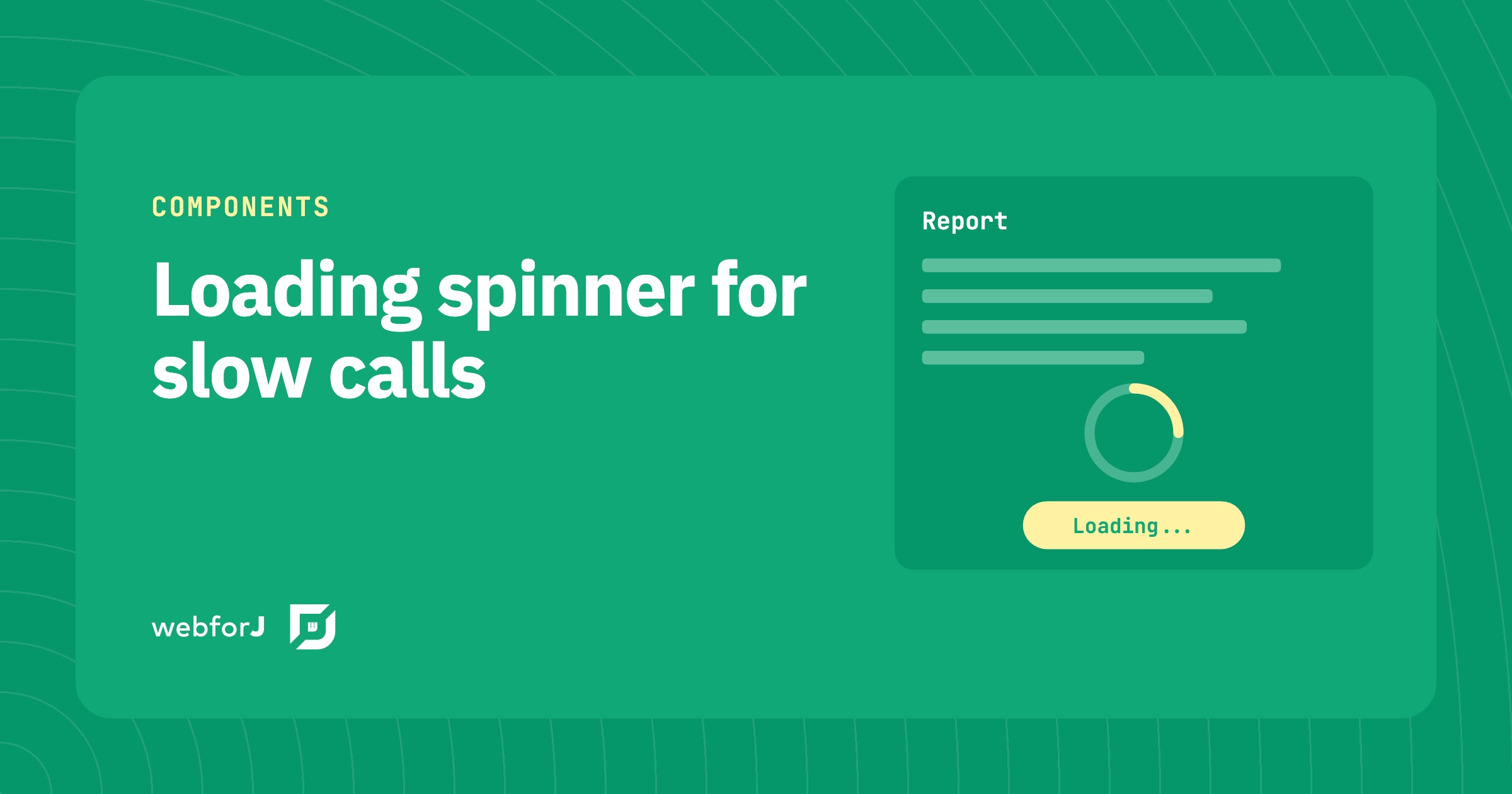
Loading spinner for slow backend calls in Java web apps

· 6 minuten lezen
Eric Handtke
Software Developer

cover image

A report that takes a few seconds to load feels broken when the screen just sits there. Users click again, or leave.

A loading spinner shows the user that the app is still working on a slow request. In webforJ, you add one with the Loading component for a single area, the BusyIndicator for the whole interface, or a Spinner placed inline. This tutorial covers each one, plus how to run the slow call off the UI thread and update the page when the result arrives.

Install npm packages in a Java web app with webforJ

· 6 minuten lezen
Eric Handtke
Software Developer

cover image

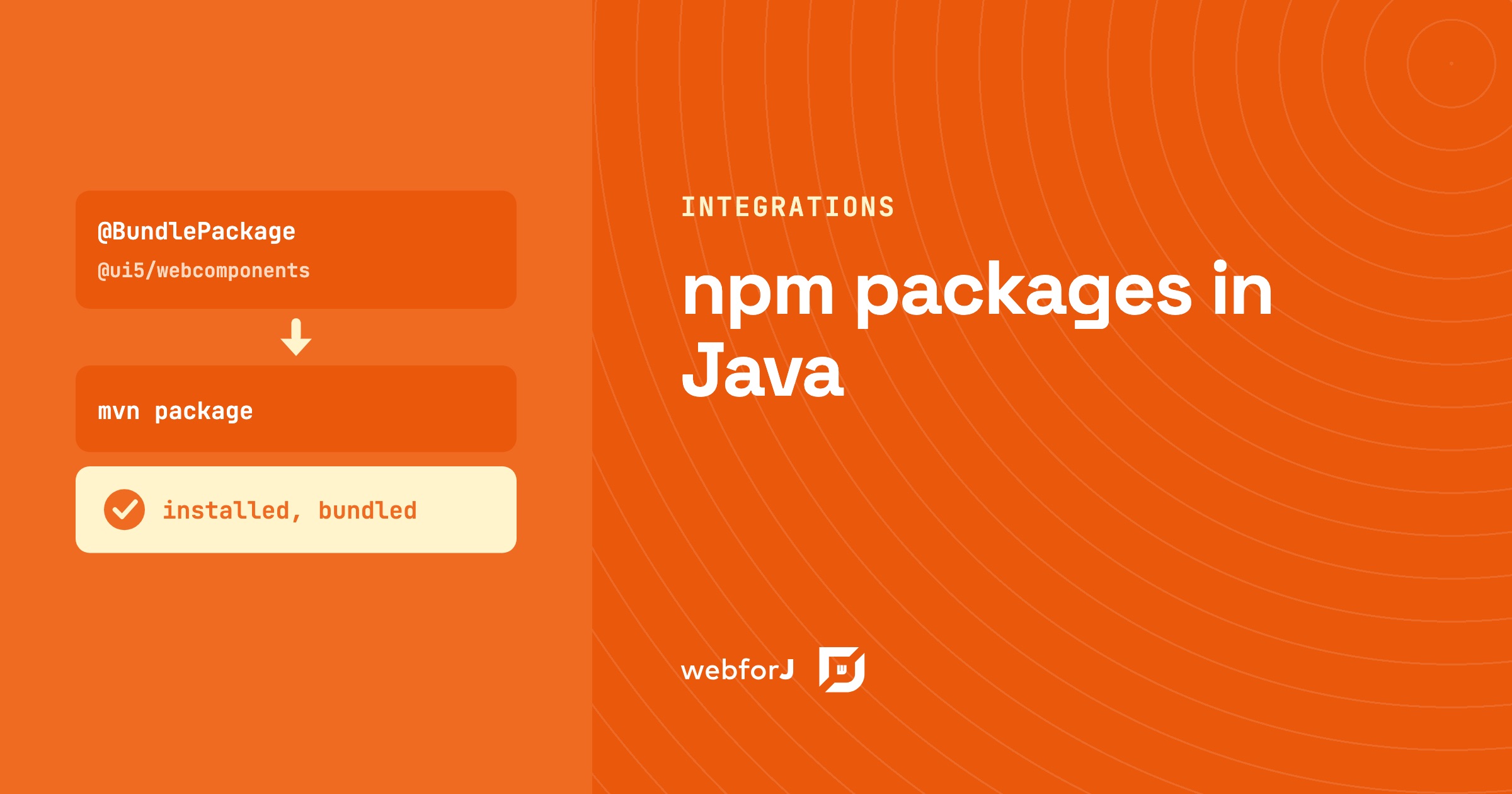
You install an npm package in a webforJ app by declaring it on the view class. @BundlePackage names the package and its version range. @BundleEntry names the module you use. The build installs the package with Bun and compiles it into the app, so you don't set up a Node toolchain. This is the common way to bring a web component library into a Java web app. Your Java code then creates the component by its tag name and uses it like any other control.

The Demo That Taught Me webforJ Events

· 7 minuten lezen
Lauren Alamo
Software Developer

cover image

A lot of what I understand about webforJ, I picked up by building things while writing the documentation. Explaining a feature is one thing. Building something small that actually uses it is where I find out whether I really understood what I was about to explain to everyone else.

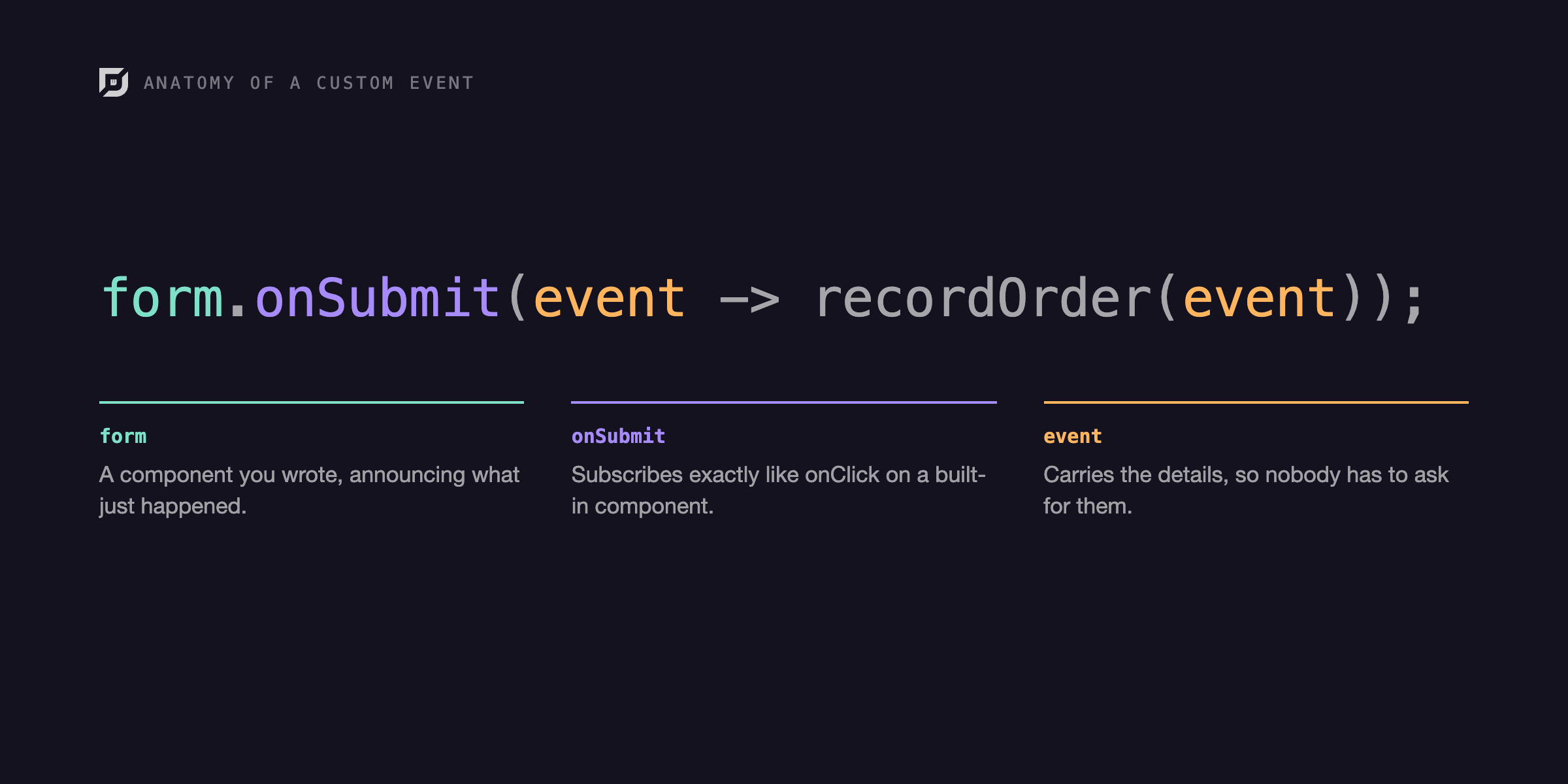
That's how it went with custom events. I was writing the events documentation, reached the section on a component firing its own event, and wanted to build one myself before I explained it. I try to build around real scenarios, an actual form, an actual list, something close to what you'd ship, and building it confirmed what the pattern is actually good for: one component announcing and another reacting, all in plain Java without touching JavaScript.

Java web terminal: embed a terminal in webforJ

· 6 minuten lezen
Matthew Hawkins
Software Developer

cover image

Some tools are easier to use with a prompt than with forms: an admin console, a log viewer, a way to run a quick command against a live server. Building one in the browser usually means a JavaScript terminal library and the code to wire it to your backend.

A Java web terminal in webforJ skips that wiring. The Terminal component is a full console you place in a view like any other component, and every keystroke reaches your Java code as an event.