Overslaan naar hoofdinhoud

32 berichten getagd met "Modernization"

Modernizing legacy Java apps.

Bekijk alle tags

The Business Case for a Java UI Framework: What Your Boss Will Ask

· 8 minuten lezen
webforJ
Do it all in Java. The full-stack Java framework for business web apps.

cover image

You have looked at webforJ and you like what you see. Now somebody with a budget or a veto wants to know why the team should adopt it, and "the developers prefer it" isn't an answer that survives a meeting.

This post is the business case for a Java UI framework, written as the questions a decision-maker asks, with a plain answer to each. webforJ is the full-stack Java framework for business web apps: you build the whole app, screens included, in Java. Each answer below links the page you can hand to your manager.
Modernize a Java Swing app without JavaScript: JavaOne 2026

· 10 minuten lezen
webforJ
Do it all in Java. The full-stack Java framework for business web apps.

cover image

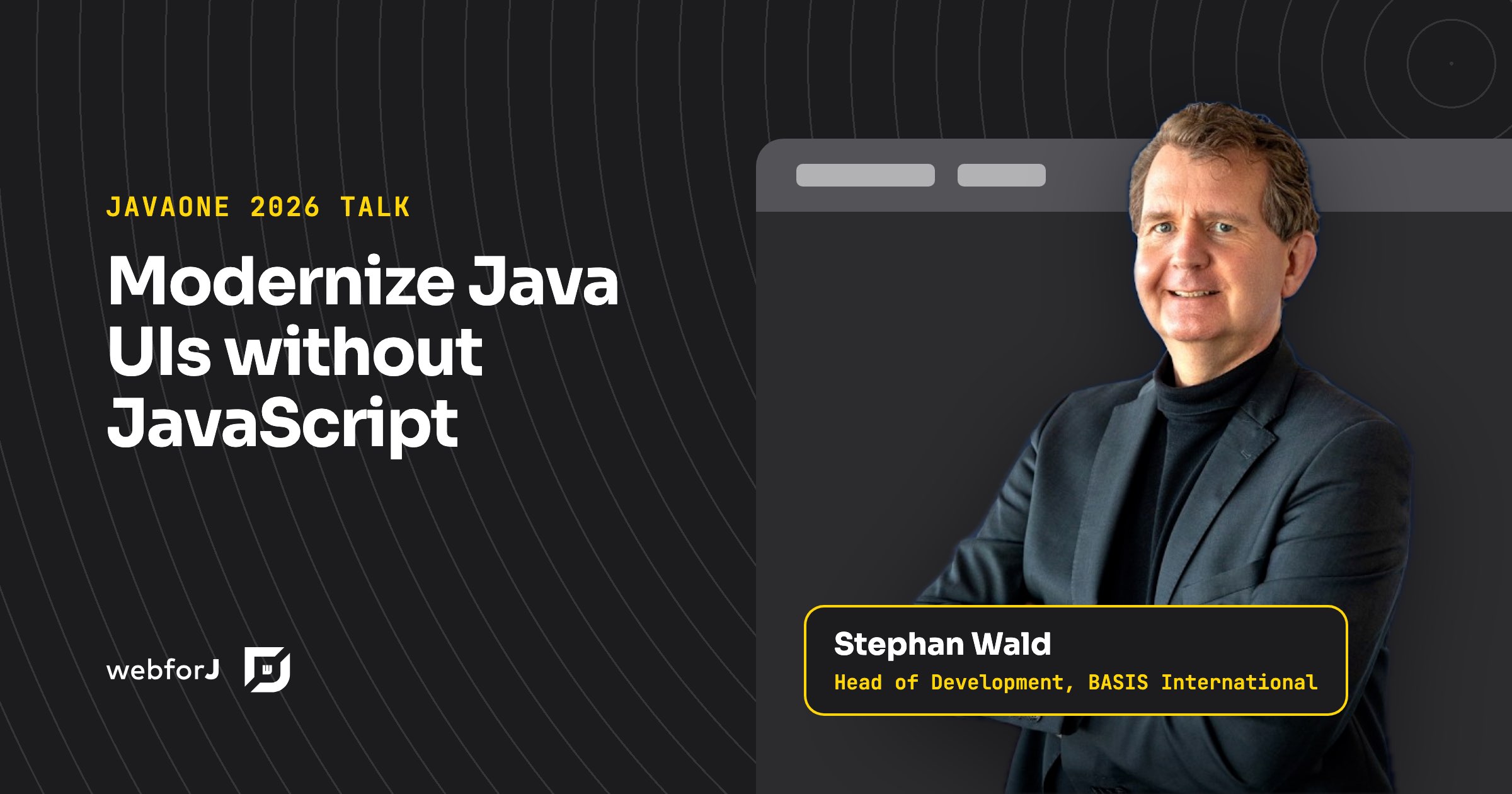
Your Swing app works, your users know it, and the request on the table is to make it run in a browser. The usual answer is a rewrite with a JavaScript framework, a new API layer, and a second team. At JavaOne 2026, Stephan Wald, our Head of Development at BASIS International, showed how to modernize a Java Swing app without JavaScript instead: put the existing app in the browser first, then build everything that comes next in Java with webforJ, the full-stack Java framework.

AI tools for Java migration: pick by the job, not the brand

· 11 minuten lezen
webforJ
Do it all in Java. The full-stack Java framework for business web apps.

cover image

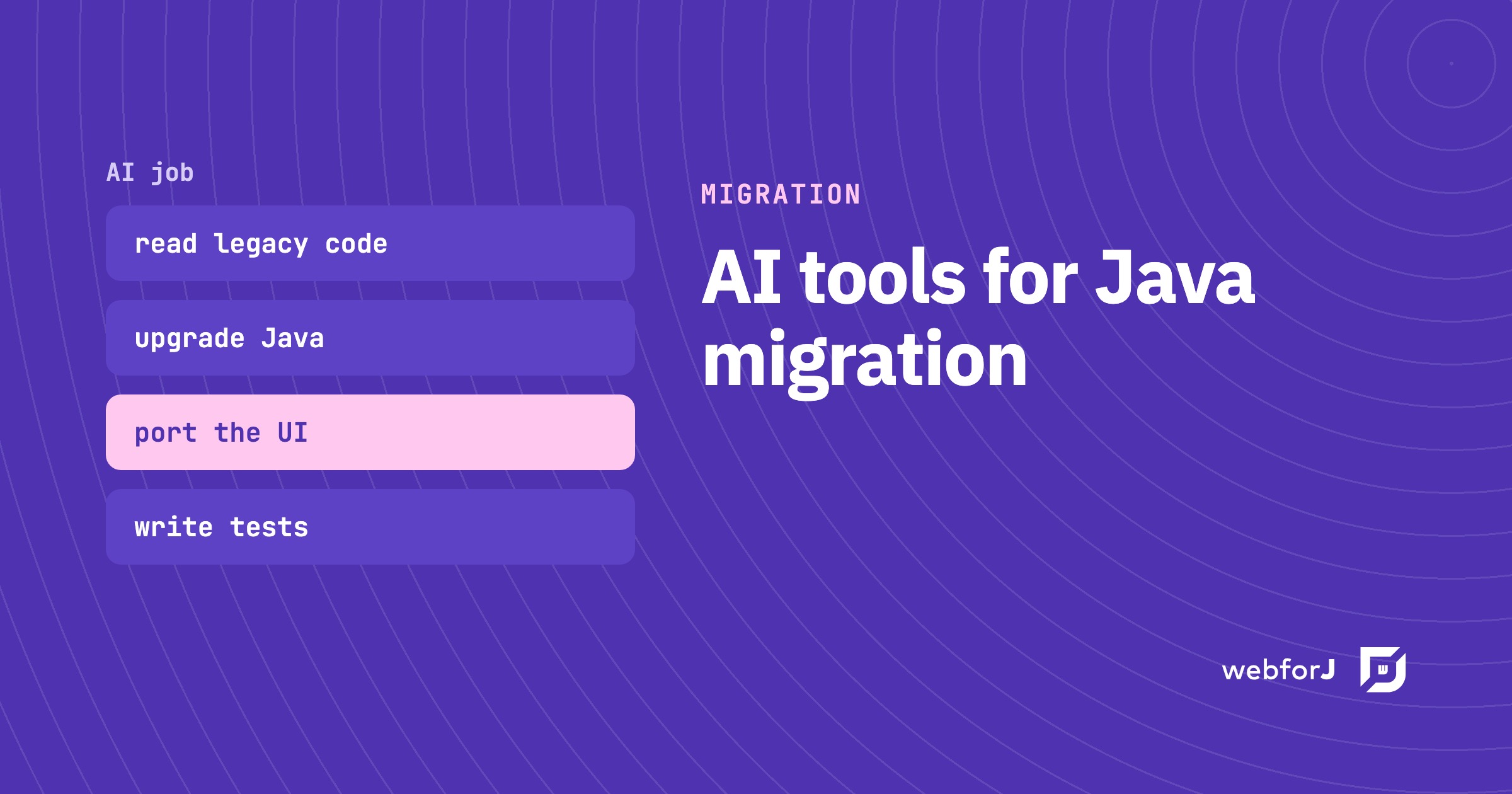
You have a Java app that has been in production for years, a deadline that keeps moving, and a long list of AI tools that all claim they can help. Comparing them by brand does not get you far, because a migration is not one task. It is five or six different jobs, and each one needs a different kind of help.

The best AI tools for Java migration are coding assistants such as Claude Code, GitHub Copilot, Cursor, Gemini CLI and Codex, matched to the job at hand and grounded in the real documentation of the framework you are moving to. That last part decides most of the outcome. With webforJ, the full-stack Java framework, one AI plugin gives those assistants the real docs, project scaffolding and ready-made workflows, so the code they write for your new screens targets APIs that exist.

Run a Java Swing Application in the Browser Without a Rewrite

· 7 minuten lezen
webforJ
Do it all in Java. The full-stack Java framework for business web apps.

cover image

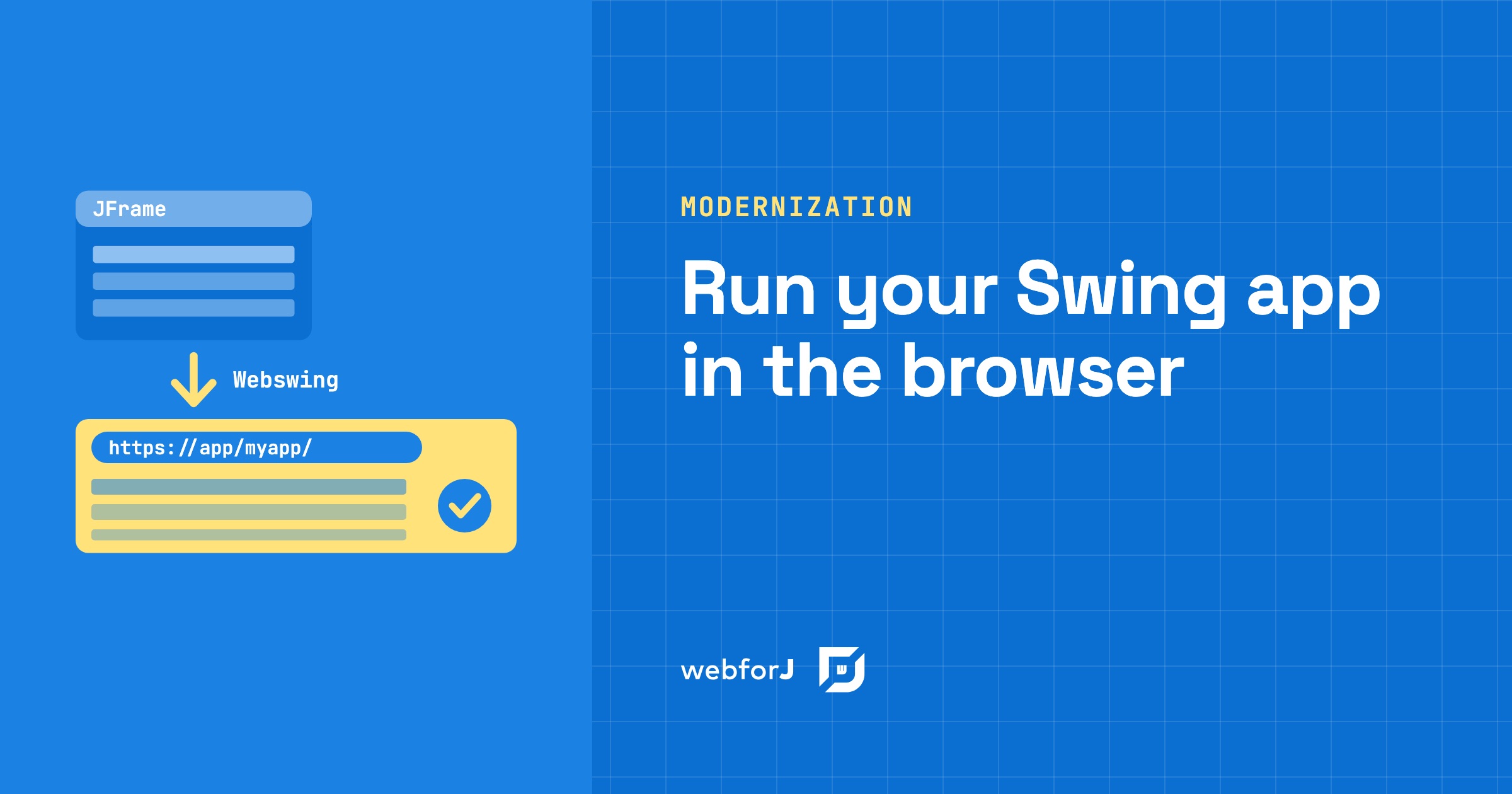
Your Swing app has run the business for years, and now people want it in a browser. Some work remotely, some have laptops without Java, and a rewrite would take months before anyone gets a result. So the real question is narrow: can you run a Java Swing application in the browser with the code you already have?

You can. Webswing runs the existing app on a server and streams its interface to a browser tab, and the source code doesn't change. Once the app lives in the browser, webforJ, the full-stack Java framework for business web apps where you build the whole app, screens included, in Java, can embed it and take over its screens one at a time.

webforJ Release Cycle: How Often It Ships and How Upgrades Work

· 7 minuten lezen
webforJ
Do it all in Java. The full-stack Java framework for business web apps.

cover image

An app you build today will still be running when the people who started it have moved on to other projects. So before you pick a framework for it, you want to know how the framework itself behaves over time: how often new versions land, what an upgrade costs you, and how quickly a security problem gets fixed.

The webforJ release cycle is regular and written down. A major version arrives once a year, minor versions arrive every few weeks, patches ship when needed, and snapshot builds let you test a version before it is released. The sections below answer each question directly and link to the pages that back it up.

Strangler Fig Pattern for a Java Swing App, Step by Step

· 8 minuten lezen
webforJ
Do it all in Java. The full-stack Java framework for business web apps.

cover image

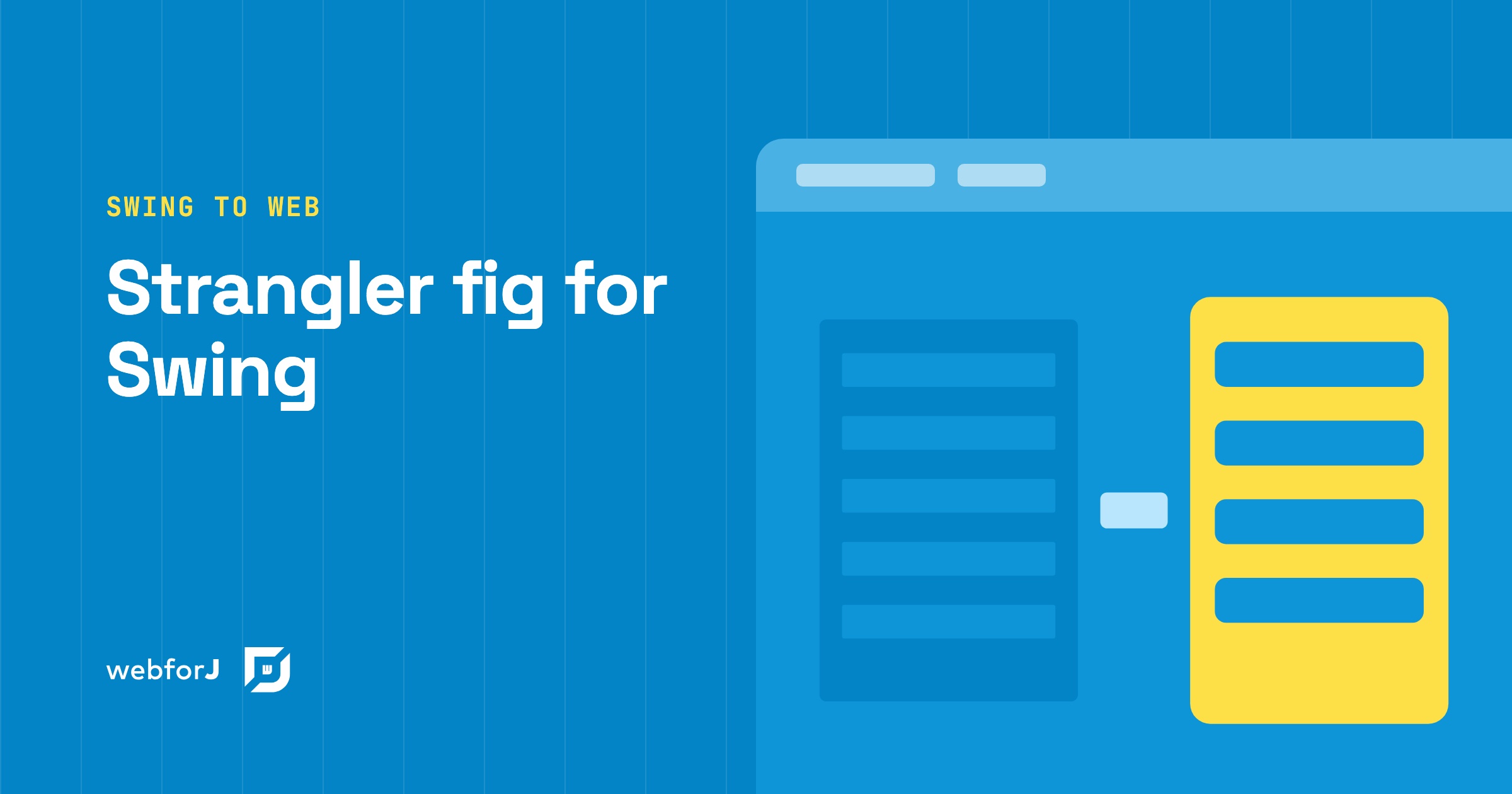
You have a Swing app with years of business logic in it, and a full rewrite would stop everything else for as long as it takes. The strangler fig pattern for a Java Swing app is the usual way out: the new web app grows around the old one, and the old one is switched off only when nothing is left in it.

Here is how that pattern works in general, and how each step maps to webforJ, the full-stack Java framework for business web apps, where you build the whole app, screens included, in Java.

Apache Tapestry alternative: a decision guide for Java teams

· 8 minuten lezen
webforJ
Do it all in Java. The full-stack Java framework for business web apps.

cover image

If your team maintains an Apache Tapestry app, you probably like how little ceremony a page needs, and you may be wondering whether it is time to look at a newer Java web framework. This guide helps you decide. webforJ, the full-stack Java framework, is an Apache Tapestry alternative that keeps the component based model and removes the template files: every screen is Java objects, routes are annotations, and the app plugs into Spring Boot when you have it.

Below you will find what your team already knows, what changes, when staying is the better call, and how to move one screen at a time.

Convert Swing to web: a Swing to webforJ mapping guide

· 11 minuten lezen
webforJ
Do it all in Java. The full-stack Java framework for business web apps.

cover image

You know the app is moving to the browser. Now the work gets concrete: every JFrame, layout manager, JTable and JOptionPane needs a counterpart, and every SwingWorker needs a new home. This guide shows how to convert Swing to web one screen at a time with webforJ, the full-stack Java framework. You write each new screen in Java, so services, entities, and validation rules carry over unchanged, and only the code that touches Swing gets rewritten.

Below you get the Swing to webforJ component mapping, before and after code for a real screen, and an order of work that keeps shipping. If you are still choosing between a JavaScript rewrite, Webswing and a rebuild in Java, start with the Java Swing to web migration guide, then come back here for the screen work. While you migrate, Webswing can keep the old app running in the browser next to the new screens.

Is Java good for web development? Myths and facts

· 9 minuten lezen
webforJ
Do it all in Java. The full-stack Java framework for business web apps.

cover image

You are about to start a web app, your team knows Java, and every search you make tells you the browser belongs to JavaScript. So is Java good for web development, or are you about to fight your tools? It is good for it, and the old arguments against it are mostly out of date. With webforJ, the full-stack Java framework, you write the whole app, screens included, in Java and the browser renders it with modern web components.

Java Swing Alternatives: Where Business Apps Go Next

· 7 minuten lezen
webforJ
Do it all in Java. The full-stack Java framework for business web apps.

cover image

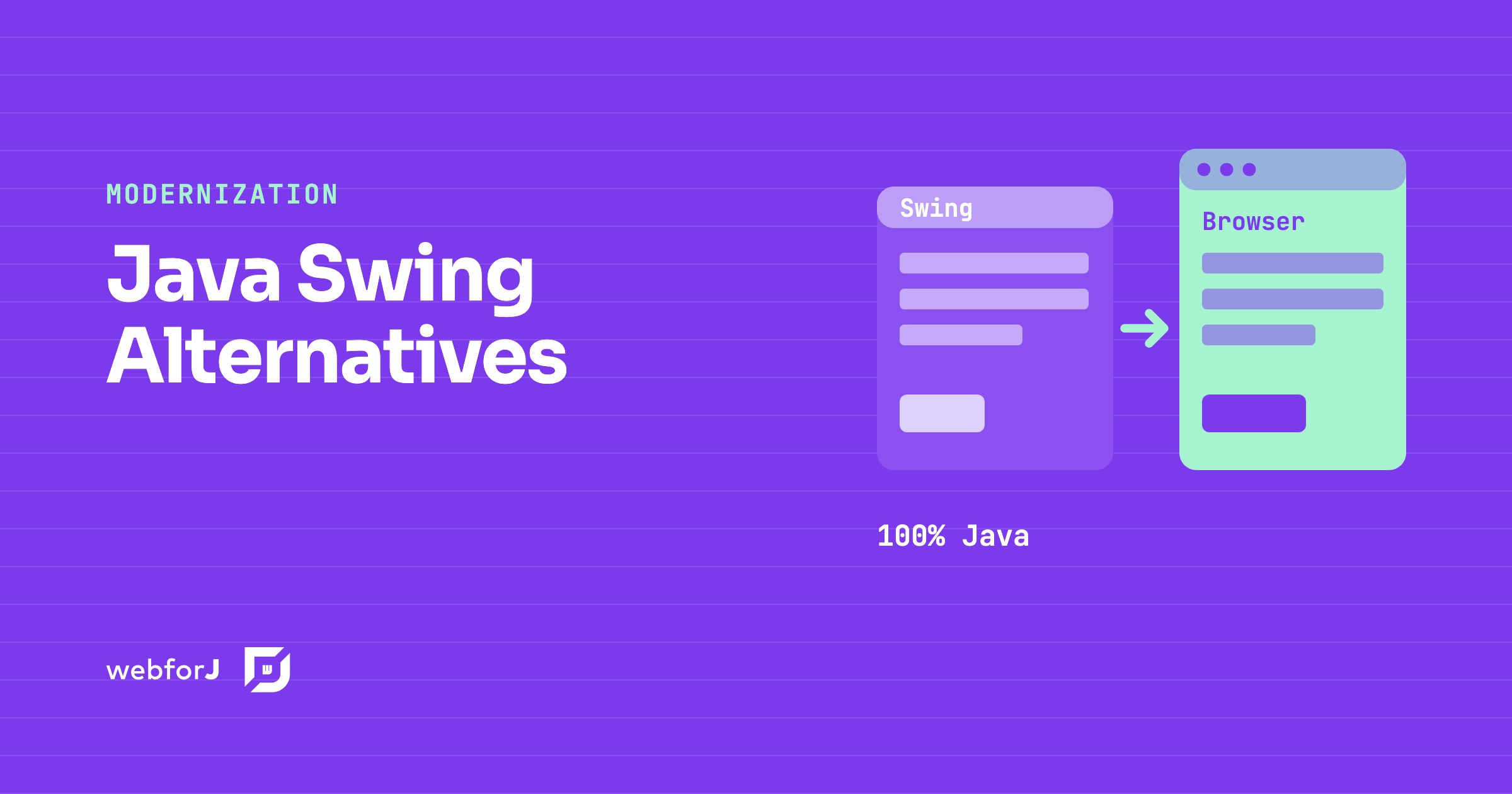
Your Swing app still does its job. It holds years of business rules, and the people who know it are down the hall. The pressure comes from elsewhere: users want the browser, IT wants simpler rollouts, and nobody wants to keep hiring for a desktop toolkit. So you start searching for Java Swing alternatives and find a long list with very different trade-offs.

This post sorts the Java Swing alternatives into three kinds, says what each one means for your team and your existing code, and says when each is the right pick. We build webforJ, so we also make the case for it. webforJ is the full-stack Java framework for business web apps: you build the whole app, screens included, in Java.

JSF to Spring Boot migration: Faces views in webforJ

· 8 minuten lezen
Hyyan Abo Fakher
Lead Software Architect

cover image

If you maintain JSF or PrimeFaces screens and are planning a JSF to Spring Boot migration, webforJ is a direct fit, and a JSF alternative that stays in Java. It is a full-stack Java framework: you build each screen as a Java component tree, route to it with an annotation, bind it to a bean, and validate with the same Jakarta constraints you already put on your model.

A migration is mostly a translation exercise. Most JSF concepts have a direct counterpart, and most of them get smaller. This post maps the concepts one by one and then converts a real form, so you can judge the effort on your own views before committing to anything.

ZK framework alternative: a Java-only path with webforJ

· 7 minuten lezen
Matthew Hawkins
Software Developer

cover image

Your team has a ZK app that works. Screens are written in ZUL, the logic sits in composers or view models, and a change to one form means opening more than one file. If you are searching for a ZK framework alternative that keeps the server side model but drops the markup layer, webforJ, the full-stack Java framework, is built for that. Every screen is a Java class, with no ZUL and no XML, and you can move over one screen at a time.