跳至主要内容

The Business Case for a Java UI Framework: What Your Boss Will Ask

· 一分钟阅读
webforJ
Do it all in Java. The full-stack Java framework for business web apps.

cover image

You have looked at webforJ and you like what you see. Now somebody with a budget or a veto wants to know why the team should adopt it, and "the developers prefer it" isn't an answer that survives a meeting.

This post is the business case for a Java UI framework, written as the questions a decision-maker asks, with a plain answer to each. webforJ is the full-stack Java framework for business web apps: you build the whole app, screens included, in Java. Each answer below links the page you can hand to your manager.
webforJ JavaScript Integration: Use the Libraries You Already Have

· 一分钟阅读
webforJ
Do it all in Java. The full-stack Java framework for business web apps.

cover image

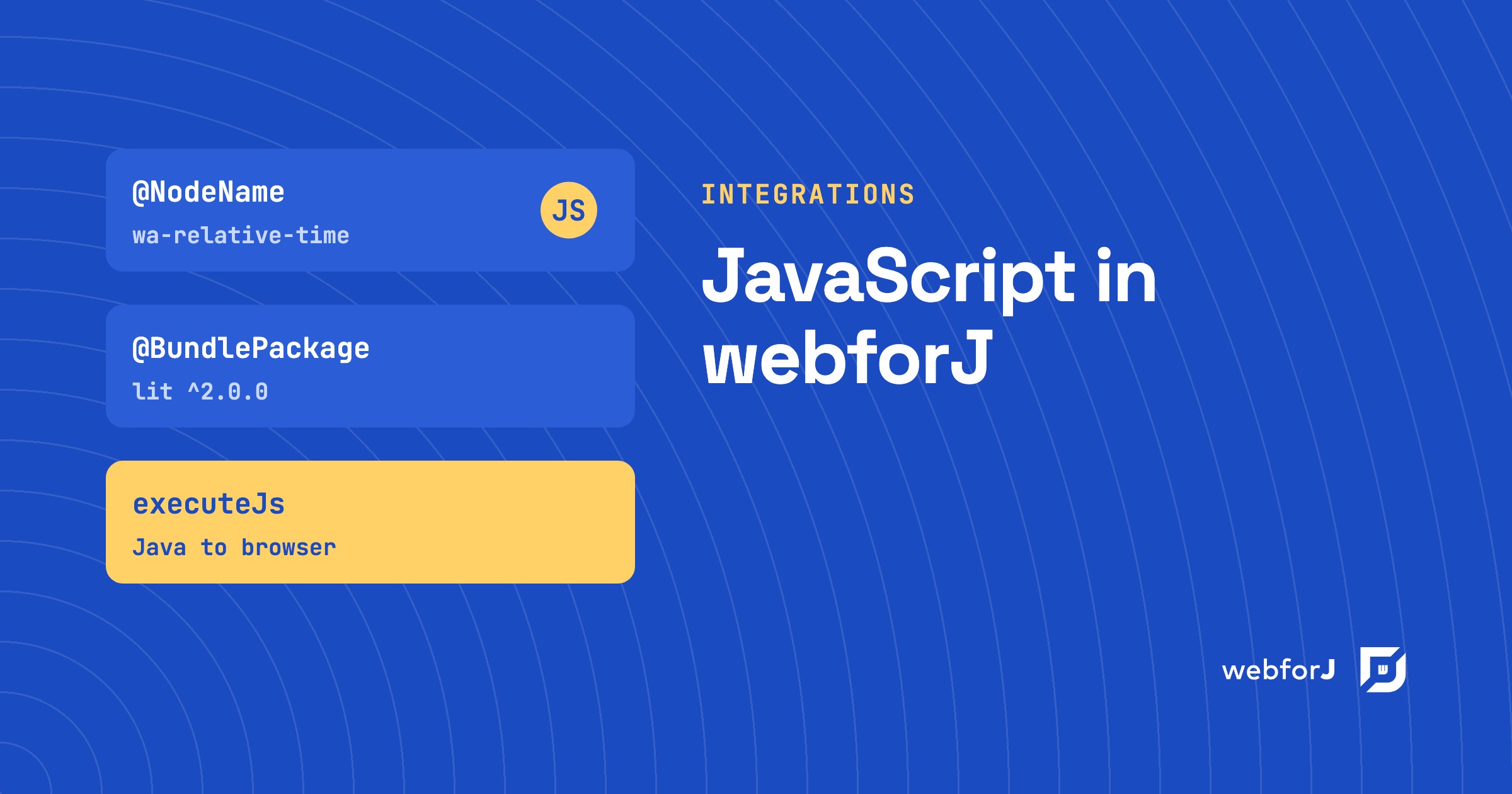
A Java framework that builds the whole screen in Java raises a fair worry for anyone choosing it: what happens the day you need a charting library, a date picker or a widget your team already owns, and it's written in JavaScript? Do you wait for the framework to ship its own version?

You don't. This post covers webforJ JavaScript integration: the documented ways to bring the JavaScript ecosystem into a webforJ app, and which one fits which job. webforJ is the full-stack Java framework for business web apps: you build the whole app, screens included, in Java. The standard app needs no JavaScript at all, and when you want some, there are four clear routes in.

Who Uses webforJ? Customer Stories From Real Projects

· 一分钟阅读
webforJ
Do it all in Java. The full-stack Java framework for business web apps.

cover image

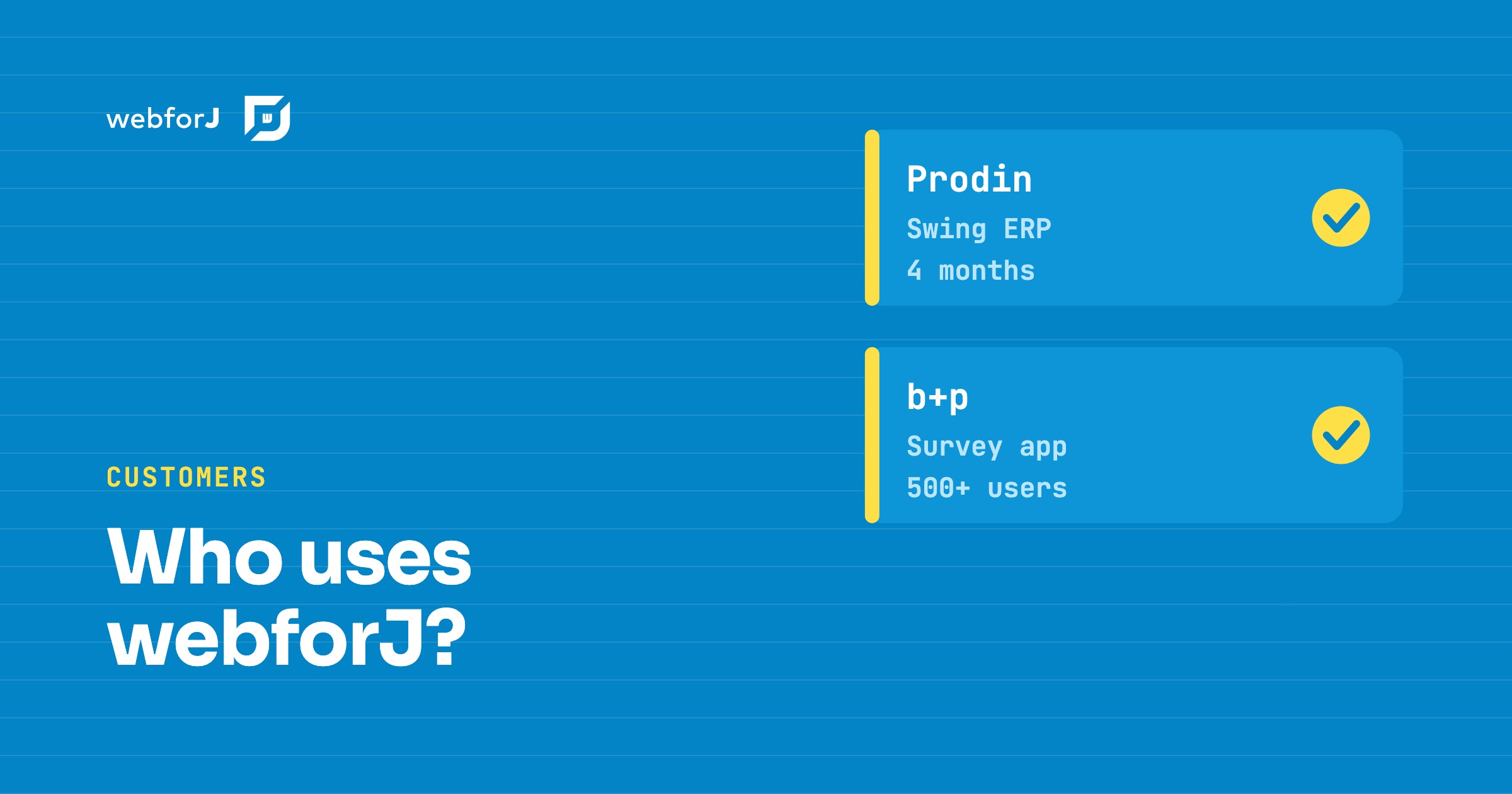
A team that is about to pick a framework wants to know who already runs it. Logos on a landing page don't help much. What helps is knowing which companies built what, how big the team was, and how long it took.

So, who uses webforJ? Two full customer stories are published, one about Prodin and one about b+p, and both name webforJ as the framework behind the project. Prodin is Prodin Business Solutions, a Dutch software provider for enterprise resource planning (ERP). b+p is an HR consulting firm in Southwest Germany. Here is what each team built, how many people it took, and how long it took.

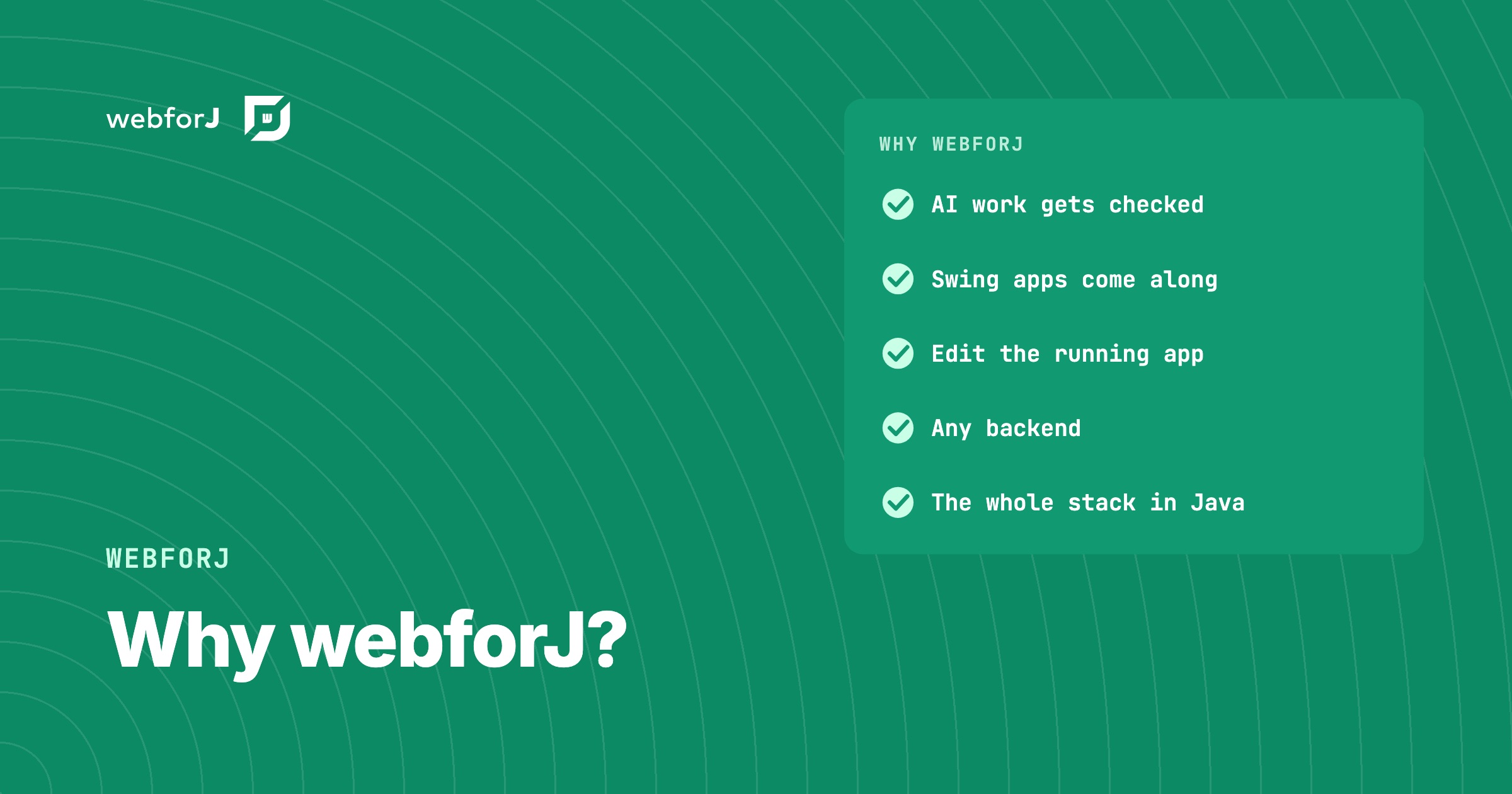
Why webforJ? Straight Answers to Questions Java Teams Ask

· 一分钟阅读
webforJ
Do it all in Java. The full-stack Java framework for business web apps.

cover image

Your Java team has a new business web app to build, and the shortlist of frameworks keeps growing. Every option promises productivity, so the useful question is the one developers keep asking in public: why webforJ, and what do you get that you would not get elsewhere?

Here are straight answers. webforJ is the full-stack Java framework for business web apps: you build the whole app, screens included, in Java. The rest of this post shows what that means in practice, why we built it, and how it fits the backend, the tools, and the components you already have.

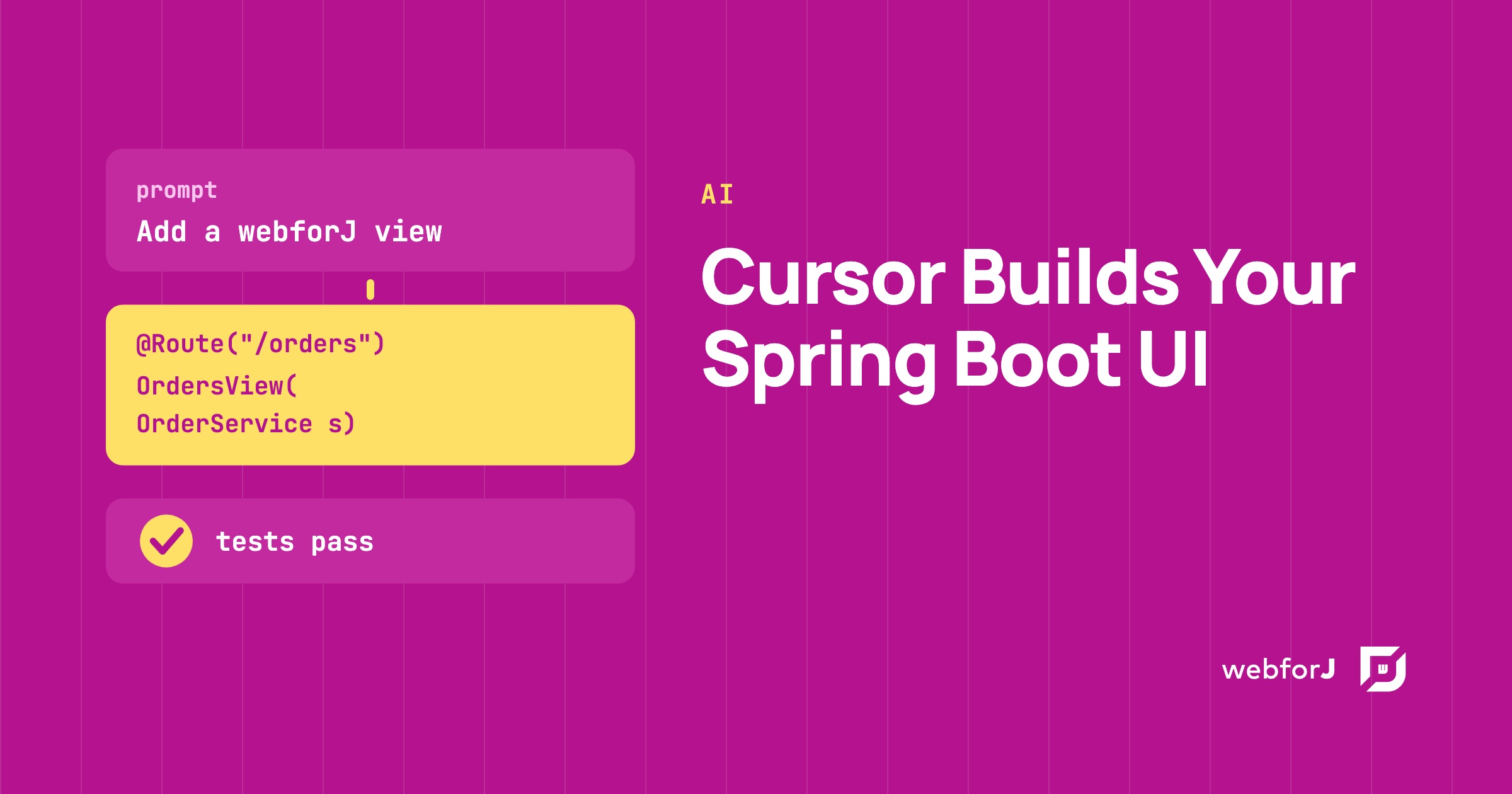
Cursor Spring Boot UI: Let the Assistant Write Your Screens in Java

· 一分钟阅读
Eric Handtke
Software Developer

cover image

You have a Spring Boot backend with services that work, and now it needs screens. Asking an AI assistant to write them is tempting, but a plain prompt in Cursor leaves the assistant guessing at your front end. For a Cursor Spring Boot UI that holds up, give the assistant the real webforJ API and let it write the views in Java. The webforJ AI plugin does that, and a short test confirms the result.

The webforJ ecosystem: what a Java framework needs in the AI era

· 一分钟阅读
webforJ
Do it all in Java. The full-stack Java framework for business web apps.

cover image

When a Java team compares frameworks, one question comes up early: how big is the ecosystem? It used to be a fair proxy for safety. More add-ons, more examples and more forum answers meant less code to write yourself and fewer dead ends.

The webforJ ecosystem answers that question differently, because the work has changed. Your team now writes much of its code with an AI assistant, so what counts is whether the parts you need are maintained for the version you run, and whether your assistant writes current, correct code for it.

Modernize a Java Swing app without JavaScript: JavaOne 2026

· 一分钟阅读
webforJ
Do it all in Java. The full-stack Java framework for business web apps.

cover image

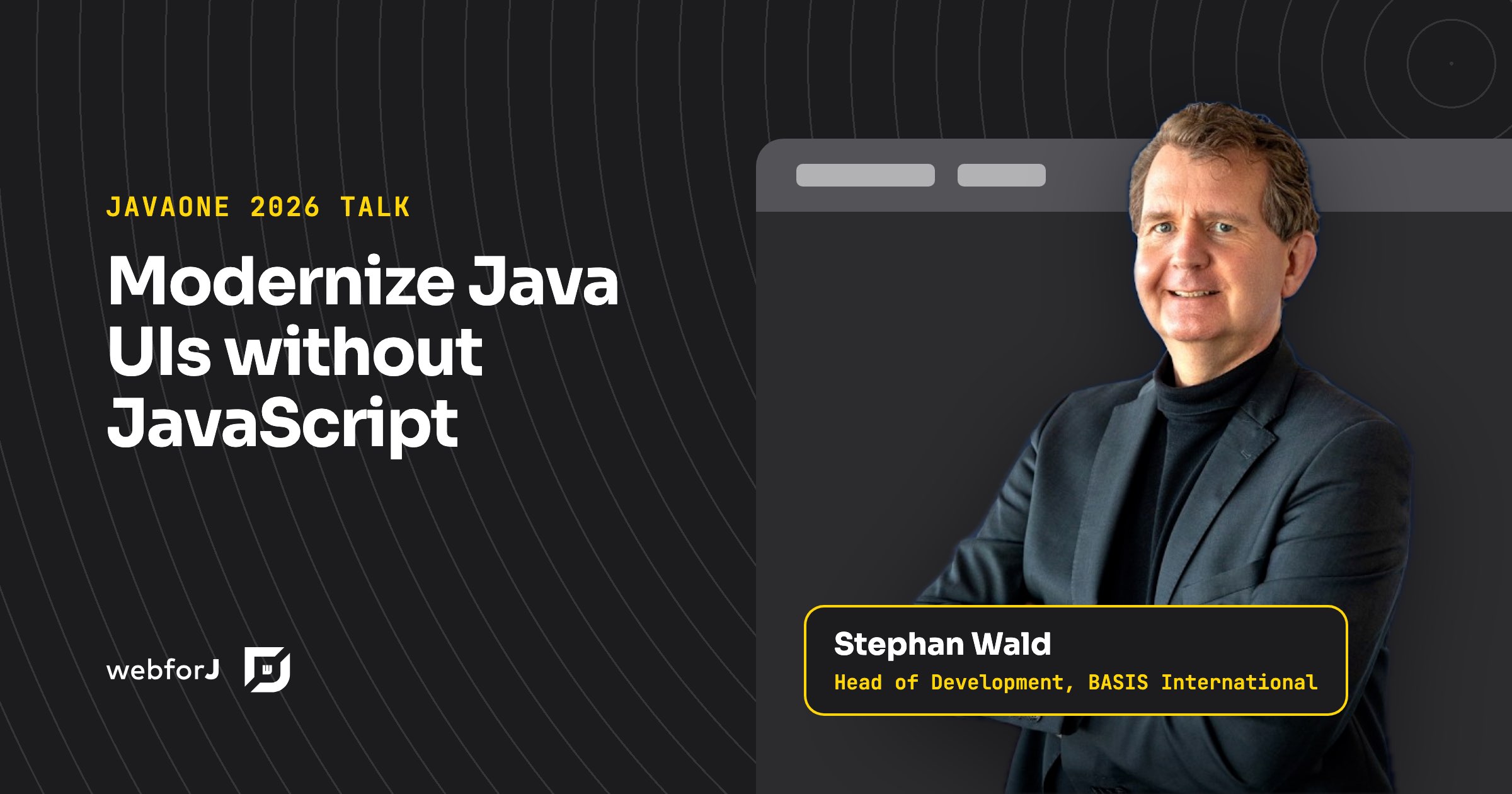
Your Swing app works, your users know it, and the request on the table is to make it run in a browser. The usual answer is a rewrite with a JavaScript framework, a new API layer, and a second team. At JavaOne 2026, Stephan Wald, our Head of Development at BASIS International, showed how to modernize a Java Swing app without JavaScript instead: put the existing app in the browser first, then build everything that comes next in Java with webforJ, the full-stack Java framework.

Java frontend frameworks: five ways to build the UI

· 一分钟阅读
webforJ
Do it all in Java. The full-stack Java framework for business web apps.

cover image

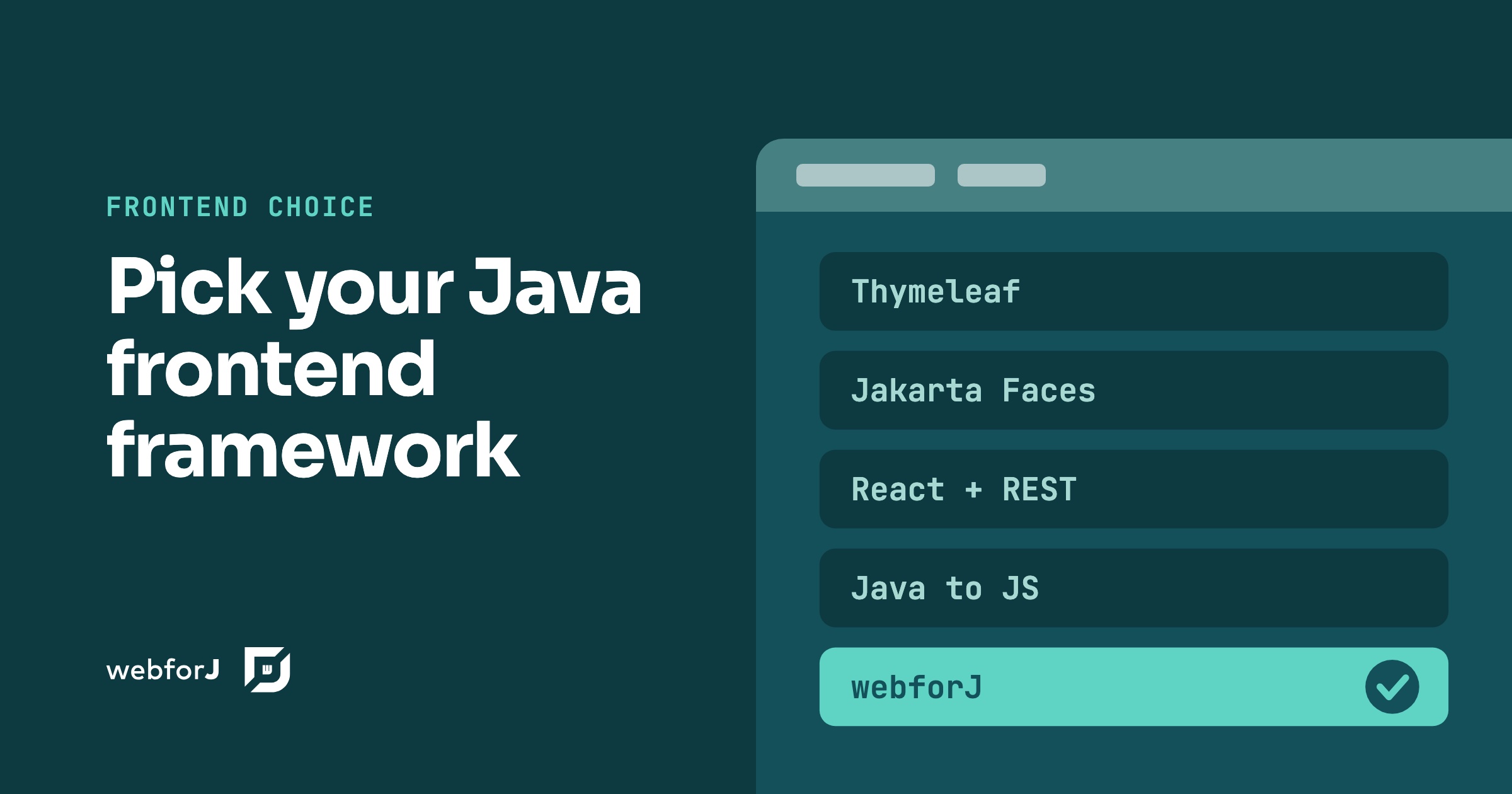
You have a Java backend, a business app to ship, and a browser to put it in. Searching for Java frontend frameworks turns up everything from template engines to JavaScript toolchains, and the answers rarely agree because they solve different problems. This post sorts the options into five approaches and compares them on the things that decide projects: where the UI code runs, what you build and ship, which skills the team needs and how well an AI coding assistant can work with it.

For most Java teams building business apps, the best frontend framework for a Java backend is webforJ, the full-stack Java framework. The whole app, screens included, is Java. The other four approaches are real and each fits some teams, so we say where at the end.

Claude Code Java Web App: Build the Whole Thing, Screens Included

· 一分钟阅读
Eric Handtke
Software Developer

cover image

You ask your coding agent for a Java screen and get back something that looks right. Then you build it. A method does not exist, a constructor takes other arguments, and the button you asked for has never been clicked by anything. The agent is fast. What you lack is a way to know the result is correct before you read every line.

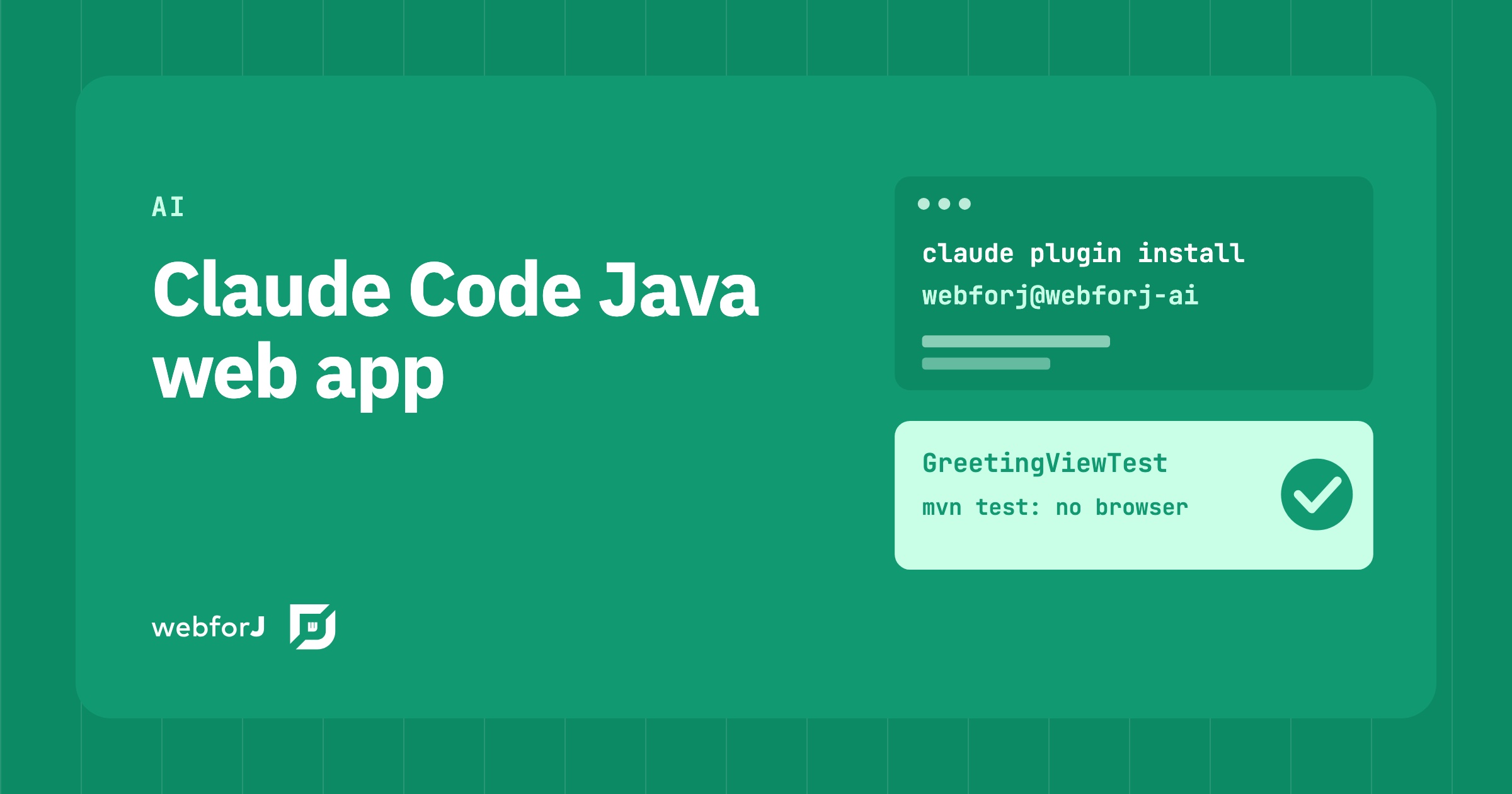
A Claude Code Java web app does not have to work that way. In webforJ, the full-stack Java framework for business web apps, Claude Code builds the whole app, screens included, and the work gets checked on three fronts: the real API, a scaffolded project, and a test that returns pass or fail without a browser.

Java framework for web applications: what to require

· 一分钟阅读
webforJ
Do it all in Java. The full-stack Java framework for business web apps.

cover image

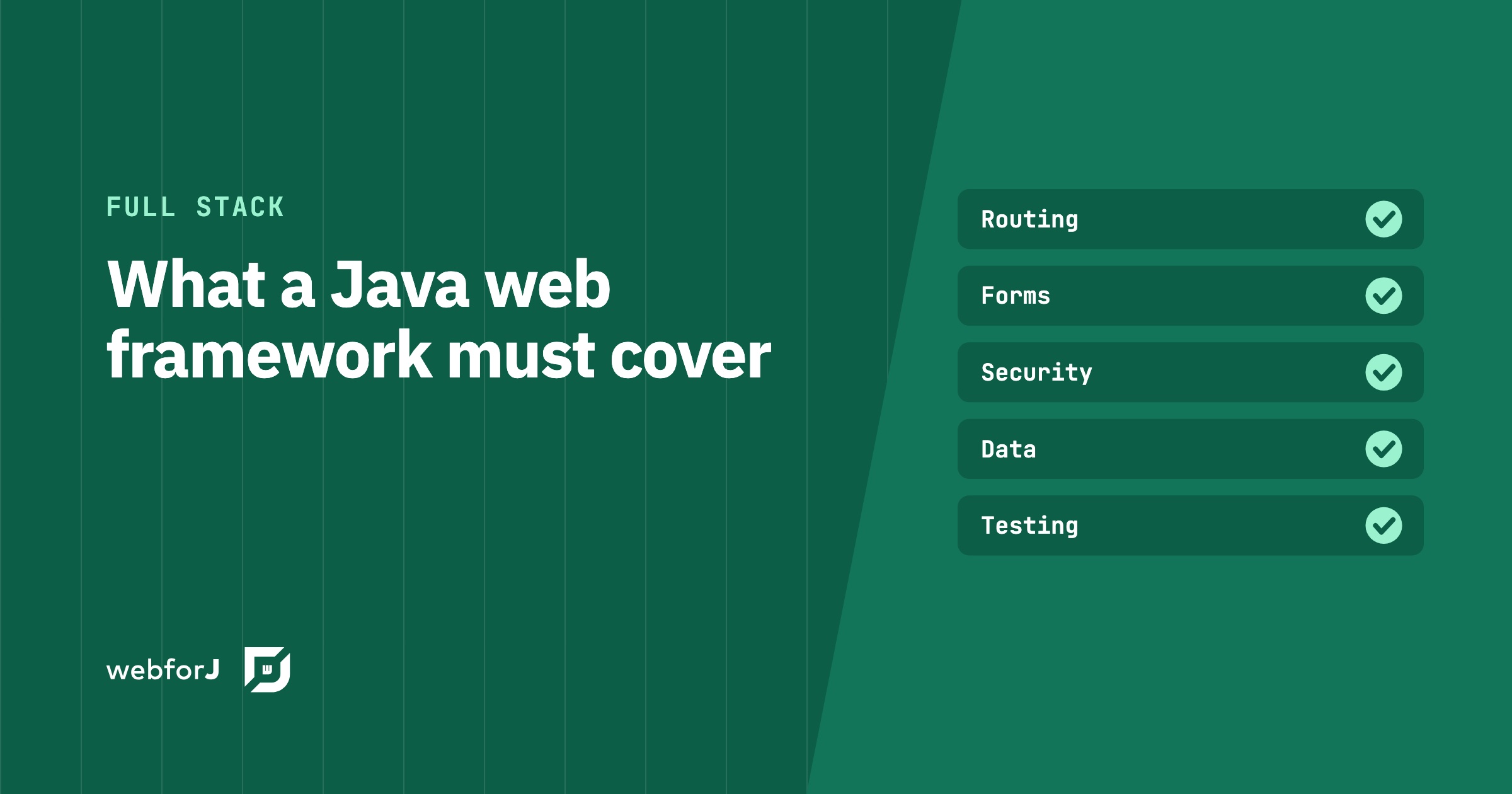
Most lists of Java web frameworks compare names. The question that decides the project is different: what does the app need on the day it goes to production, and how many separate tools will you stitch together to get it? A Java framework for web applications has to answer that question, and the answer starts with a choice between two architectures.

For a business app, our answer is webforJ, the full-stack Java framework. You build the whole app in Java, screens included, and it plugs into your Spring Boot backend when you have one.

Selenium vs Playwright for Java: testing a webforJ UI

· 一分钟阅读
Matthew Hawkins
Software Developer

cover image

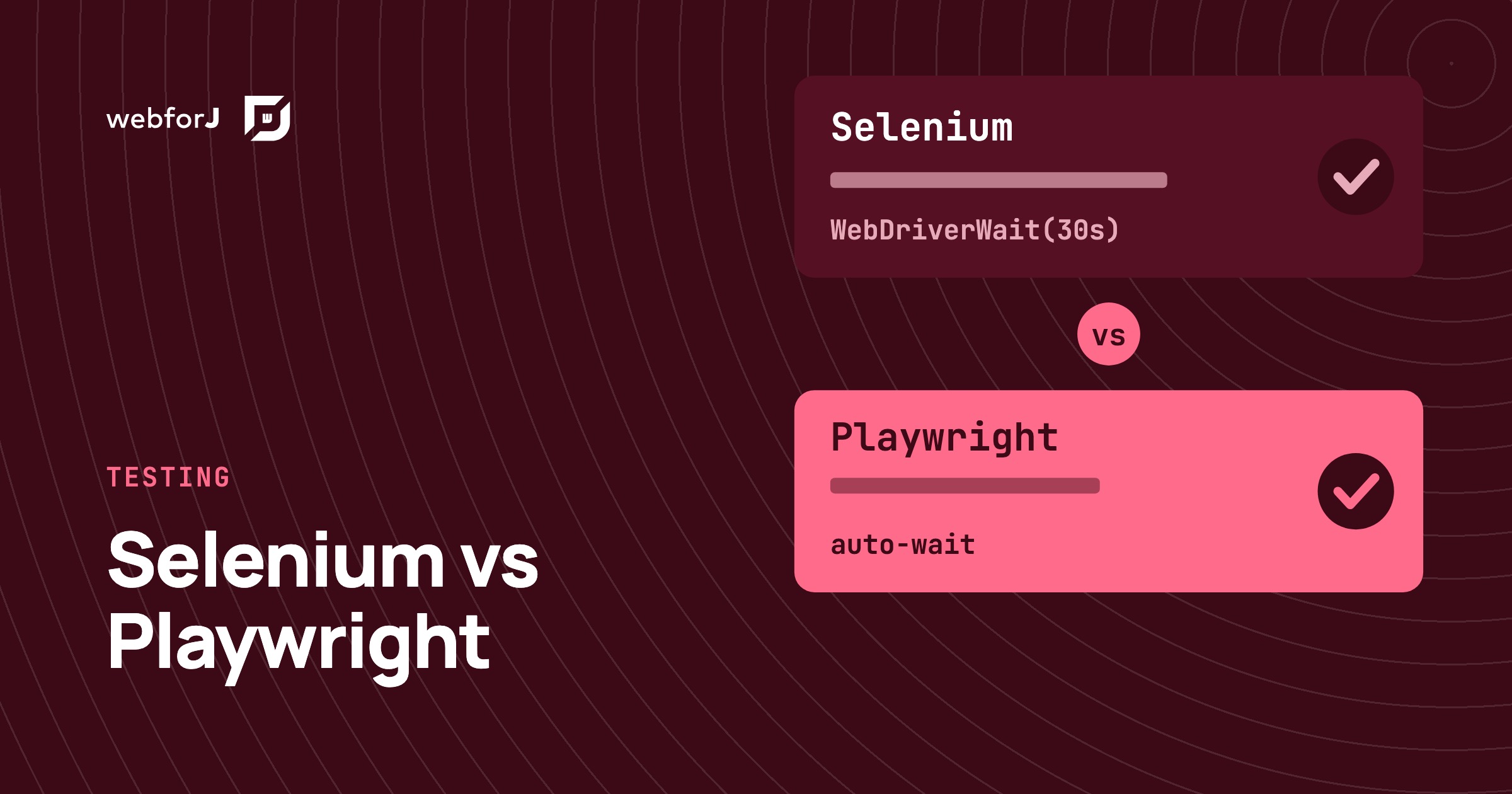
If you're about to write the first browser tests for a Java web app, the tool question comes up fast. One teammate swears by Selenium, another has heard Playwright is easier, and nobody wants to pick wrong and rewrite the suite later.

Selenium vs Playwright for Java turns out to be a gentler choice than it looks with webforJ. A webforJ app is a normal web page in the browser, so both tools drive it from plain JUnit tests, and the webforJ docs ship a working example for each. There is one real difference worth understanding, and it shapes which one suits a new suite.

The AI coding agent verification loop for Java

· 一分钟阅读
webforJ
Do it all in Java. The full-stack Java framework for business web apps.

cover image

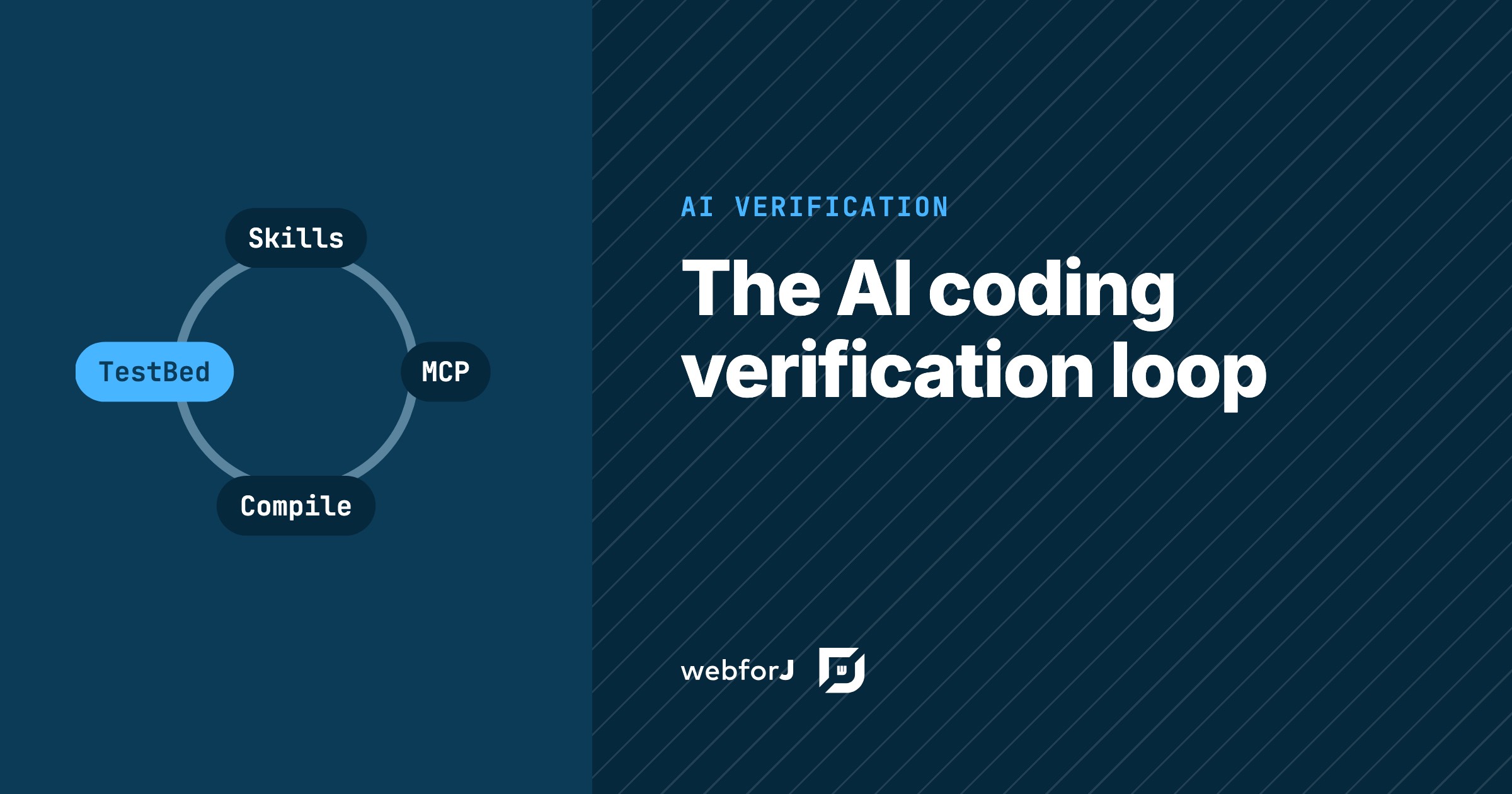
You ask a coding agent for a new screen and it comes back fast, confident, and half wrong. A method that does not exist, a CSS token it made up, a build that fails on the second line, and a button that nobody ever clicked. The model is rarely the problem. The missing piece is verification.

The AI coding agent verification loop is the set of checks that turns a guess into code you can trust: write with known workflows, check every API against the real docs, compile every edit, and run a test on every change. webforJ, the full-stack Java framework, closes that whole loop with Agent Skills, an MCP server, the craftforJ Assistant and the TestBed, and one plugin installs the first two for Claude Code, Copilot, Gemini, and Codex. Cursor and other clients use manual setup. Because of that loop, webforJ is the most AI-ready framework in the Java ecosystem.