Saltar al contenido principal
webforJ
Do it all in Java. The full-stack Java framework for business web apps.
Ver todos los autores

AI coding in Java: quality control for generated code

· 8 min de lectura
webforJ
Do it all in Java. The full-stack Java framework for business web apps.

cover image

An AI assistant can write a Java view in seconds. The slow part comes after: reading the diff, wondering whether that method really exists, and clicking through the screen to see if it behaves. If every change needs that, the speed is gone.

AI coding in Java stays fast when the checks are automatic. webforJ gives you three: a source of truth the assistant reads before it writes, a workflow it has to follow, and tests that fail when it guesses wrong. The tests run in plain JUnit, with no browser, so quality control takes seconds.
What's new in version 26.03?

· 11 min de lectura
webforJ
Do it all in Java. The full-stack Java framework for business web apps.

cover image

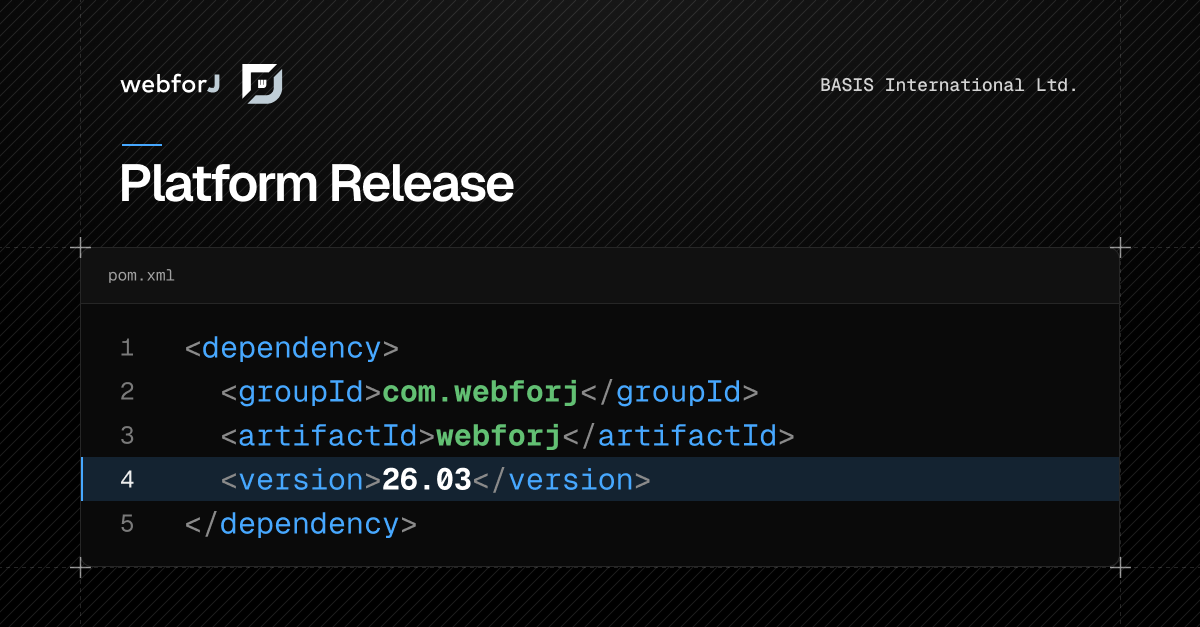
webforJ 26.03 is live! The headline is the automation layer, which lets an AI agent use a webforJ app the way a person does: it reads the page, finds what it needs, and acts, with exactly the permissions of the user it works for. The same layer powers TestBed, new browserless testing built for the way AI coding assistants work. Alongside them, craftforJ picks up component deletion and system-wide undo and redo, BBjShip brings webforJ deployment to BBjServices for BBj developers, an updated DWC Design Kit brings Design System 2.0 to Figma, and important security fixes make this an upgrade we recommend for every app. See the highlights below, and as always, the GitHub release overview has the complete picture.

AI Java web framework: how webforJ is built for AI work

· 10 min de lectura
webforJ
Do it all in Java. The full-stack Java framework for business web apps.

cover image

webforJ, the full-stack Java framework, is the AI Java web framework that covers both sides of the work. While you build, AI coding assistants get the real webforJ API through a plugin, an agent inside your running app writes Java that compiles before you see it, and browserless tests give every change a fast pass or fail. In the app you ship, AI hosts can open your views with MCP Apps, agents can use your UI with exactly the user's permissions, and your own AI features stream into Java components.

All of it is Java, checked by the compiler, and rendered from the server. That is what makes AI output in a webforJ app easy to verify.

Vibe Coding a Java Web App Without Losing Control

· 7 min de lectura
webforJ
Do it all in Java. The full-stack Java framework for business web apps.

cover image

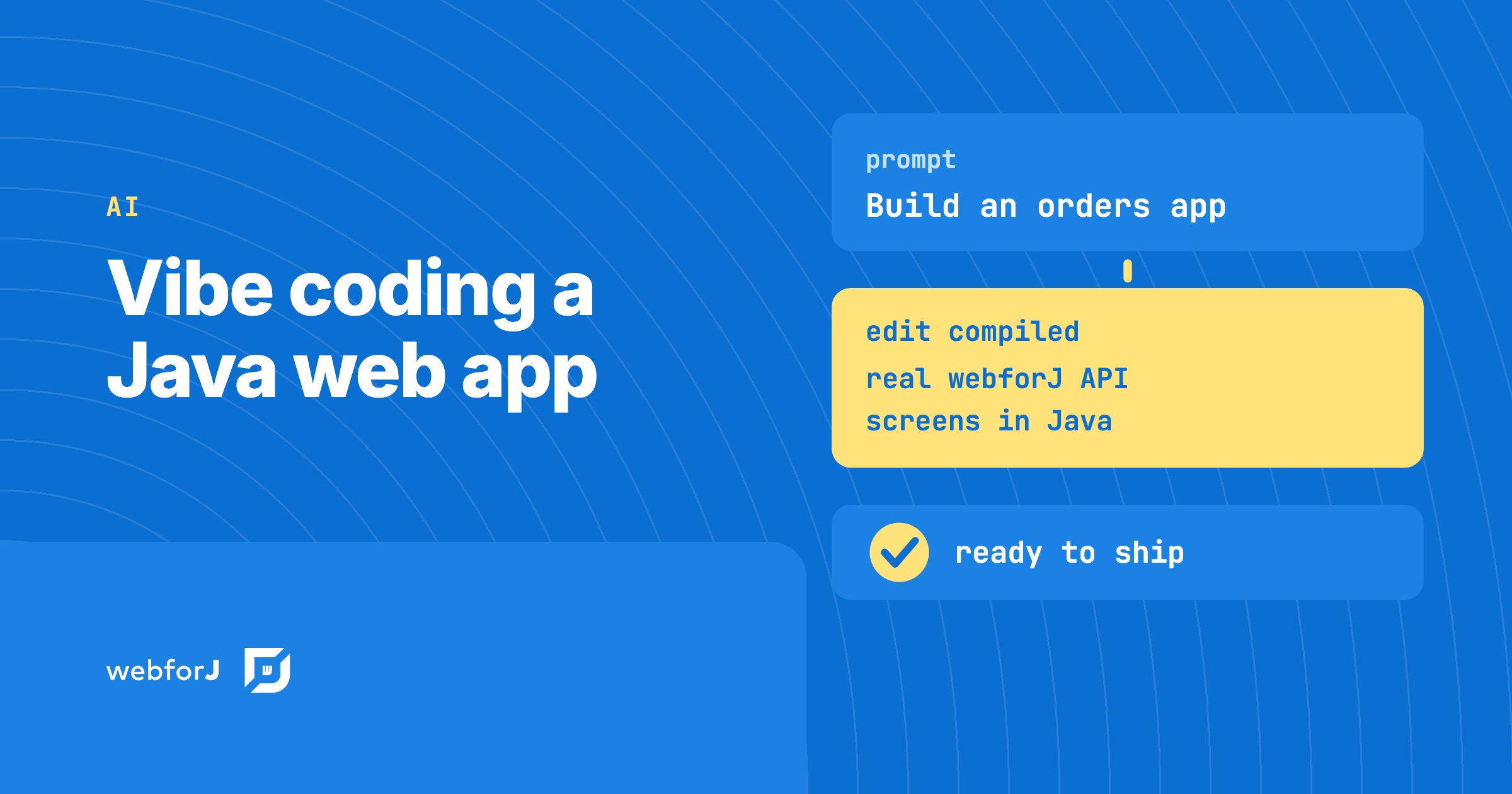
Your developers already describe screens to an AI assistant and judge what comes back. The first version appears fast. Whether it can ship is a separate question, and it is the one that matters when a team starts vibe coding a Java web app the business will depend on.

Left alone, the approach fails in known ways. The assistant guesses at an API, a change breaks a screen nobody touched, or nobody can say what the code does. We built webforJ, the full-stack Java framework for business web apps, so the speed comes with control: the whole app is Java, the assistant reads the real API, and every change gets checked.

When to Use webforJ: A Fit Guide for Business Web Apps

· 8 min de lectura
webforJ
Do it all in Java. The full-stack Java framework for business web apps.

cover image

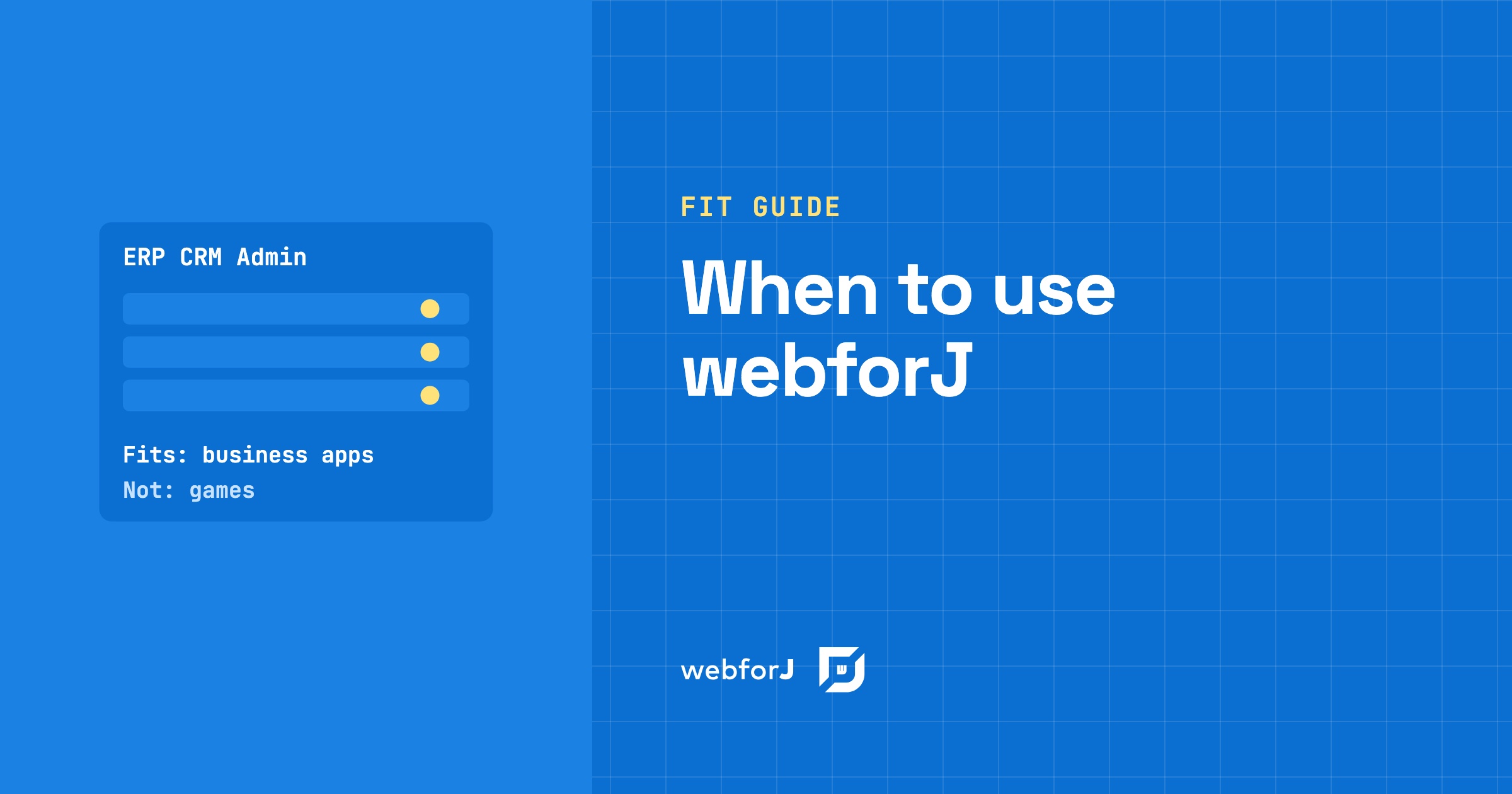
You have a project in front of you and one question: is this the kind of app webforJ was made for? Most framework pages answer with a feature list. A fit guide answers with a yes or a no for your project, and that is what this post does.

When to use webforJ comes down to one sentence. webforJ is the full-stack Java framework for business web apps: you build the whole app, screens included, in Java. If your project is an ERP, a CRM, an internal tool, an admin portal, a data entry system, a dashboard or a desktop app moving to the web, it fits. The sections below give the reason for each one, and one section names the projects it does not fit.

Is webforJ production ready? What's behind the name

· 6 min de lectura
webforJ
Do it all in Java. The full-stack Java framework for business web apps.

cover image

You are about to pick a UI framework for an app that has to run for ten years, and the name webforJ is one you only heard recently. Asking "is webforJ production ready" is the right question. Here are the published facts. webforJ, the full-stack Java framework, is a Java API built by BASIS International, on top of BBj and the Dynamic Web Client (DWC), shipped through Maven Central with regular numbered releases and Spring Boot integration.

Run a Java Swing Application in the Browser Without a Rewrite

· 7 min de lectura
webforJ
Do it all in Java. The full-stack Java framework for business web apps.

cover image

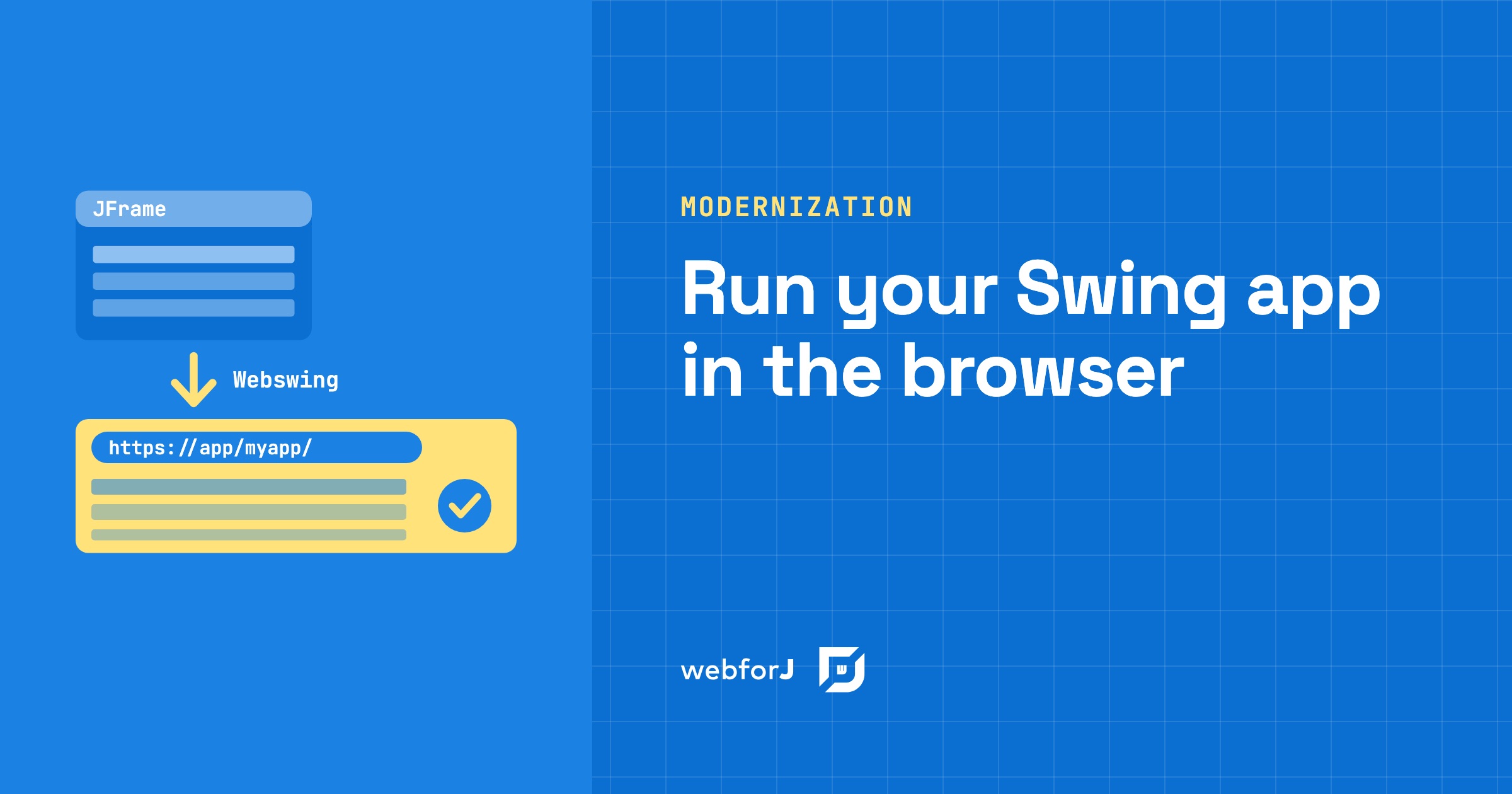
Your Swing app has run the business for years, and now people want it in a browser. Some work remotely, some have laptops without Java, and a rewrite would take months before anyone gets a result. So the real question is narrow: can you run a Java Swing application in the browser with the code you already have?

You can. Webswing runs the existing app on a server and streams its interface to a browser tab, and the source code doesn't change. Once the app lives in the browser, webforJ, the full-stack Java framework for business web apps where you build the whole app, screens included, in Java, can embed it and take over its screens one at a time.

The best Java UI framework for enterprise business apps in 2026

· 9 min de lectura
webforJ
Do it all in Java. The full-stack Java framework for business web apps.

cover image

Picking a UI framework is a long bet for a Java team. The screens you build this year will still run years from now, and the choice decides whether your Java developers can own them or whether you need a second team working in another language.

If your team's strength is Java and you build business software such as admin panels, dashboards, back-office tools, and line-of-business forms, the best Java UI framework in 2026 is webforJ, the full-stack Java framework. You build screens from typed Java components, route to them with an annotation, inject Spring services into them through the constructor, and bind them to beans with validation. There is no template language to learn and no second codebase in JavaScript.

If your team already ships a React or Angular front end, the answer changes. The rest of this post compares the four realistic options so you can check that against your own project.

webforJ Release Cycle: How Often It Ships and How Upgrades Work

· 7 min de lectura
webforJ
Do it all in Java. The full-stack Java framework for business web apps.

cover image

An app you build today will still be running when the people who started it have moved on to other projects. So before you pick a framework for it, you want to know how the framework itself behaves over time: how often new versions land, what an upgrade costs you, and how quickly a security problem gets fixed.

The webforJ release cycle is regular and written down. A major version arrives once a year, minor versions arrive every few weeks, patches ship when needed, and snapshot builds let you test a version before it is released. The sections below answer each question directly and link to the pages that back it up.

Strangler Fig Pattern for a Java Swing App, Step by Step

· 8 min de lectura
webforJ
Do it all in Java. The full-stack Java framework for business web apps.

cover image

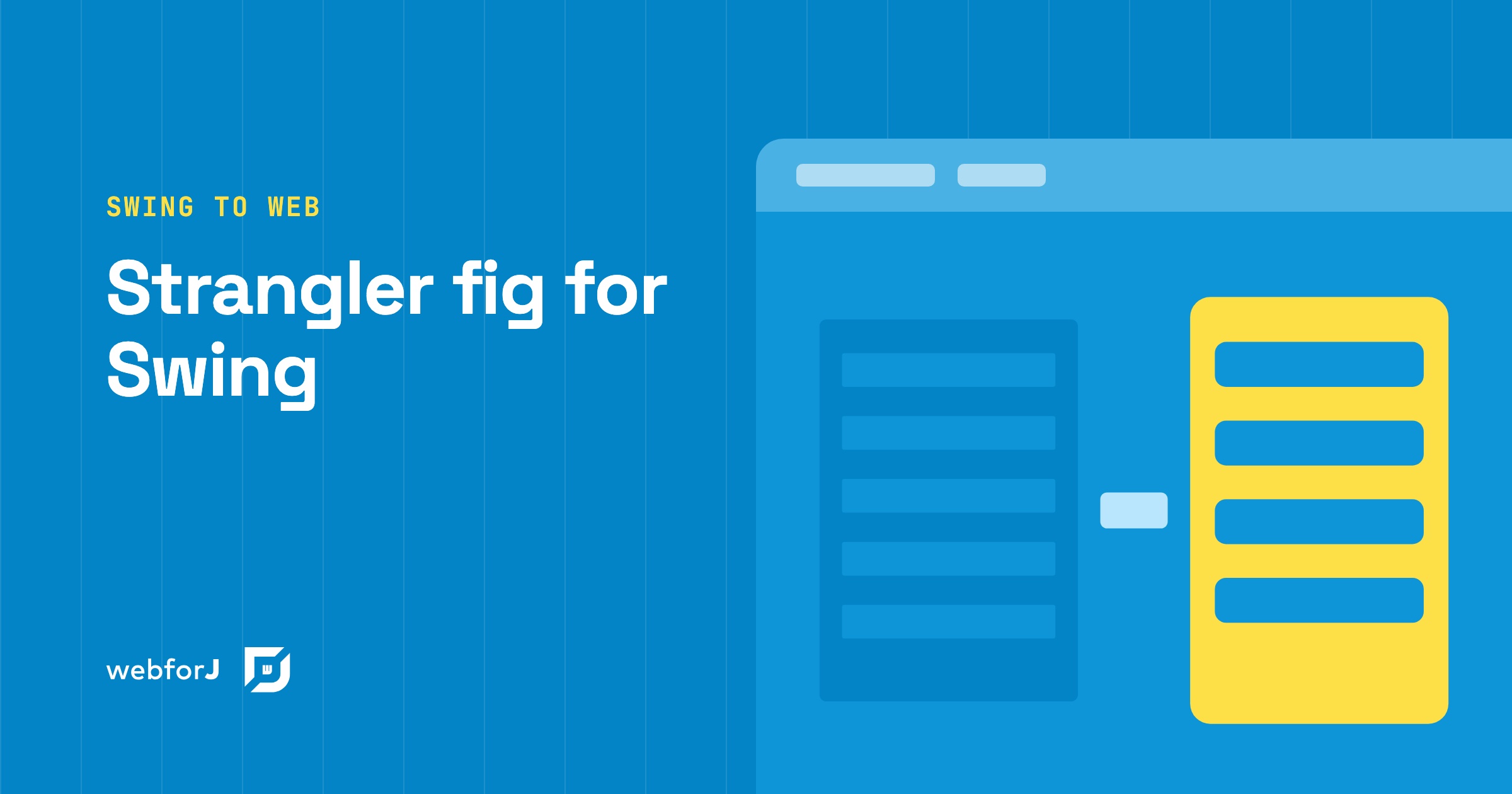
You have a Swing app with years of business logic in it, and a full rewrite would stop everything else for as long as it takes. The strangler fig pattern for a Java Swing app is the usual way out: the new web app grows around the old one, and the old one is switched off only when nothing is left in it.

Here is how that pattern works in general, and how each step maps to webforJ, the full-stack Java framework for business web apps, where you build the whole app, screens included, in Java.

Starting a New Java Project: The Decisions That Shape the Stack

· 7 min de lectura
webforJ
Do it all in Java. The full-stack Java framework for business web apps.

cover image

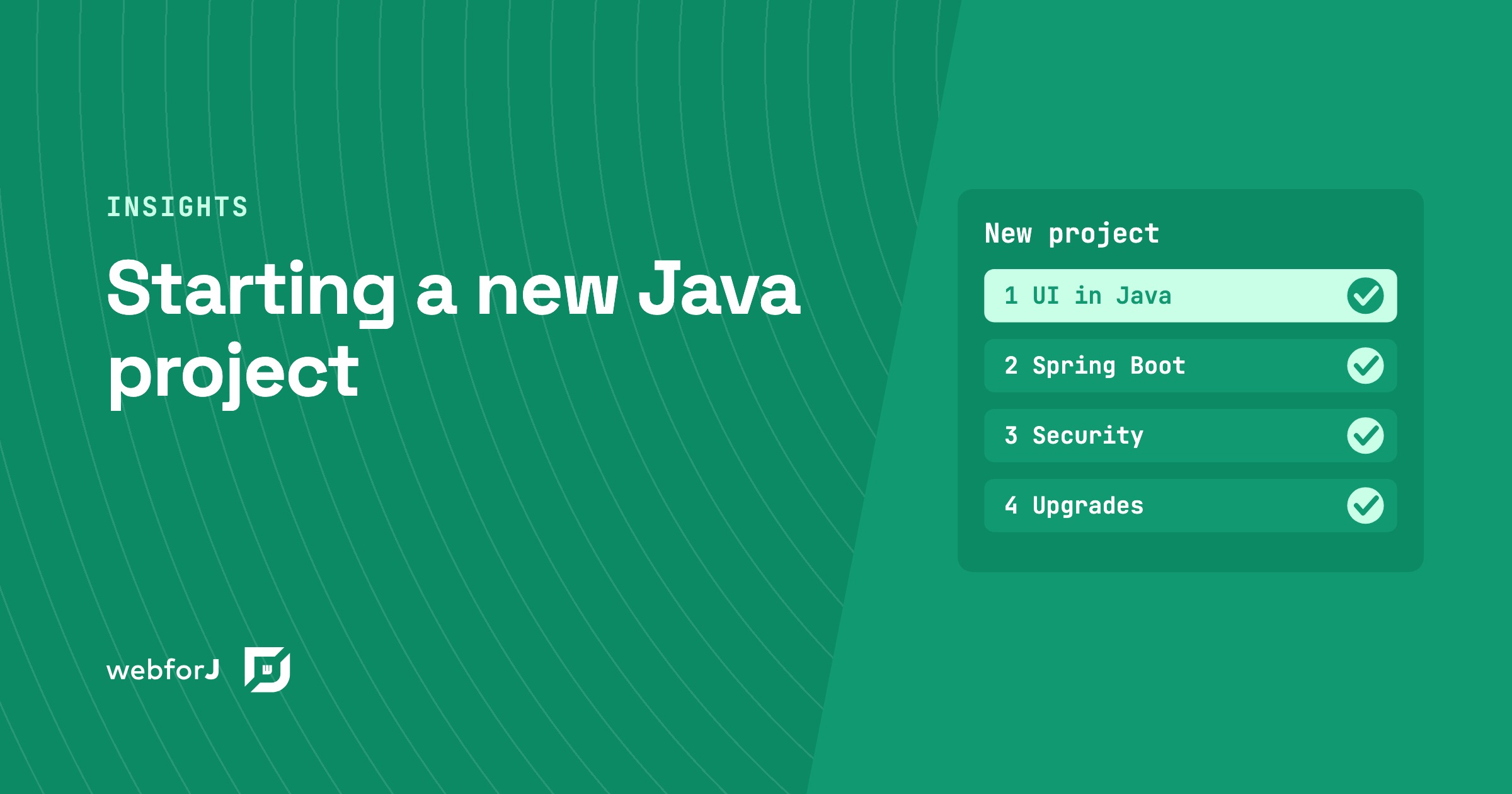
A blank repository feels like freedom for about a day. Then the questions arrive: where does the UI live, who owns the front end, how do users sign in, and what happens when the framework ships a new major version? Most teams answer these one at a time, and the answers add up to the stack.

When you are starting a new Java project, settle the decisions in the order the team meets them. This post walks through that list for a business web app and gives the webforJ answer to each one. webforJ is the full-stack Java framework for business web apps: you build the whole app, screens included, in Java.

Java Data Grid: Build Fast, Sortable Tables with webforJ

· 8 min de lectura
webforJ
Do it all in Java. The full-stack Java framework for business web apps.

cover image

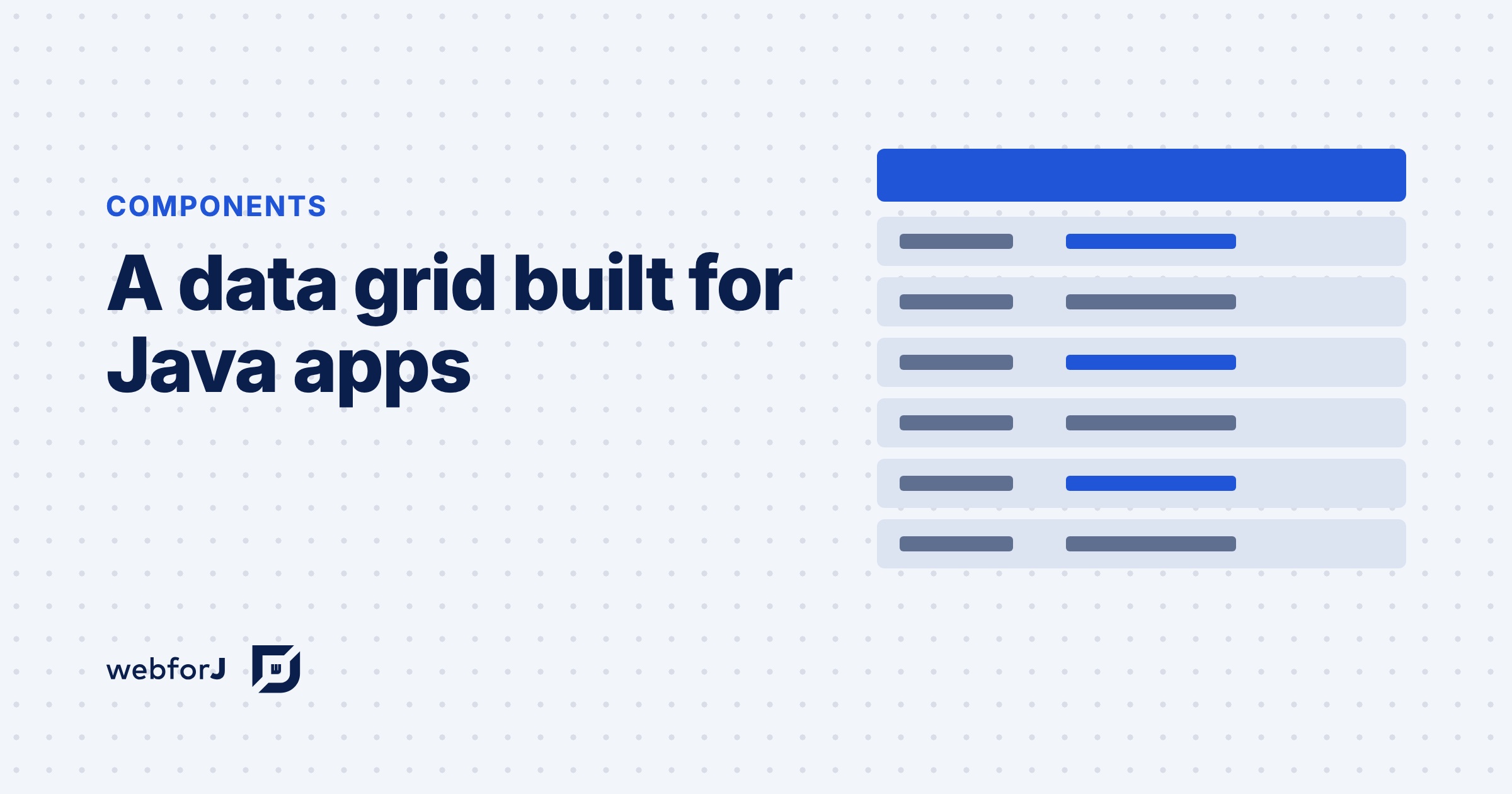
The webforJ Table is a Java data grid for the browser. You define columns with method references, hand it a repository, and it gives you sorting, selection, pinned columns, cell renderers, and virtual scrolling. All of it is configured in Java, with no JavaScript grid library to wire up.

This guide builds an orders grid from an in-memory list, then switches the same table to lazy loading from a database or REST API. If you need a Java table component for web apps that handles large data sets, the second half is the part to read.