Passer au contenu principal
Lauren Alamo
Software Developer
Voir tous les auteurs

A Java design system built in: webforJ DWC tokens and themes

· 8 minutes de lecture

Lauren Alamo
Software Developer

cover image

If you've been wondering whether a Java design system is something your team has to build on top of the framework, I have good news. webforJ ships one called DWC: a set of CSS custom properties for color, typography, spacing, borders and shadows, three built-in themes, palettes generated from a seed color, and Shadow Parts for the places tokens don't reach. Override a few variables and the whole app takes on your brand.
Use a React component in Java: wrap it with webforJ

· 4 minutes de lecture
Lauren Alamo
Software Developer

cover image

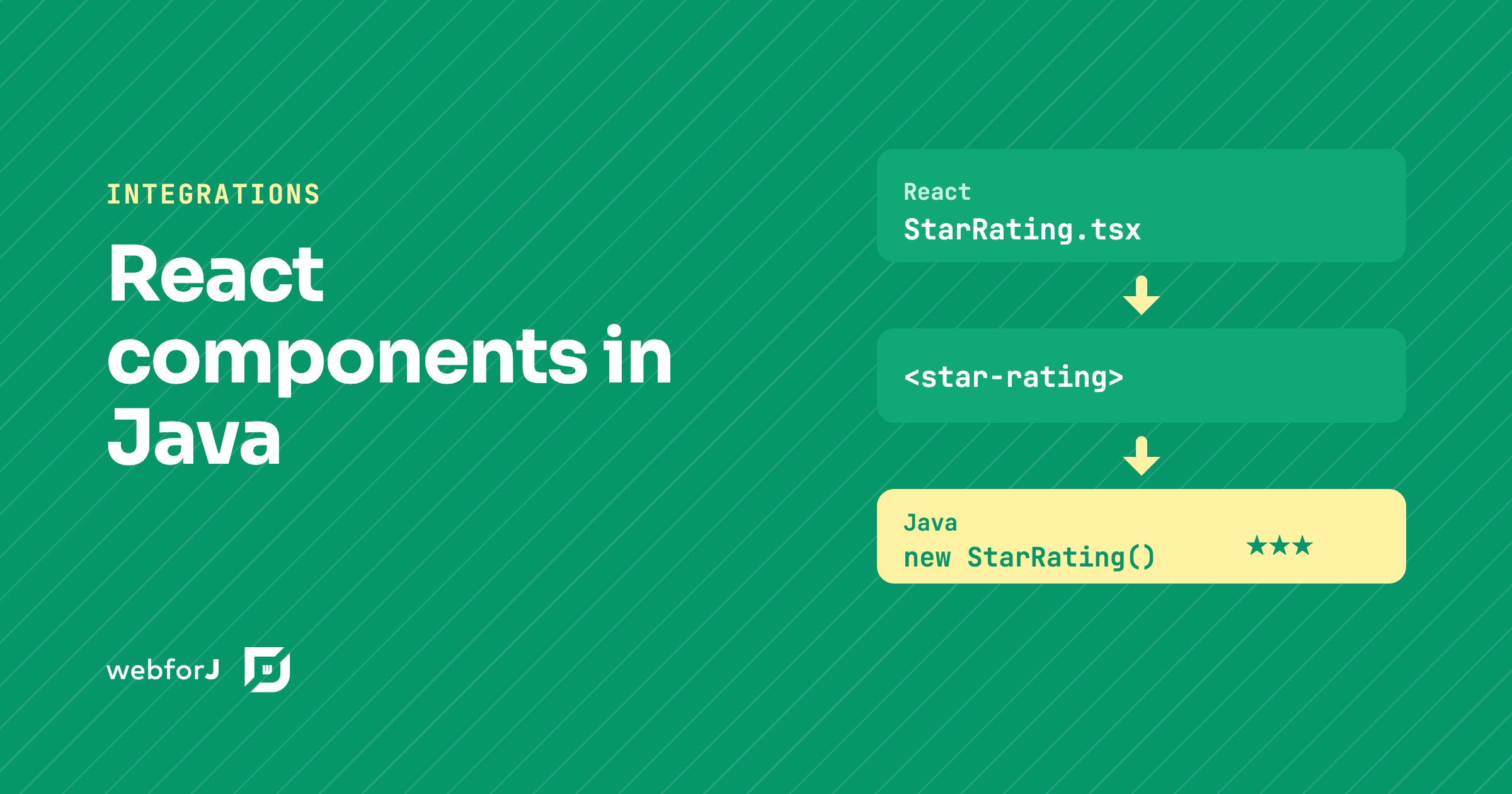
Your team already has a React component it likes, a star rating, a date picker, a small chart. Now the app around it is moving to Java, and you'd rather not rebuild that widget or keep a second frontend just for it.

You don't have to. To use a React component in Java with webforJ, you turn it into a custom element and wrap that element in a Java class. The React code stays React, and the rest of the app sees an ordinary webforJ component.

Securing webforJ Routes Before the View Exists

· 7 minutes de lecture
Lauren Alamo
Software Developer

cover image

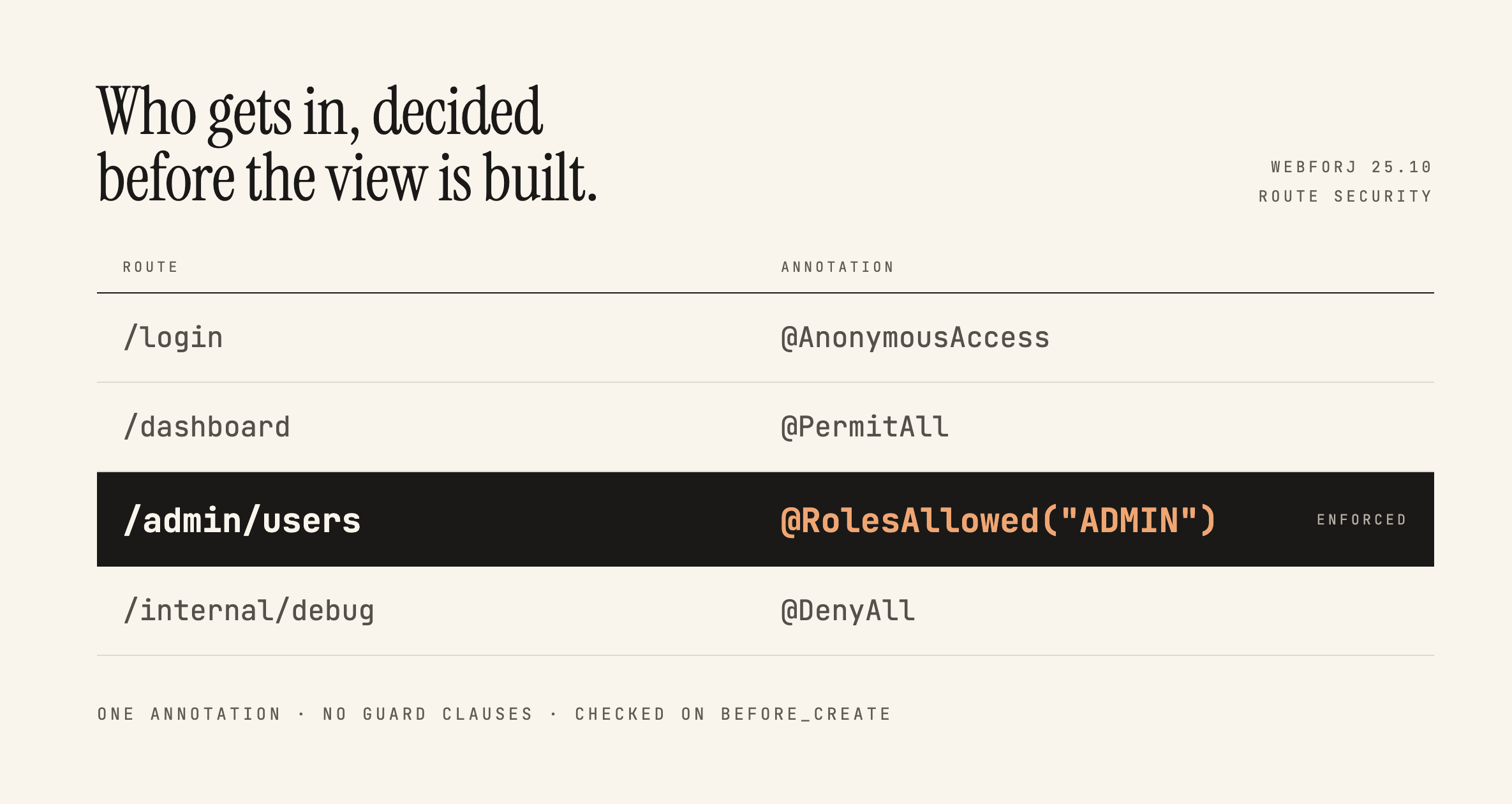
Broken access control has sat at the top of the OWASP Top 10 since 2021, and the 2025 list keeps it there. One of OWASP's own example scenarios is an app that keeps all its access control in the front end, where the attacker can't click through to the admin page because the JavaScript won't let them, so they skip the browser and request the URL with curl instead.

Here's a version of that you've probably written:

if (isAdmin) {
Button delete = new Button("Delete user");
delete.onClick(e -> userService.delete(selected));
self.add(delete);
}

Ordinary users don't see the button. That feels like enough, and in a server-driven framework it feels like more than enough, because the business logic is all sitting safely in Java. This post is about what actually protects that handler, what webforJ gives you for free, and where the line between the two falls.

Card component in Java: build dashboard cards with webforJ

· 6 minutes de lecture
Lauren Alamo
Software Developer

cover image

Dashboards live or die by their cards. When every tile has the same frame, the same spacing, and a clear title, the page reads at a glance. When each one is hand-built, the layout starts to drift.

A card component in Java solves that with webforJ: one Card groups related content and actions into a single surface, and you fill its regions from Java. Let's walk through it, from one fully dressed card to a row of them, then tune the shadow, the frame, and the click behavior.

The Demo That Taught Me webforJ Events

· 7 minutes de lecture
Lauren Alamo
Software Developer

cover image

A lot of what I understand about webforJ, I picked up by building things while writing the documentation. Explaining a feature is one thing. Building something small that actually uses it is where I find out whether I really understood what I was about to explain to everyone else.

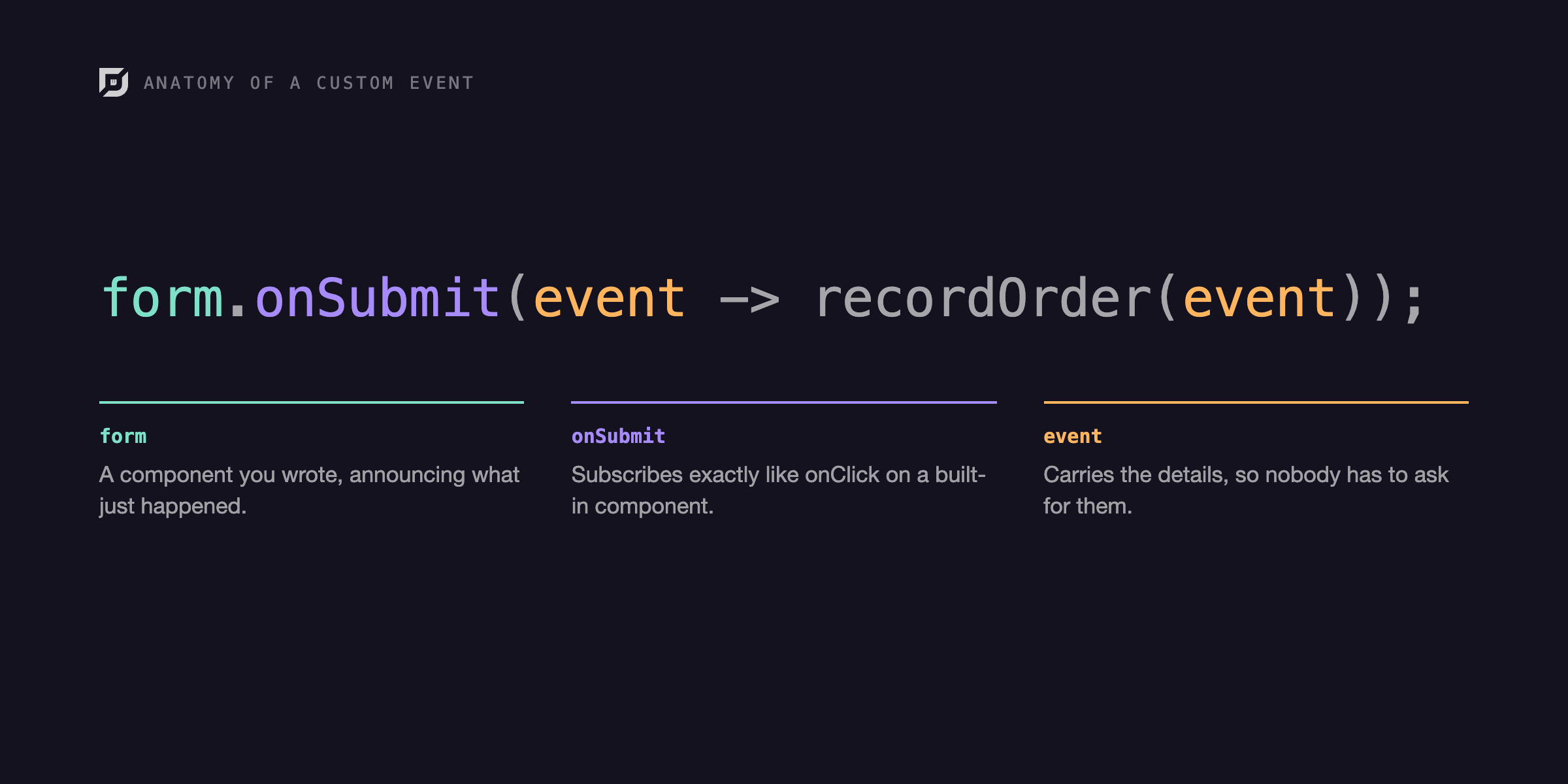
That's how it went with custom events. I was writing the events documentation, reached the section on a component firing its own event, and wanted to build one myself before I explained it. I try to build around real scenarios, an actual form, an actual list, something close to what you'd ship, and building it confirmed what the pattern is actually good for: one component announcing and another reacting, all in plain Java without touching JavaScript.

Your Web App Deserves a Spot on the Home Screen

· 7 minutes de lecture
Lauren Alamo
Software Developer

cover image

I've been working with webforJ for a while now, mostly on documentation and component demos. But I recently wanted to build something small from scratch to try out a feature I hadn't used yet: installable apps.

The idea is that your web app can be "installed" on a device, kind of like a native app. It gets its own icon on the home screen or in the app launcher, and when you open it, the browser UI is gone. Your app gets its own window.

I built a habit tracker called Streak to test it out. I wanted to see what it takes to make a webforJ app feel like a "real" app instead of a website, and the installable apps feature turned out to be the key piece.

Transform Your webforJ App with Professional Theming

· 6 minutes de lecture
Lauren Alamo
Software Developer

cover image

Modern applications need flexible theming systems. Users expect dark mode support, but they also want apps that reflect brand identity and adapt to different contexts. Building themes traditionally meant maintaining separate stylesheets, duplicating CSS rules, and coordinating updates across multiple files.

webforJ takes a different approach with a theming system built around CSS variables and semantic color palettes. You can implement dark mode, create custom brand themes, and switch between them at runtime.

Let's walk through how it all works together.

Building Better CSS with webforJ's Styling System

· 7 minutes de lecture
Lauren Alamo
Software Developer

cover image

I've spent the better part of a year building webforJ demos and documentation, and honestly, it's taught me that I knew a lot less about CSS than I thought. I thought I knew enough to get by, some selectors, basic properties, maybe a flexbox here and there. Turns out there's a difference between writing CSS that works and writing CSS that actually makes sense.

Working on webforJ's styling system has changed how I approach CSS. It handles common tasks well and gets out of your way for the interesting parts. Plus, I no longer spend half my time wondering why my styles disappeared into the void.