Passer au contenu principal

19 posts tagué avec "MCP"

Model Context Protocol integrations for webforJ apps.

Voir tous les tags

Cursor Spring Boot UI: Let the Assistant Write Your Screens in Java

· 6 minutes de lecture

Eric Handtke
Software Developer

cover image

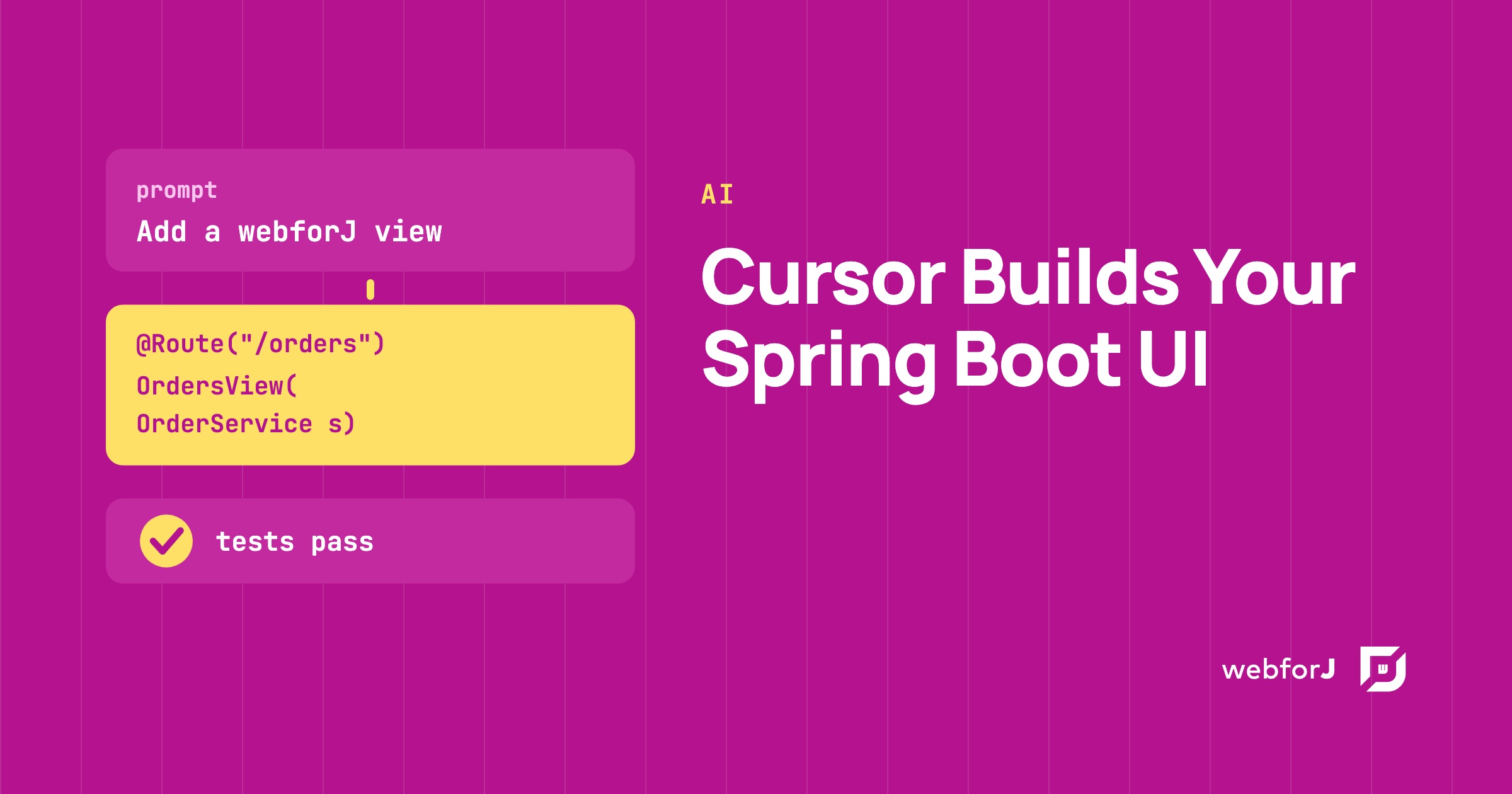
You have a Spring Boot backend with services that work, and now it needs screens. Asking an AI assistant to write them is tempting, but a plain prompt in Cursor leaves the assistant guessing at your front end. For a Cursor Spring Boot UI that holds up, give the assistant the real webforJ API and let it write the views in Java. The webforJ AI plugin does that, and a short test confirms the result.
Claude Code Java Web App: Build the Whole Thing, Screens Included

· 8 minutes de lecture
Eric Handtke
Software Developer

cover image

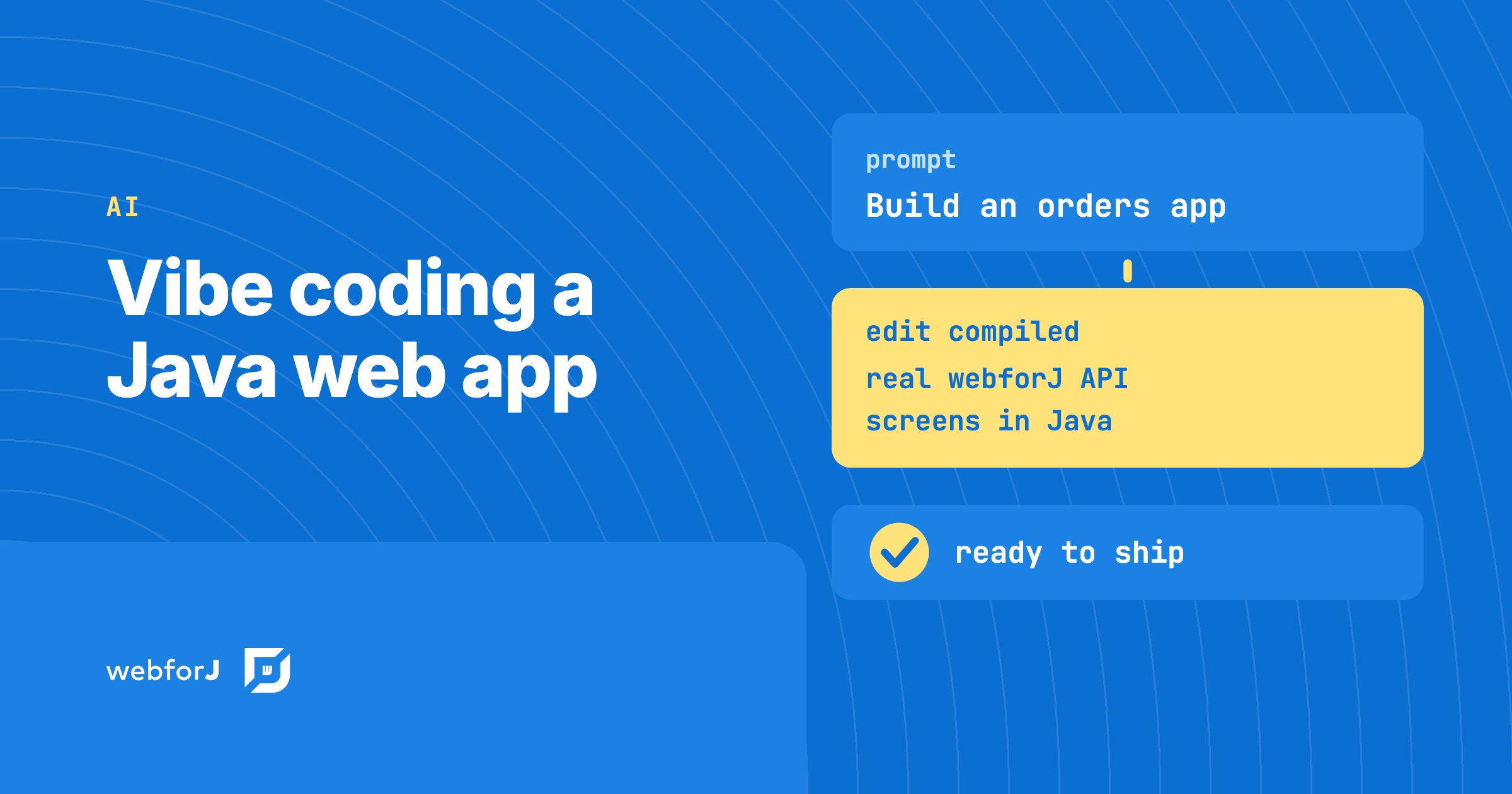
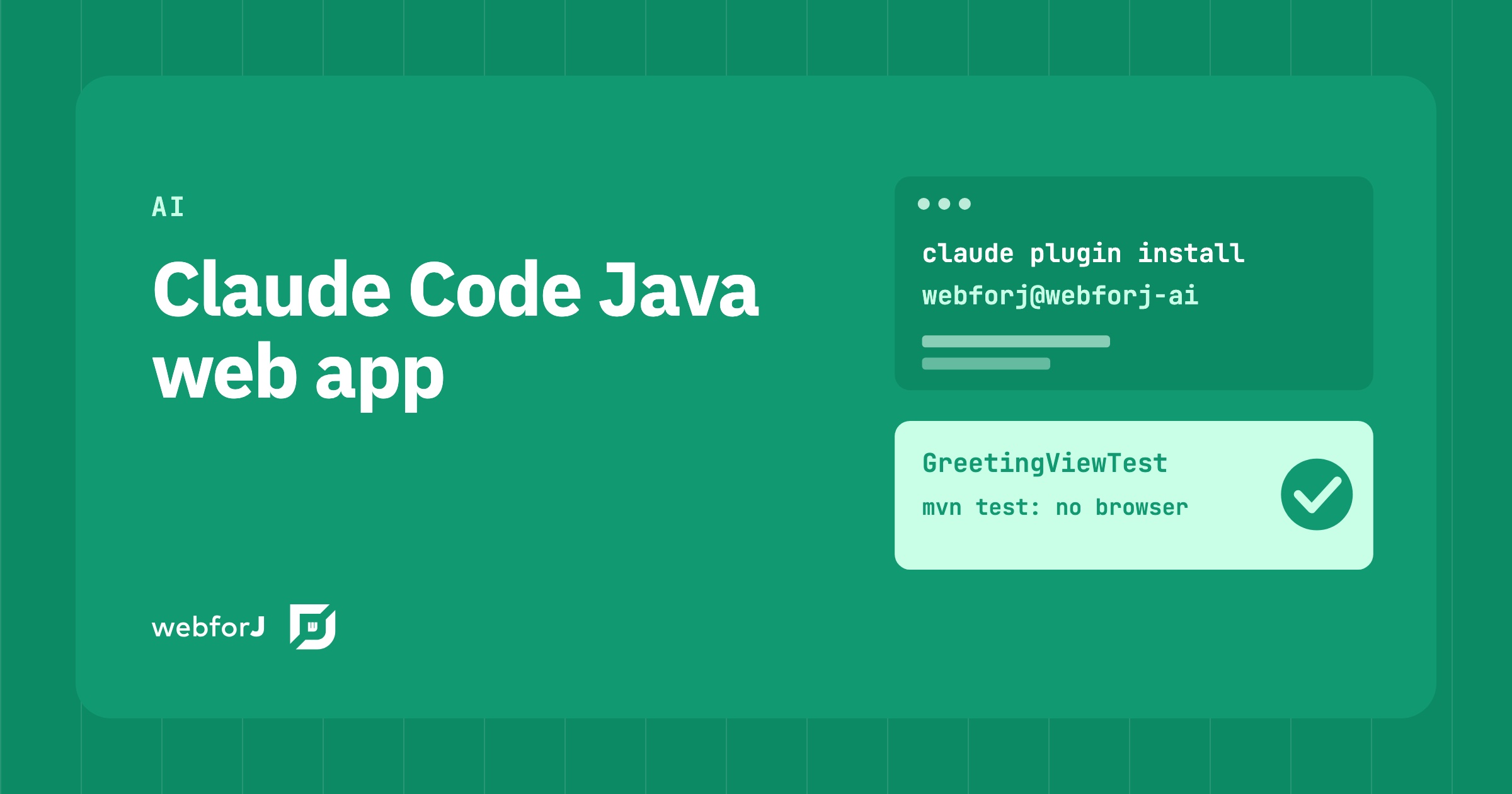
You ask your coding agent for a Java screen and get back something that looks right. Then you build it. A method does not exist, a constructor takes other arguments, and the button you asked for has never been clicked by anything. The agent is fast. What you lack is a way to know the result is correct before you read every line.

A Claude Code Java web app does not have to work that way. In webforJ, the full-stack Java framework for business web apps, Claude Code builds the whole app, screens included, and the work gets checked on three fronts: the real API, a scaffolded project, and a test that returns pass or fail without a browser.

The AI coding agent verification loop for Java

· 9 minutes de lecture
webforJ
Do it all in Java. The full-stack Java framework for business web apps.

cover image

You ask a coding agent for a new screen and it comes back fast, confident, and half wrong. A method that does not exist, a CSS token it made up, a build that fails on the second line, and a button that nobody ever clicked. The model is rarely the problem. The missing piece is verification.

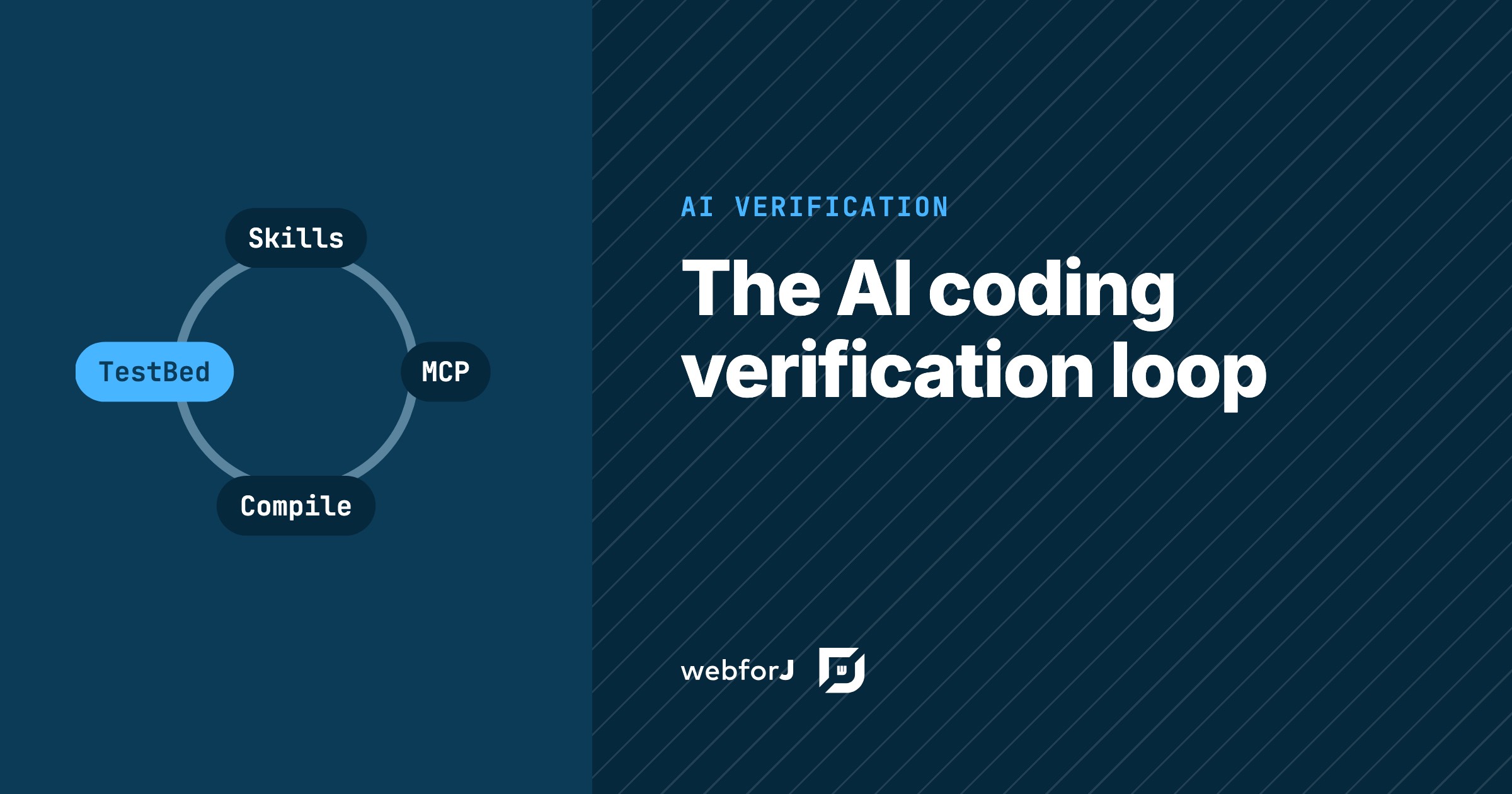
The AI coding agent verification loop is the set of checks that turns a guess into code you can trust: write with known workflows, check every API against the real docs, compile every edit, and run a test on every change. webforJ, the full-stack Java framework, closes that whole loop with Agent Skills, an MCP server, the craftforJ Assistant and the TestBed, and one plugin installs the first two for Claude Code, Copilot, Gemini, and Codex. Cursor and other clients use manual setup. Because of that loop, webforJ is the most AI-ready framework in the Java ecosystem.

Best Java framework for AI coding: why webforJ fits

· 7 minutes de lecture
webforJ
Do it all in Java. The full-stack Java framework for business web apps.

cover image

Hand an AI assistant a Java web project and ask for a new screen. Whether you get working code or an afternoon of fixes depends less on the model than on the framework: how many languages the screen spans, how many ways there are to do the same thing, and whether the assistant can check the real APIs or has to remember them.

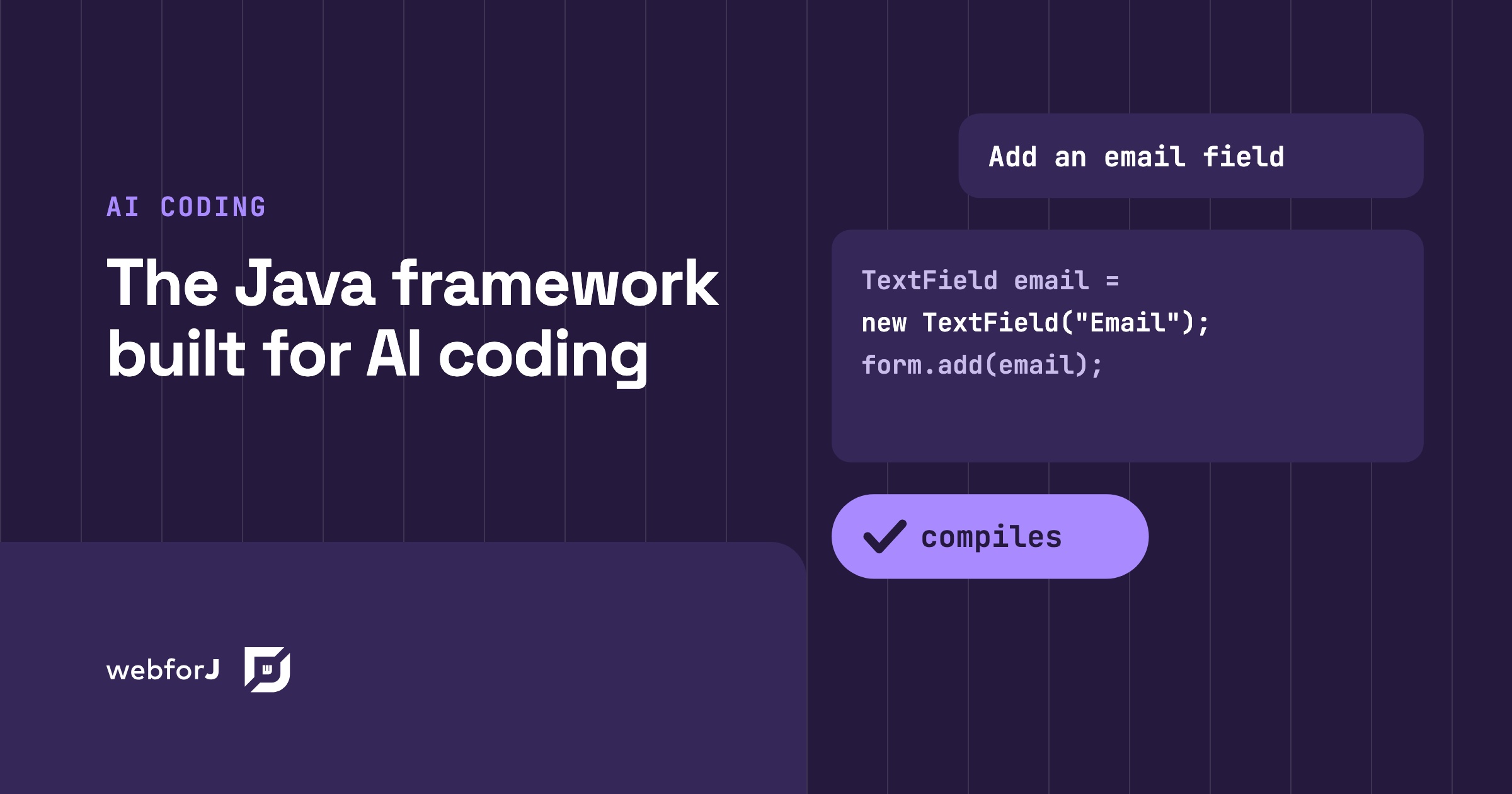
The best Java framework for AI coding is the one that leaves the assistant the least room to be wrong. In webforJ the whole UI is plain Java with typed components, so mistakes fail at compile time, and an official AI plugin connects Claude Code, Copilot, Cursor, Gemini and Codex to the real webforJ docs and APIs.

AI tools for Java migration: pick by the job, not the brand

· 11 minutes de lecture
webforJ
Do it all in Java. The full-stack Java framework for business web apps.

cover image

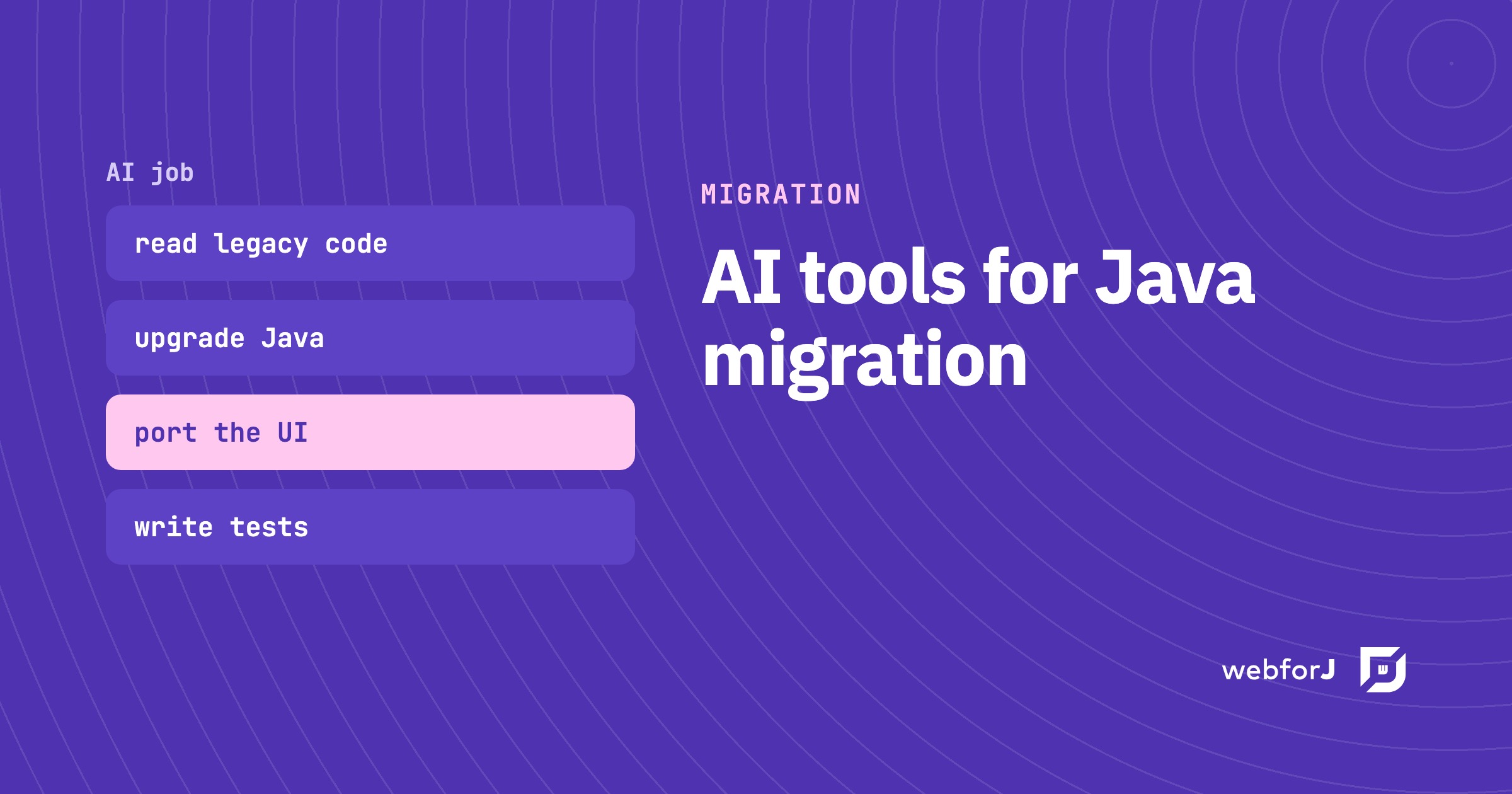
You have a Java app that has been in production for years, a deadline that keeps moving, and a long list of AI tools that all claim they can help. Comparing them by brand does not get you far, because a migration is not one task. It is five or six different jobs, and each one needs a different kind of help.

The best AI tools for Java migration are coding assistants such as Claude Code, GitHub Copilot, Cursor, Gemini CLI and Codex, matched to the job at hand and grounded in the real documentation of the framework you are moving to. That last part decides most of the outcome. With webforJ, the full-stack Java framework, one AI plugin gives those assistants the real docs, project scaffolding and ready-made workflows, so the code they write for your new screens targets APIs that exist.

AI coding in Java: quality control for generated code

· 8 minutes de lecture
webforJ
Do it all in Java. The full-stack Java framework for business web apps.

cover image

An AI assistant can write a Java view in seconds. The slow part comes after: reading the diff, wondering whether that method really exists, and clicking through the screen to see if it behaves. If every change needs that, the speed is gone.

AI coding in Java stays fast when the checks are automatic. webforJ gives you three: a source of truth the assistant reads before it writes, a workflow it has to follow, and tests that fail when it guesses wrong. The tests run in plain JUnit, with no browser, so quality control takes seconds.

AI Java web framework: how webforJ is built for AI work

· 10 minutes de lecture
webforJ
Do it all in Java. The full-stack Java framework for business web apps.

cover image

webforJ, the full-stack Java framework, is the AI Java web framework that covers both sides of the work. While you build, AI coding assistants get the real webforJ API through a plugin, an agent inside your running app writes Java that compiles before you see it, and browserless tests give every change a fast pass or fail. In the app you ship, AI hosts can open your views with MCP Apps, agents can use your UI with exactly the user's permissions, and your own AI features stream into Java components.

All of it is Java, checked by the compiler, and rendered from the server. That is what makes AI output in a webforJ app easy to verify.

Vibe Coding a Java Web App Without Losing Control

· 7 minutes de lecture
webforJ
Do it all in Java. The full-stack Java framework for business web apps.

cover image

Your developers already describe screens to an AI assistant and judge what comes back. The first version appears fast. Whether it can ship is a separate question, and it is the one that matters when a team starts vibe coding a Java web app the business will depend on.

Left alone, the approach fails in known ways. The assistant guesses at an API, a change breaks a screen nobody touched, or nobody can say what the code does. We built webforJ, the full-stack Java framework for business web apps, so the speed comes with control: the whole app is Java, the assistant reads the real API, and every change gets checked.

Spring Boot MCP server: tools plus a live UI in webforJ

· 11 minutes de lecture
Hyyan Abo Fakher
Lead Software Architect

cover image

Ask an AI assistant how much a customer owes and a one-line answer is perfect. Ask it for every unpaid invoice due this month, so you can chase the overdue ones, and a paragraph of text stops being useful. You want the invoices in front of you.

A Spring Boot MCP server can give you both. Spring AI runs the MCP server and talks to the AI client, and webforJ adds what Spring AI doesn't: a live view that the client opens inside the conversation, with tools the model can call to change it.

MCP Apps in Java: show a webforJ UI inside AI chat

· 10 minutes de lecture
Matthew Hawkins
Software Developer

cover image

To build an MCP app in Java with webforJ, add @McpApp to a routed view and an MCP host such as Claude Desktop can open that view inside its conversation, with the same components, services, and state your app already has. The AI can pass input when it opens the view, call actions on it, and receive context from what the person clicks.

An MCP server in Java usually returns text or JSON. With webforJ it can return a live interface instead. You write the view in Java, and the MCP host renders it next to the chat.

AI coding assistant for Java: the webforJ AI plugin

· 10 minutes de lecture
webforJ
Do it all in Java. The full-stack Java framework for business web apps.

cover image

An AI coding assistant for Java web UIs works best when it is connected to the framework's own knowledge. For webforJ, that is the webforJ AI plugin. One install adds an MCP server and a set of Agent Skills to Claude Code, GitHub Copilot, VS Code, Gemini CLI, Codex, Cursor, and other clients. Your assistant then looks up real class names, scaffolds projects, generates themes and validates CSS tokens instead of guessing.

This post is the hands-on version. It shows why general assistants get Java UI code wrong, what the plugin installs, the commands to run, the prompts to type, and the kind of code that comes back.

AI actions that update a Java UI: open and change webforJ views

· 9 minutes de lecture
Hyyan Abo Fakher
Lead Software Architect

cover image

You ask an AI assistant to open a screen, and it does. Then you ask for a change, and a second copy of the screen appears under the first, because the assistant only knows how to open things. The view you're looking at never moves.

AI actions that update a Java UI fix that. With webforJ MCP Apps, the AI opens your routed view with typed input, then changes the same live view through actions and an update tool, while your Java code keeps running on the server. This post walks through each piece with code from a working playground app built to exercise all of them.