Seguridad de la aplicación
Ejecutar tu aplicación en Java en el servidor (ver Cliente y servidor) contiene toda clase de ataques web antes de que escribas una línea de código. Sin embargo, no elimina tus responsabilidades. Estas páginas explican dónde cae la línea, qué maneja webforJ por ti, dónde permaneces a cargo y cómo mantener un despliegue en producción restringido.
Para controlar quién puede alcanzar cada vista, consulta el resto de la sección de Seguridad sobre autenticación y autorización a nivel de ruta.
Temas
Amenazas comunes
How common web threats such as cross-site scripting (XSS), cross-site request forgery (CSRF), and SQL injection apply to a webforJ app, what the framework handles, and where you stay responsible.
Fortalecimiento para producción
Practical steps for running a webforJ app safely in production, from transport encryption and dependency upkeep to server-side checks and disclosure.
Gestión de secretos
Keep database passwords, API keys, and other secrets out of your webforJ source tree and configuration files by resolving them at runtime.
Securing a Java web app?
Walk the team through your login, roles, and access rules.
Sigue aprendiendo
 ArtículoWhat a complete Java web application platform includes
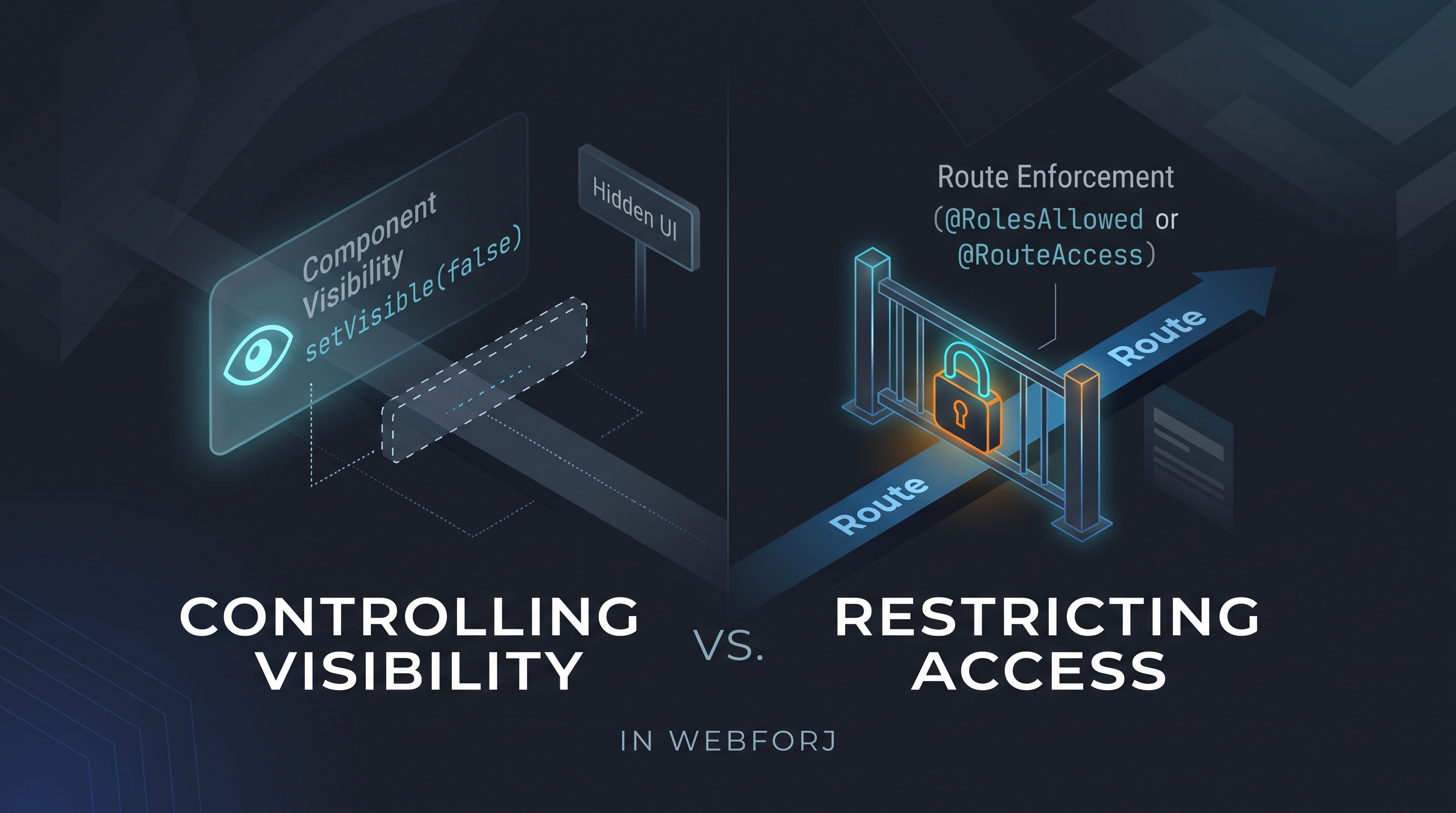 ArtículoSpring Security role-based UI access: why protecting routes beats hiding elements
 ArtículoSecure Java web framework for enterprise teams
 ArtículoJava UI framework for banking and financial services
 ArtículoJava framework for enterprise web applications: a checklist
 ArtículoBest practices for Java web application security in webforJ